Awareness Day

World Polio Day

October 24, 2026 Recurs yearly

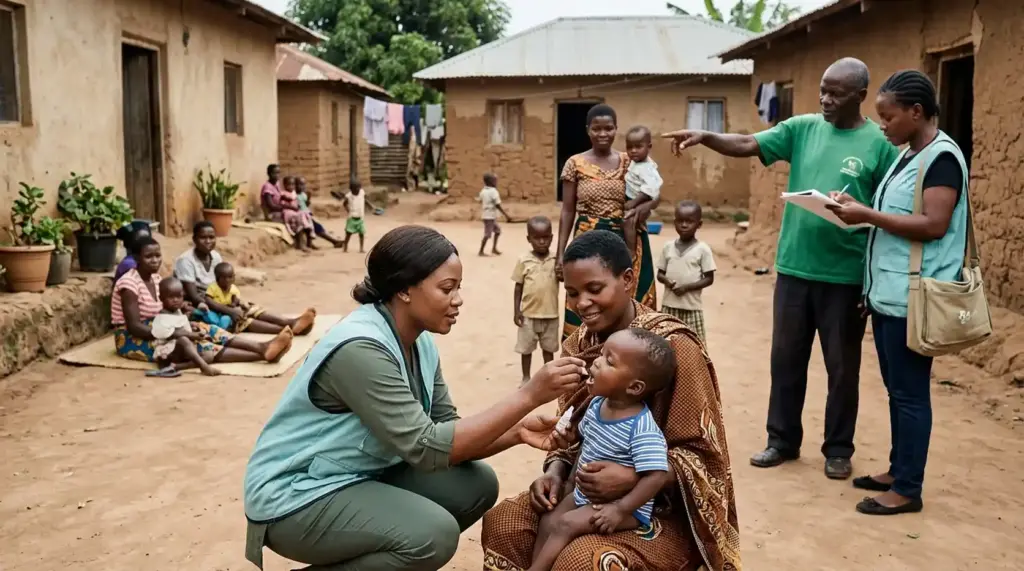
Community health workers and a volunteer engaging with families during a polio immunization outreach visit, representing the shared effort to protect every child and eradicate polio.

2026 Theme

Every Child Protected. Every Community Polio-Free.

Editorial theme • Health Custodian

Campaign Description

World Polio Day honors efforts to eradicate polio and highlights the importance of vaccination and surveillance.

Theme Focus

Polio is a preventable infectious disease that can cause permanent paralysis and death, particularly in young children. Although global vaccination efforts have brought the world closer to eradication, poliovirus continues to threaten communities where immunity gaps allow it to circulate.

Every Child Protected. Every Community Polio-Free. emphasizes that eradication requires more than the availability of vaccines. It depends on reaching every child, maintaining strong routine immunization, identifying outbreaks quickly, building community trust, and sustaining international cooperation until transmission is interrupted everywhere.

The theme places children and communities at the center of the eradication effort, highlighting the shared responsibility of families, healthcare workers, governments, community leaders, and international partners.

Key Priorities

  • Protect every child through vaccination: Promote timely routine immunization and supplementary polio vaccination campaigns, ensuring that children receive the vaccines recommended by national immunization programs.
  • Reach missed and underserved children: Address barriers affecting children in remote communities, conflict-affected areas, displaced populations, and communities with limited access to healthcare.
  • Strengthen routine immunization: Emphasize that sustained protection requires reliable immunization services beyond occasional vaccination campaigns.
  • Detect poliovirus early: Support effective disease surveillance, including the investigation of suspected cases of acute flaccid paralysis and environmental surveillance where appropriate.
  • Respond rapidly to outbreaks: Promote coordinated public health action and vaccination responses when poliovirus is detected.
  • Build community trust: Address misinformation, listen to caregivers' concerns, and work with trusted local leaders to improve vaccine acceptance.
  • Sustain political and financial commitment: Encourage governments and partners to maintain the funding, workforce, infrastructure, and coordination required to finish eradication.
  • Promote equitable protection: Reinforce that every child deserves protection, regardless of location, socioeconomic circumstances, displacement status, or access to healthcare.
  • Recognize the people behind eradication: Highlight the contributions of vaccinators, surveillance officers, laboratory teams, community mobilizers, caregivers, and volunteers.
  • Maintain global solidarity: Communicate that polio eradication requires continued international cooperation because poliovirus transmission in one area can threaten populations elsewhere.

Key Concepts

  • Polio
  • Poliomyelitis
  • Poliovirus
  • Wild poliovirus
  • Circulating vaccine-derived poliovirus
  • Polio eradication
  • Polio vaccination
  • Oral polio vaccine (OPV)
  • Inactivated polio vaccine (IPV)
  • Routine immunization
  • Supplementary immunization activities
  • Vaccine coverage
  • Missed children
  • Zero-dose children
  • Vaccine confidence
  • Vaccine hesitancy
  • Acute flaccid paralysis

Campaign Resources & Support

View Awareness Calendar