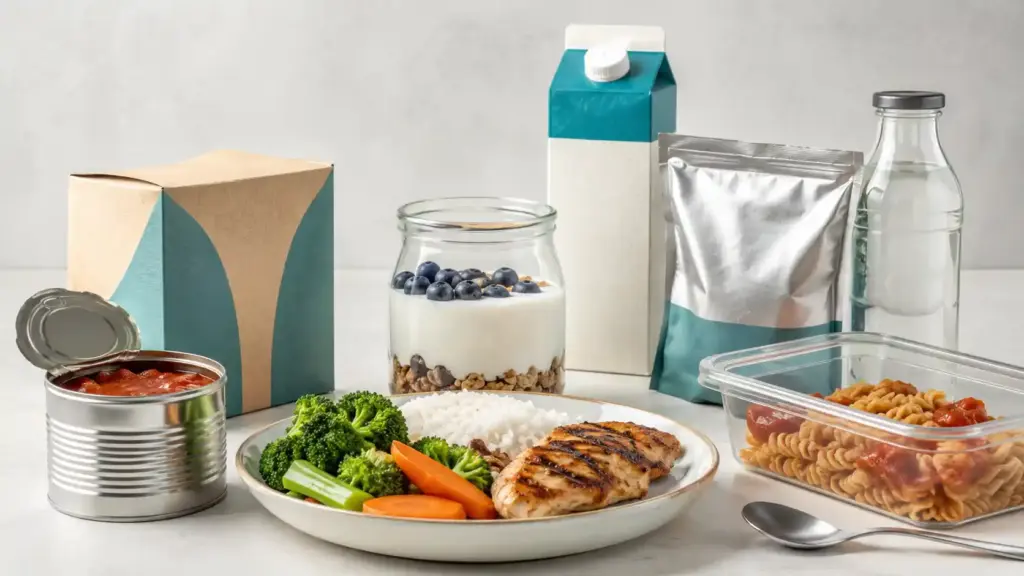
A material or article intended to come into contact with food during its production, processing, preparation, storage, transportation, or serving.
Food-contact materials include packaging, containers, bottles, cans, kitchen utensils, processing equipment, storage vessels, and other articles that touch food. They may be made from plastics, glass, metals, paper, cardboard, ceramics, rubber, or combinations of materials..
Food-contact materials are evaluated because substances within them can potentially migrate into food. This does not mean that every food-contact material is hazardous; rather, its safety depends on its composition, intended use, and potential exposure.
QUICK FACT
The material you can see is not necessarily the material touching the food. A metal can, for example, may have an internal coating between the metal and its contents.
COMMONLY CONFUSED WITH
- Food-contact substance: a substance used to manufacture or produce a material or article intended to contact food.
- Food-contact surface: the particular surface of an object that directly touches food.
SEE ALSO