
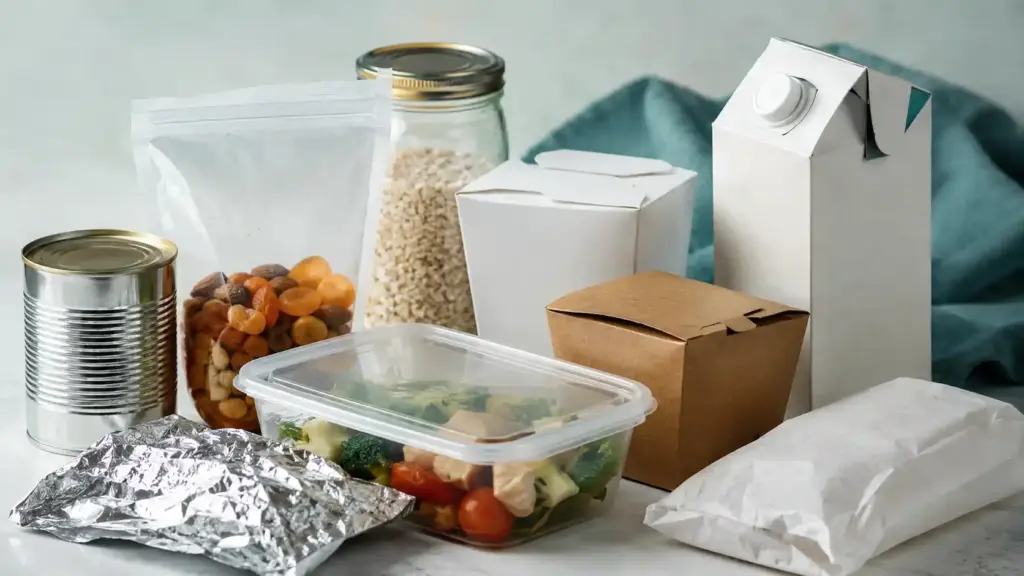
You probably think about what is in your food, but how often do you think about what your food is touching? A can of tomatoes, a plastic bottle of water, a paper coffee cup, a foil wrapper, a takeaway container, a carton of milk, or even a glass jar may look like nothing more than packaging. Yet food packaging is not always chemically or biologically invisible. Depending on the material, the food, temperature, storage time, and conditions of use, substances can migrate from packaging into food, while packaging itself can also become a source of contamination. This does not mean packaged food is inherently unsafe. In fact, packaging is one of the things that helps keep food safe, but it does mean that what surrounds your food can sometimes become part of the food-safety equation.
Food packaging is more than a wrapper
Packaging protects food.
It helps prevent contamination, physical damage, moisture loss, oxidation, pest exposure, and premature spoilage. It can extend shelf life and make food safer to transport and store.
But packaging is also made from substances that can interact with food.
Food-contact materials can include:
- plastics;
- glass;
- metals;
- paper and cardboard;
- coatings and lacquers;
- adhesives;
- printing inks;
- rubber and elastomers;
- multilayer films;
- and composite materials.
Some packaging contains several of these materials at once.
A beverage carton, for example, may contain layers of paperboard, plastic and aluminum. A metal food can may have a polymeric coating separating the food from the metal. A paper cup may have an internal plastic coating.
The package may look like one thing.
Chemically, it may be several things.
Question & Short Answer
Can substances from food packaging get into food?
Yes. Substances from food-contact materials can migrate into food under certain conditions. The extent of migration depends on factors such as the material, the type of food, temperature, contact time, and other conditions of use. This is why food-contact materials are subject to safety assessment and regulation.
The important distinction is that migration does not automatically mean harm. Risk depends on what substance migrates, how much reaches the food, how often a person is exposed, and the substance’s toxicity.
What the evidence says about food-contact materials
Food packaging is not necessarily chemically inert. Materials and components that come into contact with food, including plastics, paper and cardboard, metals, coatings, adhesives, and printing inks, can contain substances capable of migrating into food.
Regulatory safety assessments therefore consider not simply whether a substance is present, but whether it can migrate into food, how much exposure may result, and whether that exposure is considered safe under the intended conditions of use.
The hidden process: migration
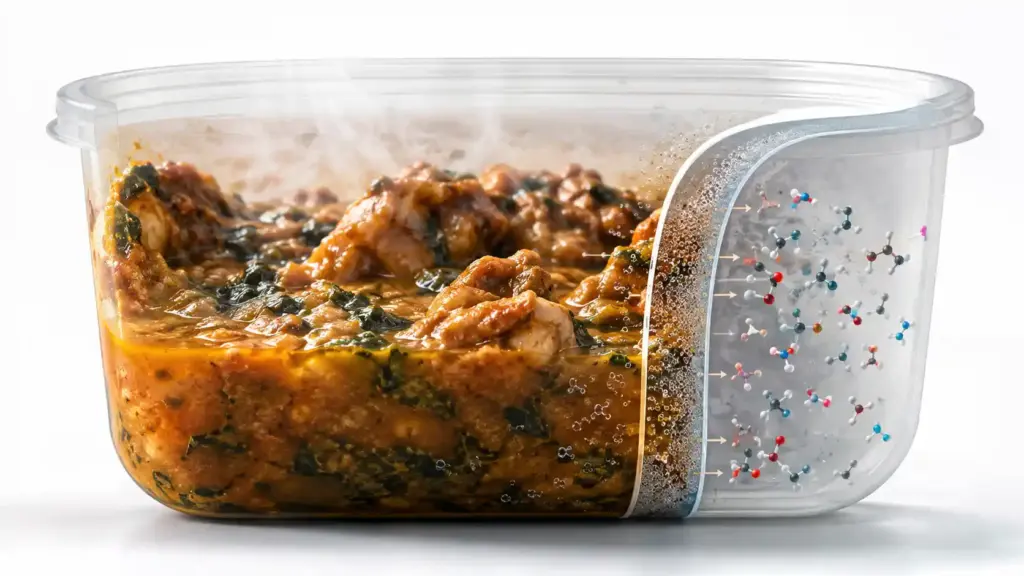
One of the most important concepts in food packaging is migration.
Migration is the movement of substances from a food-contact material into the food or drink.
You cannot necessarily see it.
The package may look perfectly normal.
The food may taste perfectly normal.
There may be no smell, discoloration, or visible deterioration.
Yet molecules can move between materials.
The amount that migrates depends partly on the properties of the substance and the food-contact conditions.
Migration
The transfer of substances from a food-contact material into food.
Food-contact material
A material or article intended to come into contact with food, either directly or indirectly.
Exposure
The amount of a substance that reaches a person through a particular route, such as eating, drinking, breathing, or skin contact.
These terms are important because hazard and risk are not the same thing.
A substance can have hazardous properties without creating a meaningful health risk at every exposure level.
Why temperature matters
Heat can increase the movement of some substances from packaging into food.
This is one reason the same package may be appropriate for one use but inappropriate for another.
Consider the difference between:
- storing a cold salad in a suitable container;
- filling the same type of container with boiling soup;
- microwaving food in it;
- leaving very hot food in it for several hours.
These are not necessarily equivalent uses.
Packaging materials are generally assessed under specified conditions of use, including factors such as temperature and food type.
“Plastic is safe” and “plastic is dangerous” are both oversimplifications.
There are many different plastics, with different chemical compositions and different intended uses.
The more useful question is:
Was this particular material designed and tested for contact with this particular food under these particular conditions?
That is a much better question than simply asking whether something is plastic.
Why the conditions of use matter
A food-contact material is assessed for particular conditions of use. The potential for substances to migrate into food can depend on factors including the material itself, the type of food, temperature, and duration of contact.
Consequently, a container that is appropriate for one use cannot automatically be assumed to be appropriate for every other use, for example, prolonged contact with very hot or fatty food or heating in a container not designed for that purpose.
Plastic: useful, versatile and chemically complex
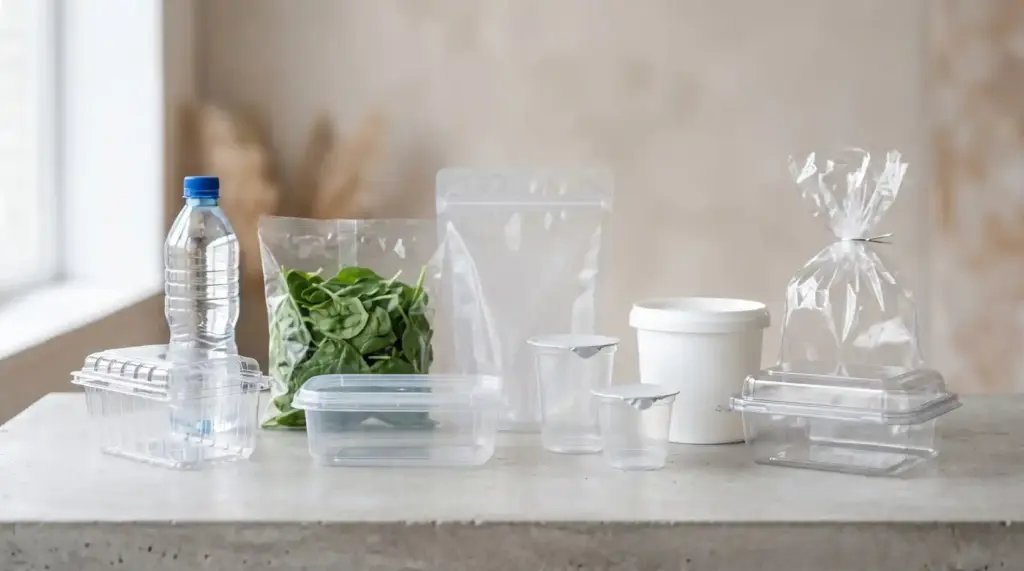
Plastic packaging has transformed food distribution.
It is lightweight, durable, inexpensive, resistant to breakage, and adaptable to many applications.
But plastic is not a single material.
Different plastics can contain different additives, stabilizers, plasticizers, colorants, antioxidants, processing aids, and other substances.
Some substances can migrate into food.
This is why food-contact regulations specify which substances can be used and under what conditions.
The presence of a chemical in plastic does not automatically mean that it will migrate into food at a harmful level.
But neither should the absence of visible damage be interpreted as proof that no migration occurs.
BPA: the chemical that changed the conversation
One of the best-known examples is bisphenol A (BPA).
BPA has been used in the manufacture of certain plastics and epoxy resins, including materials used in some food and beverage packaging.
It became a major public-health concern because of evidence concerning its biological activity and potential health effects.
Regulatory agencies have subsequently reassessed BPA as scientific evidence has accumulated.
This is an important lesson in food packaging:
Safety assessments are not necessarily permanent.
As scientific evidence improves, regulators may change restrictions, permitted uses, or exposure limits.
BPA illustrates an important principle:
A substance can be widely used in consumer products while researchers continue to investigate its potential effects.
This does not mean that everyone exposed to BPA will develop disease.
It means that food-contact safety is an evolving field in which exposure levels, toxicology, and population vulnerability are continually evaluated.
What about phthalates?
Phthalates are another family of chemicals that have attracted considerable attention.
Some phthalates have been used to make plastics more flexible.
Certain phthalates can migrate from food-contact materials into food, and some members of the group have been associated with reproductive and developmental effects in toxicological and epidemiological research.
But again, “phthalates” is not one chemical.
Different members of the group have different properties and different risk profiles.
This distinction matters whenever a broad chemical category becomes a headline.
PFAS: when grease resistance becomes a health question
Have you ever wondered why some food packaging seems almost magically resistant to grease?
That property can be useful.
It can also involve chemistry worth understanding.
PFAS, or per- and polyfluoroalkyl substances, are a large family of chemicals known for their resistance to water, oil, grease, and heat.
Some PFAS have been used in food-contact applications.
Their persistence in the environment and potential health effects have generated substantial scientific and regulatory attention.
Not every food package contains PFAS, and packaging is not necessarily the main source of PFAS exposure for every person.
Nevertheless, PFAS demonstrate an important principle:
A chemical property that makes packaging useful can sometimes create environmental or health questions that become apparent only after widespread use.
PFAS and food packaging: what we actually know
Some PFAS have been used in food-contact applications because of properties such as resistance to grease and water. PFAS can migrate from certain food-contact materials, although the extent of migration depends on the specific substance, material, manufacturing process, and intended use.
The presence of PFAS in a package does not by itself establish that a particular food contains a harmful dose. Risk assessment requires consideration of actual or expected dietary exposure and the toxicity of the specific substance.
The can you thought was just metal
Now consider something completely different:
a can of food.
Cans appear simple.
They are metal.
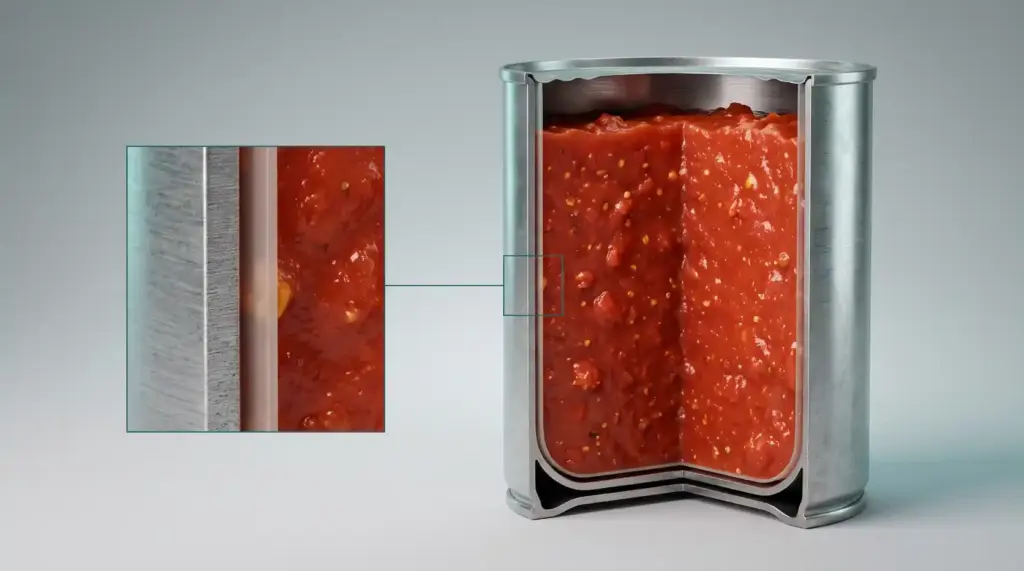
But many canned foods do not come into direct contact with bare metal.
Instead, the inside of the can may have a thin protective coating.
Why?
Because food can be chemically aggressive toward metal.
Acidic foods such as tomatoes, fruits, and some sauces can interact with metal surfaces. The internal coating helps protect the food and the can.
That coating, however, becomes part of the food-contact system.
And suddenly, the question changes from:
“Is metal safe?”
to:
“What is the food touching inside the can?”
Can linings are part of the packaging
Internal can coatings may contain polymeric materials designed to protect the food from the metal and prevent corrosion.
Historically, some epoxy coatings used BPA-based materials.
This does not mean that every modern can contains BPA or that canned food is inherently unsafe.
Food-contact regulations and manufacturers have changed formulations and practices over time, and different jurisdictions use different requirements.
The broader lesson is more useful:
Packaging is often more chemically complicated than it looks.
A can may be metal on the outside, but the food may be interacting primarily with an internal coating.
A food package can contain multiple layers even when you see only one surface.
A metal can may have an internal lining.
A paper carton may have polymer layers.
A pouch may contain several plastic films plus adhesives.
A coffee cup may have paperboard plus a moisture-resistant coating.
The visible material is therefore not necessarily the material touching your food.
The can is not always what the food touches
Many food cans contain an internal coating that separates the food from the metal. Historically, some can coatings have used BPA-based epoxy resins. Small amounts of BPA can migrate from some food-contact materials into food and beverages.
Importantly, regulatory conclusions can differ across jurisdictions and can change as scientific evidence and risk assessments evolve. This is why it is more accurate to discuss specific materials, uses, exposure levels, and regulatory assessments than to label all canned food as unsafe.
Acidic foods can make packaging interactions more important
Food chemistry matters.
Acidic foods can interact differently with packaging than dry or neutral foods.
This is one reason food-contact testing uses different food types or food simulants to represent different kinds of foods.
Examples include:
- tomato products;
- citrus products;
- vinegar-based foods;
- pickled foods;
- alcoholic beverages;
- fatty foods;
- and aqueous foods.
The point is not that acidic food automatically becomes dangerous in packaging.
Rather, the chemistry of the food helps determine what can migrate from the package into it.
Fatty foods can behave differently too
Oil and fat matter because substances that are poorly soluble in water may interact differently with fatty foods.
This becomes relevant to packaging used for:
- fried foods;
- butter;
- cheese;
- meat;
- oily sauces;
- nuts;
- chocolate;
- and other high-fat products.
A packaging material suitable for a dry food may not necessarily have identical migration behavior with a fatty food.
This is one reason food-contact materials are evaluated according to their intended uses rather than receiving a universal “safe” label.
Paper is not automatically harmless

Paper feels natural.
That can create a psychological shortcut:
natural = safe.
But paper used for food packaging may contain much more than cellulose.
Depending on the product, it may involve:
- inks;
- coatings;
- adhesives;
- sizing agents;
- recycled fibers;
- processing aids;
- mineral oils;
- and other substances.
Food-grade paper is specifically manufactured for food-contact applications.
Ordinary paper is not automatically interchangeable with it.
The newspaper example: a global food-safety lesson
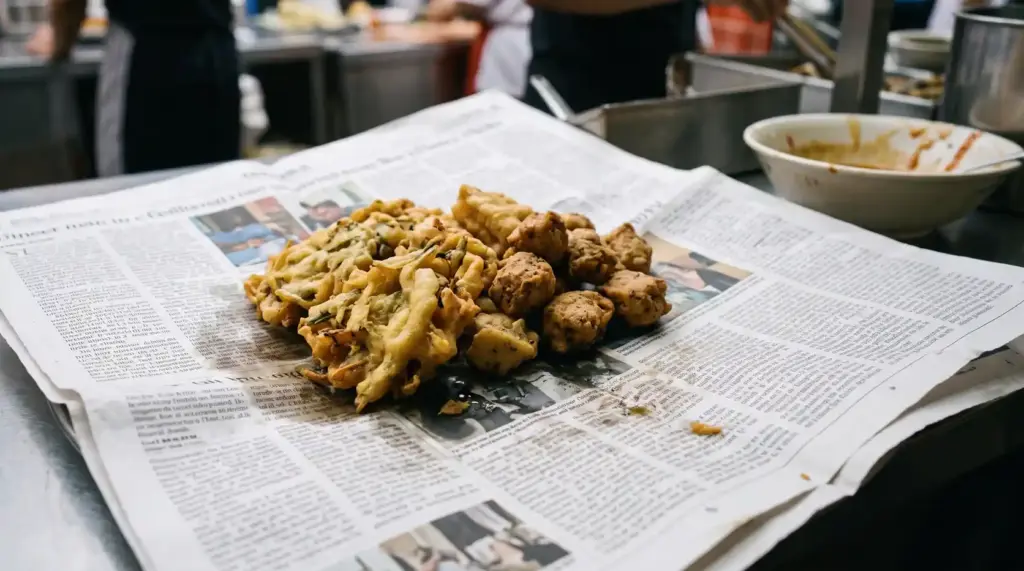
This is particularly relevant in places where hot foods are sometimes wrapped in old newspaper or other printed paper.
The practice is not unique to one country.
Street foods, fried foods, snacks, and other foods may sometimes be placed on printed paper because it is cheap, available, and absorbent.
But ordinary newspaper was designed for printing.
It was not designed as food packaging.
That distinction matters.
Printing inks can contain numerous chemical components, and substances associated with printing and recycled paper can migrate into food under some conditions.
Research has particularly examined mineral oil hydrocarbons, including MOSH and MOAH, in recycled paper and cardboard.
So when hot, oily food is placed directly onto printed newspaper, there can be both a chemical exposure concern and a hygiene concern.
“Newspaper is just paper, so it is harmless.”
Ordinary newspaper is not equivalent to food-grade paper. Printed paper can contain inks and other substances that were not intended for direct food contact.
“Eating food wrapped in newspaper once means you have been poisoned.”
That conclusion is not supported. The presence of potential contaminants does not tell us the dose received or establish that a person will become ill.
The sensible conclusion is simpler:
Avoid unnecessary direct contact between food and materials that were never designed for food contact.
Recycled paper: environmentally valuable, chemically complicated
Recycling reduces waste and conserves resources.
But recycled materials can carry substances from their previous lives.
Newspapers, magazines, packaging, labels, and other printed products can enter paper recycling streams.
Some substances associated with printing inks and other materials can therefore end up in recycled paperboard.
One extensively studied example is mineral oil hydrocarbons.
These compounds can migrate from recycled paperboard into food, particularly when there is inadequate barrier protection.
This is why food packaging made with recycled fibers may require appropriate functional barriers when it is intended for direct food contact.
The lesson is not:
“Recycled packaging is dangerous.”
It is:
“Recycled packaging intended for food contact needs to be appropriately designed for that purpose.”
Printed and recycled paper can be a source of food-contact chemicals
Paper and cardboard used for food packaging can contain substances originating from printing inks, recycled fibers, adhesives, coatings, and other components.
Mineral oil hydrocarbons (MOH), including MOSH and MOAH, are among the substances investigated in food and food-contact materials. EFSA notes that MOH can enter food through migration from food-contact materials, among other routes. The toxicological significance of MOSH and MOAH is not identical, however, and they should not simply be described as one group of equally dangerous chemicals.
Paper cups are not simply paper
Take a paper coffee cup.
It looks like paper.
But if it were made entirely from absorbent paper, your coffee would quickly soak through it.
The inside therefore requires a barrier.
Depending on the cup, that barrier may be made from a polymer or another coating.
The same principle applies to many paper plates, cartons, takeaway boxes, and wrappers.
Again:
The material you see may not be the material touching your food.
Beverage cartons are multilayer systems
Milk cartons, juice cartons, and similar packages can also contain multiple layers.
A typical aseptic carton may combine materials that provide:
- structural strength;
- moisture resistance;
- protection from oxygen;
- light protection;
- and sealing.
Aluminum may be incorporated into some multilayer cartons to provide a strong barrier against light and oxygen.
Plastic layers and adhesives may also be involved.
The result is highly effective packaging.
It is also chemically more complicated than the word “carton” suggests.
Glass: one of the quieter packaging materials
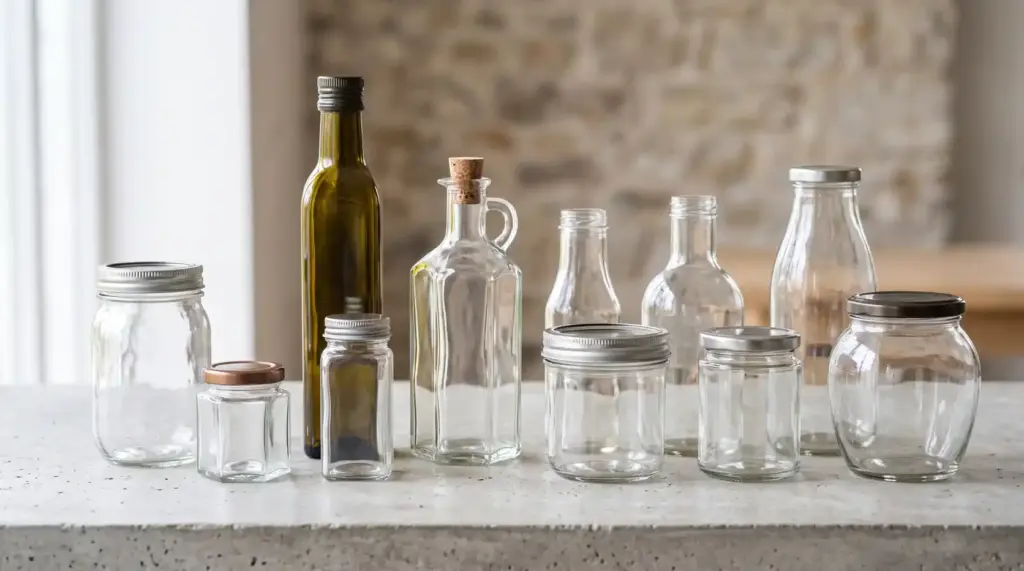
Glass is often considered one of the simplest food-packaging materials.
It has major advantages:
- it is highly impermeable;
- it does not require the same type of plastic additives as many plastic packages;
- it can be reused when appropriately designed and cleaned;
- and it provides a strong barrier between food and the external environment.
But “glass” does not mean “nothing can ever migrate.”
Glass containers can have:
- coatings;
- labels;
- closures;
- caps;
- seals;
- pigments;
- and other components that may contact or indirectly affect food.
The lid may actually be more chemically relevant than the glass itself.
This illustrates a recurring principle:
Assess the whole food-contact system, not just the most obvious material.
Aluminum foil and metal as food packaging
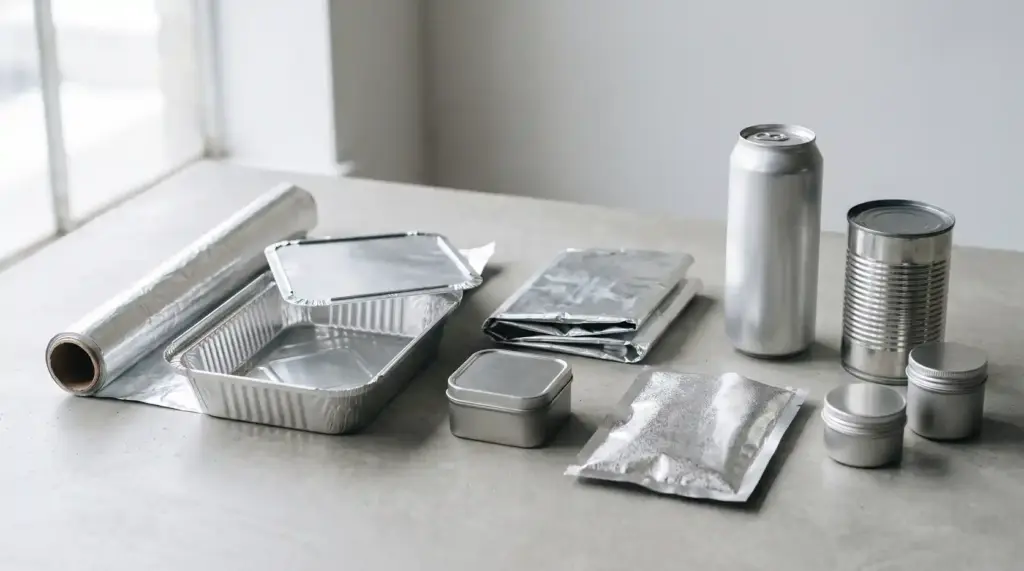
Aluminum foil is widely used for food preparation, storage, and packaging.
Like other metals, aluminum can interact with food under particular conditions.
Acidic and salty foods, heat, and prolonged contact can influence the extent of interaction.
That does not make aluminum foil inherently unsafe.
It means that material, food chemistry, temperature, and duration of contact all matter.
The same principle applies to stainless steel, tinplate, aluminum cans, and other metal food-contact systems.
Adhesives and printing inks: the invisible ingredients
Packaging often requires substances that consumers rarely think about.
Labels need adhesives.
Multilayer films need bonding agents.
Boxes need printing inks.
Packages may also require coatings, varnishes, and sealants.
Some of these substances can potentially migrate.
This is why food-contact safety does not stop with the obvious packaging material.
A package may be:
plastic + ink + adhesive + coating + barrier layer + food.
Each component can have a different function.
The package can contaminate food without chemicals
Chemical migration gets most of the attention, but packaging can also contribute to ordinary contamination.
Packaging can carry:
- microorganisms;
- dust;
- dirt;
- insects;
- foreign objects;
- cleaning chemicals;
- or other contaminants.
Poor storage can make a clean package dirty.
Damaged packaging can expose food to the environment.
Poorly sealed packaging can allow contamination after processing.
This is particularly important because food packaging is supposed to reduce contamination, not introduce it.
Be especially cautious with packaging that is:
- visibly dirty;
- wet or moldy;
- damaged;
- leaking;
- swollen;
- punctured;
- rusted through;
- badly dented around seams;
- improperly sealed;
- or obviously being reused for a purpose for which it was not designed.
Packaging is also a physical and microbiological barrier
Food packaging serves an important protective function. Properly designed and intact packaging can reduce exposure to environmental contamination, moisture, pests, and physical damage.
Conversely, packaging that is dirty, damaged, improperly stored, poorly sealed, or unsuitable for the food can undermine that protective function.
Food safety therefore involves more than chemical migration: the package must also protect the food from biological and physical hazards.
A swollen can is a different kind of warning
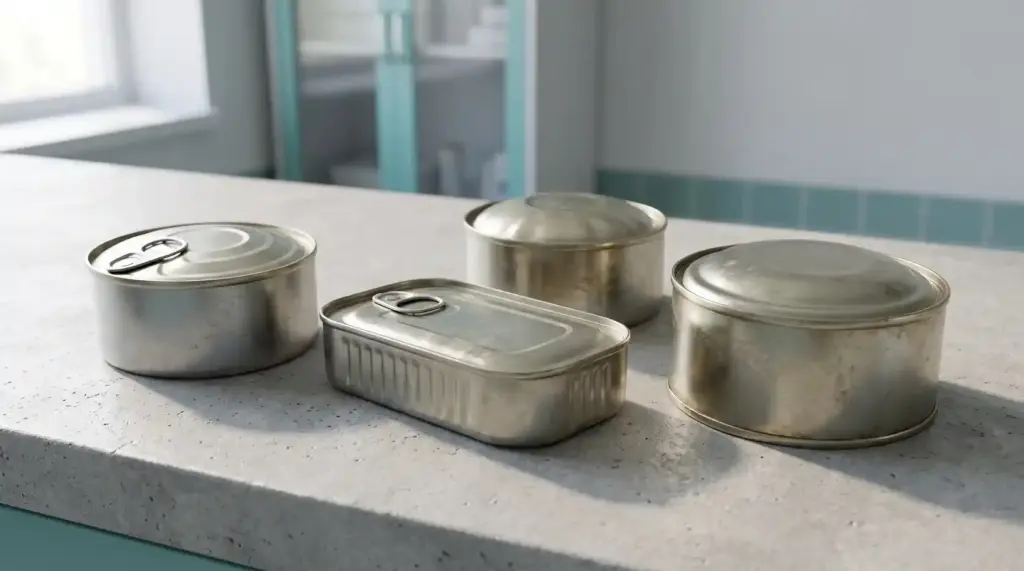
Some packaging problems are much more immediate than chemical migration.
A bulging, leaking, severely damaged, or otherwise abnormal can should not be treated as merely unattractive packaging.
Swelling can sometimes indicate gas production associated with microbial growth or other deterioration.
Botulism is a particularly serious foodborne illness associated with toxins produced by Clostridium botulinum under certain conditions.
Commercially produced canned foods are processed to control such hazards, but damaged or improperly processed canned foods can pose serious risks.
Do not taste food from a can or container that is bulging, leaking, spurting liquid, badly damaged, or otherwise suspicious.
If someone develops neurological symptoms such as blurred or double vision, difficulty swallowing, difficulty speaking, weakness, or breathing difficulty after eating potentially contaminated food, seek emergency medical care.
Foodborne botulism can be life-threatening.
Food packaging can protect you from danger too
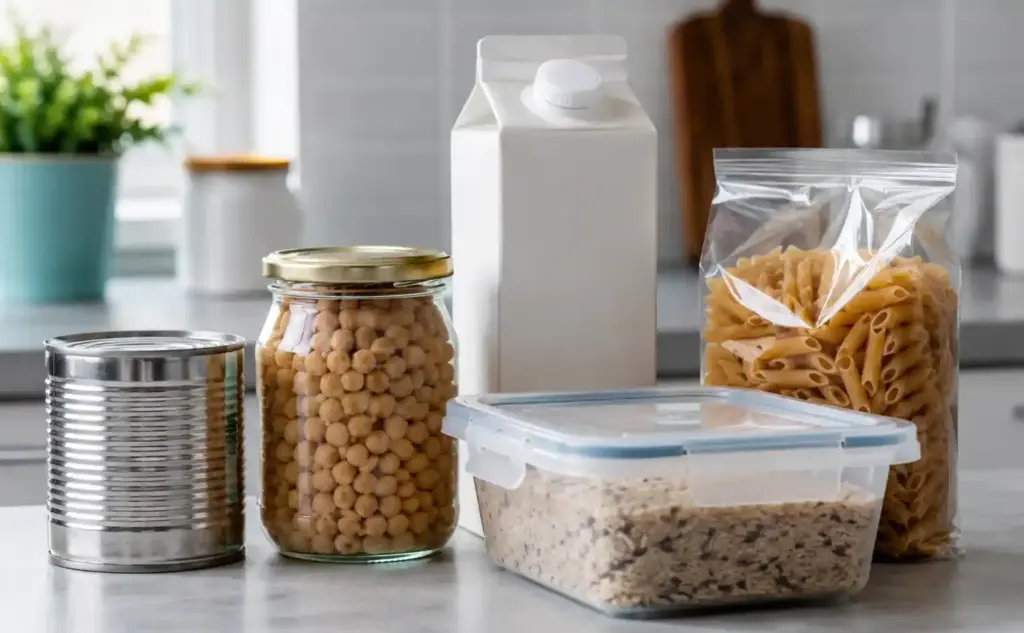
This point deserves emphasis.
Without packaging, many foods would actually be less safe.
Packaging can prevent:
- contamination during transport;
- contact with pests;
- exposure to dirt;
- moisture transfer;
- oxidation;
- physical damage;
- and premature spoilage.
Vacuum packaging, modified-atmosphere packaging, aseptic packaging, cans, bottles, cartons, and sealed pouches have transformed food safety and food distribution.
So the goal is not to return to a world without packaging.
The goal is to use appropriate packaging correctly.
The problem is not packaging. The problem is inappropriate packaging or inappropriate use of packaging.
When packaging becomes the wrong packaging
A useful way to think about the issue is to ask five questions.
1. What is the material?
Plastic? Glass? Metal? Paper? Composite?
2. What is the food?
Acidic? Fatty? Dry? Wet? Alcoholic?
3. How hot is it?
Cold storage and boiling-hot food create different conditions.
4. How long will they be in contact?
Minutes, hours, days, or months?
5. Was the packaging designed for this use?
This may be the most important question of all.
A food-contact material is not necessarily designed for every food, every temperature, or every duration of contact.
The problem with reusing disposable packaging
Many people reuse takeaway containers, bottled-water containers, food trays, and other packaging.
Reuse is not automatically dangerous.
But the intended use matters.
Repeated washing, heating, scratching, chemical exposure, and mechanical wear can alter a container’s physical condition.
Some disposable packages were simply not designed for repeated use.
For everyday food storage:
- Use containers specifically intended for food storage.
- Follow temperature and microwave instructions.
- Do not heat food in packaging unless the manufacturer indicates that it is suitable for heating.
- Replace containers that become cracked, badly scratched, warped, or degraded.
- Avoid using unidentified containers for food.
- Do not reuse packaging that originally contained non-food substances.
- Keep reusable containers clean and completely dry before storage.
- Avoid prolonged contact between very hot food and materials not designed for high temperatures.
“BPA-free” does not mean “chemical-free”
This is another common misunderstanding.
When consumers hear that a package is BPA-free, they may assume that the package contains no chemicals of concern.
That does not follow.
Manufacturers may replace one substance with another.
A replacement chemical may have a different safety profile, or may require further research.
This does not mean that every BPA replacement is dangerous.
It means that one chemical being absent does not tell you everything about an entire packaging system.
“BPA-free means the packaging contains no potentially active chemicals.”
“BPA-free” specifically means that BPA is not intentionally present or is below the relevant threshold, depending on the applicable definition and regulation. It does not mean that the material is chemically inert.
The presence of a chemical is not the same as a health risk
Finding a chemical in packaging, or even detecting that it has migrated into food does not by itself establish that the food is harmful.
Food-contact safety assessment considers factors such as:
- the identity and properties of the substance;
- how much can migrate into food;
- the type of food;
- temperature and duration of contact;
- expected dietary exposure;
- and available toxicological evidence.
This is why “contains chemicals” is not a sufficient risk assessment. The meaningful question is whether the resulting exposure is capable of causing harm.
What does all this mean for bottled water?
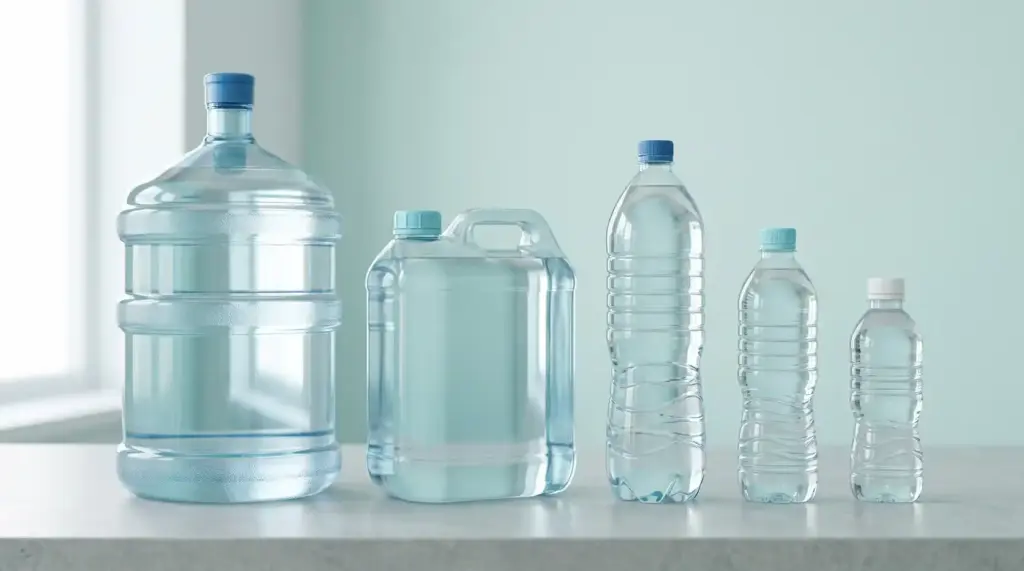
Bottled water provides another familiar example.
People sometimes focus on the plastic bottle itself while overlooking other factors:
- storage temperature;
- duration of storage;
- exposure to sunlight;
- bottle integrity;
- bottle reuse;
- and the quality of the water before bottling.
The presence of chemicals in a bottle does not automatically mean that the water contains harmful levels of them.
But storing food or beverages in conditions outside the intended use of the packaging can change exposure.
The sensible approach is not to panic about bottled water.
It is to store packaged foods and beverages according to the manufacturer’s instructions and avoid unnecessary heat exposure.
Packaging and the environment are connected
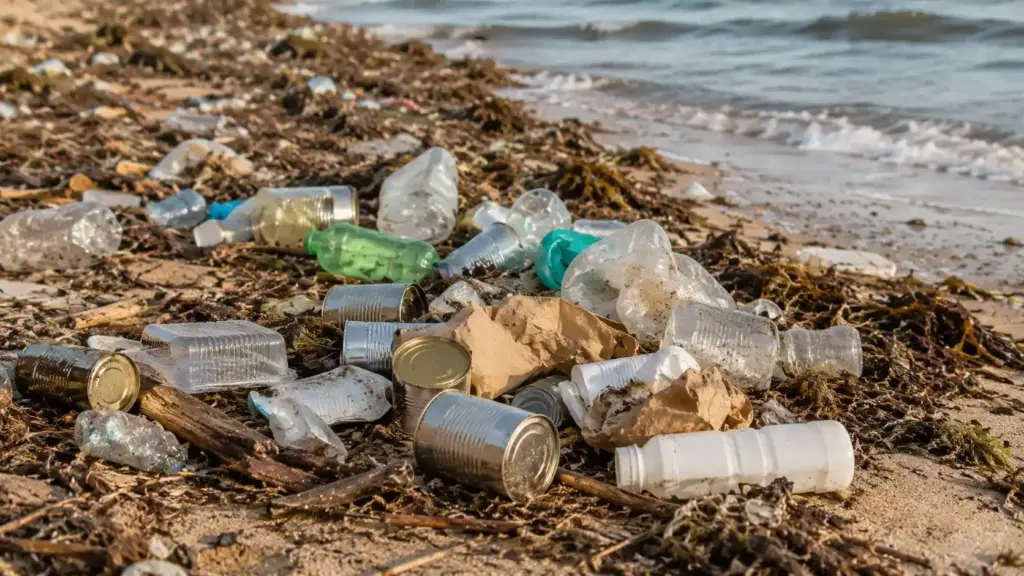
There is another reason this subject matters.
Some packaging chemicals can become environmental contaminants.
PFAS are a prominent example because of their persistence.
Plastic packaging also contributes to environmental plastic pollution, while some packaging materials can break down into smaller particles.
This creates an important distinction:
A material can be useful for food safety while creating environmental problems after disposal.
These are different questions.
A package can be excellent at protecting food and still be environmentally problematic.
Scientists are still studying the health implications of exposure to many chemicals associated with food-contact materials, as well as mixtures of chemicals and long-term low-level exposure.
This is particularly challenging because people are rarely exposed to one chemical from one package at a time.
Dietary exposure can involve numerous food-contact materials over a lifetime.
The science therefore continues to evolve.
What consumers can realistically do
You cannot personally analyze every chemical in every package.
You don’t need to.
A few practical habits can reduce unnecessary exposure without turning food packaging into a source of anxiety.
Choose appropriately packaged food.
Prefer packaging that is clearly intended for food contact.
Respect temperature instructions.
Do not microwave, bake, freeze, or heat packaging unless it is designed for that use.
Avoid direct food contact with printed materials.
Especially avoid wrapping hot, oily food in ordinary newspaper or other non-food-grade printed paper.
Don’t use mystery containers.
If you don’t know what a container was designed to hold, don’t use it for food.
Replace damaged containers.
Cracked, badly scratched, warped, or degraded containers deserve replacement.
Store food appropriately.
Heat, sunlight, moisture, and prolonged storage can change food-packaging interactions.
Don’t confuse “natural” with “safe.”
Paper, cardboard, and plant-based materials can contain coatings, inks, adhesives, or other substances.
Don’t confuse “plastic” with “toxic.”
Different plastics have different compositions and intended uses.
Don’t confuse “BPA-free” with “risk-free.”
One chemical does not define the safety of an entire packaging system.
What should you actually worry about?
The internet can make food packaging sound terrifying.
One article warns about plastic.
Another warns about cans.
Another warns about paper cups.
Another warns about aluminum foil.
Another warns about PFAS.
Another says glass is the only safe option.
This can create the impression that every food package is secretly poisoning us.
That is not what the evidence says.
Risk assessment is more useful than fear.
A chemical’s presence is not enough to determine whether it is harmful.
Health risk depends on:
Hazard × exposure × dose × duration × susceptibility.
A substance may be hazardous at sufficiently high exposure but present at negligible levels in a particular food.
Conversely, a substance with relatively low toxicity may become relevant if exposure is unusually high or prolonged.
This is why regulatory food-safety assessment focuses on exposure rather than simply identifying chemicals.
The most useful rule of all
You do not need to memorize every packaging chemical.
Instead, learn to recognize inappropriate use.
Hot food in unsuitable plastic.
Food touching printed newspaper.
Food stored in an unidentified container.
Damaged cans.
Packaging used beyond its intended conditions.
Disposable containers repeatedly exposed to high heat.
Food packaging stored in dirty or damp conditions.
These are practical situations where a little awareness can make a meaningful difference.
Question & Short Answer
Should I stop eating packaged food?
No.
Packaging is an essential part of modern food safety and distribution.
The goal is not to avoid packaging. It is to recognize that different materials have different properties and intended use, and to avoid unnecessary exposure created by using packaging incorrectly.
A package can protect food from one hazard while creating another potential exposure.
For example, a coating may protect canned food from direct contact with the metal, while the coating itself becomes part of the food-contact system.
This is why modern food packaging is evaluated as a system, not merely as the material visible from the outside.
Food-contact safety is based on more than asking whether a chemical exists in a package.
Scientific assessment considers:
- the identity and properties of the substance;
- how much can migrate;
- which foods are involved;
- temperature;
- duration of contact;
- likely dietary exposure;
- toxicological evidence;
- and vulnerable populations.
This is why the statement “this package contains chemicals” is scientifically incomplete.
Almost everything is made of chemicals.
The meaningful question is:
Which chemicals, at what exposure, under what conditions, and with what evidence of harm?
We do not know everything about food-contact chemicals
Food-contact materials can contain many intentionally added substances as well as substances that arise unintentionally during manufacturing, processing, degradation, recycling, or storage.
For some substances, toxicological and exposure data are extensive. For others, important uncertainties remain.
This does not mean that all poorly studied chemicals are dangerous. It means that the absence of strong evidence of harm should not automatically be interpreted as proof of complete safety, particularly when exposure is widespread or long-term.
Continued chemical monitoring, migration testing, exposure assessment, and toxicological research are therefore important parts of food-contact safety.
Frequently Asked Questions About Food Packaging
Can food packaging make food unsafe?
Potentially, but not simply because packaging contains chemicals. Food packaging is designed to protect food, and properly manufactured and appropriately used packaging generally serves an important food-safety function. Concerns arise when unsuitable materials are used, packaging is damaged or misused, or substances migrate into food at levels that may pose a health concern
Can chemicals from plastic packaging get into food?
Yes. Some substances can migrate from plastic and other food-contact materials into food. The extent of migration depends on factors such as the material, the type of food, temperature, and duration of contact. Finding that a substance has migrated does not automatically mean that the food is unsafe; the amount and toxicity of the substance matter.
Is hot food more likely to interact with its packaging?
It can be. Higher temperatures can increase the movement of some substances from food-contact materials into food. This is one reason why packaging intended for cold storage should not automatically be assumed to be suitable for heating or cooking.
Is canned food safe to eat?
Generally, yes, when the can is intact and properly manufactured and stored. Cans are designed to protect food from contamination and spoilage. The inside of many metal cans also has a protective lining that separates the food from the metal. Avoid cans that are severely swollen, leaking, badly rusted, or otherwise compromised.
Is wrapping food in newspaper safe?
Ordinary newspaper should not be treated as food packaging. Printing inks, paper additives, contaminants, and substances acquired during storage or handling may not be suitable for direct food contact. Paper specifically manufactured and intended for food contact is a different matter.
Does “BPA-free” mean that plastic packaging contains no potentially concerning chemicals?
No. “BPA-free” means that BPA has not been intentionally used or is not present above a specified threshold, depending on the applicable standard and product. It does not mean that the material contains no other chemicals or that every alternative substance has been proven risk-free.
Does detecting a chemical in food mean the food is dangerous?
Not necessarily. Detection alone does not establish harm. Risk assessment considers the substance’s properties, the amount present, how frequently exposure occurs, and how that exposure compares with levels associated with adverse effects.
Presence is not the same as risk.
Bottom Line
Food packaging is not simply the thing you throw away after eating.
It is part of the food environment.
Plastic, metal cans, paper, cardboard, glass, coatings, inks, adhesives, and multilayer materials all have different properties. Under appropriate conditions, they can protect food remarkably well. Under inappropriate conditions, substances can migrate into food, while poor packaging practices can contribute to contamination.
You do not need to fear every can, bottle, wrapper, or container.
But the next time you see hot food placed directly onto printed newspaper, a takeaway container being microwaved despite having no heating instructions, or food being stored in a mystery container, pause for a moment.
What touches your food matters too.
And sometimes, food safety begins before the first bite.


No comments yet
Be the first to share your thoughts, clinical perspective, or questions on this topic.