

We are generous with names.

We name the wound
before we know the pain,
the illness before the person,
the mistake before the story.

We give a stranger one word
and call it understanding.

Addict.
Infected.
Mad.
Barren.
Failed.

As though a human being
could be folded into a syllable,
pressed between the pages of a rumor,
and shelved away from the rest of us.

Perhaps that is the convenience of a label:
it saves us the trouble of looking closer.

We need not ask
what happened before the falling,
what darkness preceded the silence,
what hunger made the desperate choice,
what unseen battle
left someone too tired to explain.

The label has answered everything.

Or so we pretend.

And so a diagnosis becomes a disgrace,
a disability becomes a deficiency,
a history becomes a life sentence,
and a wound that needs tending
becomes a reason to stand apart.

We build our little fences
with whispers, glances, and laughter.
We call them standards.
We call them caution.
We call them what people will say.

Then we wonder
why the suffering hide,
why the sick arrive too late,
why the wounded learn to bleed in silence,
why some would rather endure a thousand pains
than confess to one.

We have made honesty expensive.

And sometimes, the illness is only the beginning.

The body carries one burden;
the world lays another upon it.
One pain asks to be treated,
the other teaches the sufferer
to be ashamed of needing treatment.

A person may survive the disease
and still be denied a place among us.
May find the courage to seek help
only to discover that the helping hand
has learned to hesitate.

What should have been a path to healing
becomes another place to hide.

Yet the person we exile
is still someone's child,
someone's parent,
someone who once laughed without calculation,
someone who has feared,
hoped, failed, and tried again.

Someone whose life,
like ours,
refuses to fit neatly
inside a single word.

And perhaps this is what unsettles us:

That the distance between them and us
is not always a distance at all.

Sometimes, it is a diagnosis
we have not yet received,
a loss we have not yet suffered,
a mistake we have not yet made,
a secret we have not yet needed to keep.

Sometimes, all that separates the condemned
from the condemning
is the accident of circumstance.

Still, we point.

As though pointing at another's darkness
could prove the purity of our own hands.

But a label cannot tell the whole story.
A whisper cannot measure a person's worth.
And shame, however loudly repeated,
does not become truth.

So perhaps we should learn
to pause before the naming,
to listen before the judging,
to see the person
before the thing we fear in them.

Not every wound is visible.
Not every struggle is chosen.
Not every difference is a defect.

And no human being
should have to become less visible
to remain worthy of belonging.

For the cruelest thing about stigma
is not merely that it hurts.

It is that it persuades the wounded
to carry our judgment
as though it were their own.

It makes them rehearse our accusations
in the privacy of their minds,
until the voice that once condemned them
no longer needs to speak.

And perhaps the quietest triumph over it
begins when someone,
having been taught to hide,
finally steps into the light—

not cured of every pain,
not cleared of every accusation,
not transformed into someone easier to accept,

but simply, stubbornly,
and entirely,

human.
About This Reflection
Stigma often begins with a label. A diagnosis, a personal struggle, a disability, or a past mistake becomes the defining feature of a person’s identity, leaving little room for the story behind it. In this reflection, The Convenience of a Label explores how prejudice and social judgment turn human vulnerability into a reason for exclusion. It also considers the quieter consequences of stigma, including shame, isolation, and the reluctance to seek medical care. Ultimately, it asks us to look beyond the names we assign and recognize the person whose dignity those names can obscure.
The Medical Context
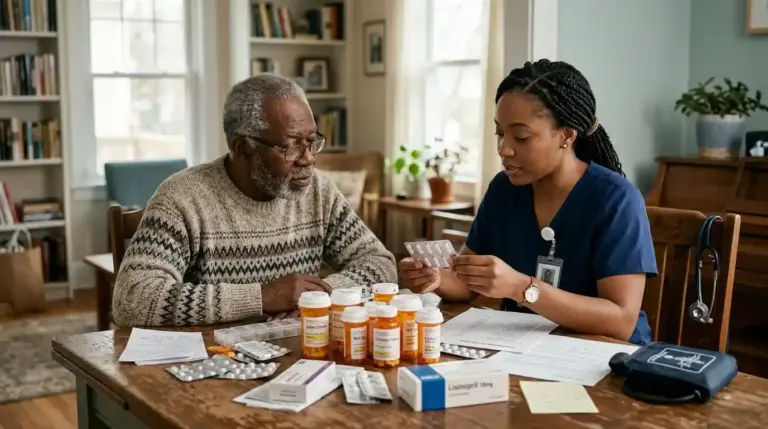
In medicine and public health, stigma refers to the negative attitudes, stereotypes, and discriminatory treatment directed at people because of a health condition, disability, personal circumstance, or perceived difference. It can affect people living with HIV, mental health conditions, substance use disorders, infertility, and many other experiences.
Stigma can have consequences beyond emotional distress. Fear of judgment may discourage people from disclosing symptoms, seeking medical attention, adhering to treatment, or accessing support. In healthcare settings, stigmatizing attitudes can also undermine trust, compromise communication, and contribute to unequal care.
Not all stigma is expressed through open hostility. It may appear in casual language, assumptions about personal responsibility, social exclusion, or the tendency to treat a diagnosis as a complete explanation of someone’s character. People who experience repeated discrimination may eventually internalize those judgments, believing themselves to be less deserving of dignity or belonging.
Reducing stigma requires more than asking people to be kind. It calls for accurate information, respectful language, fair access to care, protection of confidentiality, and recognition of each person’s circumstances and individuality. A health condition may describe one aspect of a person’s life, but it does not define their entire worth.
This reflection is a literary exploration of stigma and human dignity, not a clinical guide or a claim that all stigmatized experiences are the same. Its central message is simple: no one should have to conceal their suffering or surrender their sense of worth to be treated with compassion.


No comments yet
Be the first to share your thoughts, clinical perspective, or questions on this topic.