

Polypharmacy, the use of multiple medicines by one person is becoming increasingly common as people live longer and more people receive treatment for multiple health conditions. Imagine opening a medicine cabinet and finding tablets for blood pressure, diabetes, and cholesterol; medicines for pain or stomach discomfort; a vitamin supplement recommended by a friend; and an herbal preparation you have used for years. Each product may have a reason for being there. Some may be essential to your health, while others may no longer be necessary or may cause problems when combined. Taking several medicines can be appropriate and even lifesaving, but it can also increase the risk of side effects, harmful interactions, and medication errors. Understanding when multiple medicines work together to protect health, and when the treatment plan needs a closer look is an important step toward safer healthcare.
What Is Polypharmacy?

Polypharmacy means using multiple medicines at the same time. The term is often used when a person takes five or more medicines, although this threshold is not universal. Some definitions use a different number, and the count alone cannot determine whether a treatment plan is appropriate.
The term medicines includes more than prescription tablets. Depending on the context, it can also include injections, inhalers, eye drops, topical treatments, over-the-counter products, vitamins, minerals, and herbal preparations. These products may all matter when assessing the safety of a person’s treatment.
Appropriate and problematic polypharmacy
Taking several medicines is not automatically a problem. A person living with high blood pressure, diabetes, and cardiovascular disease may need several treatments because each medicine serves a different purpose. Combining medicines can improve disease control, prevent complications, and help people live longer or with fewer symptoms.
The concern arises when the overall treatment plan no longer serves the person’s needs. This may happen when medicines are prescribed without a clear ongoing purpose, when two products duplicate treatment unnecessarily, when side effects outweigh expected benefits, or when the burden of taking the medicines becomes greater than the benefit.
The distinction is important: the goal is not simply to reduce the number of medicines. It is to make sure that every medicine has a worthwhile purpose and that the combined treatment plan is as safe and manageable as possible.
Polypharmacy: The use of multiple medicines by one person, often defined in research as five or more, although definitions vary.
Appropriate polypharmacy: The use of multiple medicines when their expected benefits justify their risks and the treatment plan reflects the person’s needs and preferences.
Problematic polypharmacy: The use of multiple medicines when the overall regimen creates avoidable harm, includes unnecessary treatment, or is not sufficiently aligned with the person’s health goals.
Medicine count is a useful starting point for identifying people who may benefit from a medication review, but it is not a diagnosis of unsafe prescribing. A review should also consider why each medicine is used, whether it remains beneficial, possible interactions, monitoring needs, and the person’s ability to follow the regimen.
Why Polypharmacy Is Becoming More Common

There is no single reason why people take more medicines than they once did. Longer life expectancy, the increasing number of people living with chronic diseases, improved medical treatment, and the use of medicines to prevent future illness all contribute. In many cases, multiple medicines reflect progress in healthcare rather than poor prescribing.
1. People are living longer
As people age, they become more likely to develop conditions such as high blood pressure, arthritis, diabetes, osteoporosis, and heart disease. Each condition may require treatment, and medicines that were appropriate when first prescribed may continue for years.
Age alone does not make a medicine unnecessary. However, changes in kidney function, liver function, body composition, mobility, and sensitivity to certain drugs can alter how a person responds to treatment. A regimen that worked well several years ago may therefore need reassessment as the person’s circumstances change.
2. More people are living with multiple health conditions
Having two or more long-term health conditions is known as multimorbidity. Someone with diabetes, high blood pressure, and chronic kidney disease, for example, may need different medicines to manage the conditions and reduce the risk of complications.
The challenge is that treatment recommendations are often developed around individual diseases. When several guidelines are applied to one person without considering how the treatments interact, the combined regimen can become difficult to manage or may create risks that are not obvious when each medicine is considered separately.
3. Some conditions require combination treatment
Certain diseases are best managed with more than one medicine. A person may need several treatments to control cardiovascular disease, while HIV treatment commonly uses a combination of antiretroviral medicines. Cancer treatment, tuberculosis treatment, and organ-transplant care can also involve carefully selected combinations.
In these situations, the number of medicines is only part of the picture. The reason for each medicine, the evidence supporting the combination, the monitoring required, and the consequences of changing treatment are all important.
4. Different healthcare professionals may prescribe different medicines
A person may see a primary care clinician, a cardiologist, an endocrinologist, and another specialist. Each may prescribe a medicine for a legitimate reason, but no single clinician may have a complete picture of everything the person takes.
Problems can arise when medication lists are incomplete, changes are not communicated, or nobody has clear responsibility for reviewing the combined treatment plan. This is particularly important when a person moves between hospitals, clinics, pharmacies, and home care.
5. Self-medication adds to the total
Prescription medicines are not the only products that can contribute to polypharmacy. People may also use pain relievers, cold and flu products, antacids, vitamins, minerals, herbal preparations, or medicines recommended by friends and relatives.
These products may be omitted from medical records because the person does not consider them medicines or assumes they are harmless. As a result, a clinician reviewing the prescription list may not see the full combination.
6. Medicines are increasingly used to prevent future disease
Some medicines are prescribed not because a person feels unwell today, but because treatment can lower the risk of a future complication. Blood pressure medicines and cholesterol-lowering medicines are common examples.
This preventive role is important, but it also creates a need to reassess treatment over time. The likely benefit depends on factors such as a person’s underlying risk, other health conditions, treatment duration, possible adverse effects, and preferences. A preventive medicine should not be judged solely by whether the person can feel it working.
A medicine can be beneficial even when it produces no noticeable change in how a person feels. For example, treatment to lower high blood pressure or cholesterol may help reduce the risk of future cardiovascular complications. The value of preventive treatment depends on the person’s circumstances, expected benefit, potential harms, and treatment goals.
The important point is that polypharmacy often develops gradually. One medicine is started, another is added, and others remain on the list as health needs change. The resulting treatment plan may be entirely appropriate, but it should not be assumed to remain appropriate indefinitely.
When Is Taking Many Medicines Actually Appropriate?

Taking several medicines can be necessary, beneficial, and sometimes lifesaving. The number of medicines alone does not tell us whether a person is receiving good care. The more useful question is whether the combination is justified by the person’s health needs and whether its benefits continue to outweigh its risks.
Treating several different conditions
Consider someone living with diabetes, high blood pressure, and cardiovascular disease. They may need medicines to control blood glucose, lower blood pressure, manage cholesterol, and reduce the risk of specific cardiovascular complications.
Each medicine may address a different problem. Stopping one simply because the person already takes several others could leave an important condition undertreated.
The same principle applies when a person has chronic pain alongside other illnesses, or when a combination of medicines is needed to control symptoms and preserve everyday function. The treatment plan should be assessed as a whole, rather than judged by the number of items on the prescription.
Treating a single condition with a combination of medicines
Some conditions require several medicines because no single drug provides all the necessary effects.
Examples include:
- HIV: Combination antiretroviral therapy uses medicines with complementary actions to suppress the virus and reduce the risk of treatment failure.
- Tuberculosis: Drug-susceptible tuberculosis is treated with a combination regimen designed to treat the infection effectively and help prevent the development of resistance.
- Cancer: Depending on the cancer and treatment plan, a person may receive multiple anticancer medicines alongside medicines to prevent or manage treatment-related complications.
- Organ transplantation: Recipients commonly require combinations of immunosuppressive medicines to reduce the risk of organ rejection, alongside other treatments when indicated.
These examples demonstrate why reducing medicine counts without understanding the purpose of each drug can be dangerous. Changes to combination treatment should be guided by the relevant clinical team.
Preventing serious complications
A person may take several medicines to reduce the risk of events such as a heart attack, stroke, or complications of a chronic illness. These treatments may have different purposes, and their usefulness depends on the person’s diagnosis and individual risk.
For example, the appropriate medicines for someone who has previously had a heart attack may differ from those for someone who has heart failure or is at risk of developing cardiovascular disease. Similarly, diabetes medicines differ in their effects and risks, so they should not be treated as interchangeable simply because they address the same broad condition.
Preventive treatment should be reviewed when the person’s health, priorities, or expected benefits change. This is not a reason to stop beneficial medicines independently; it is a reason to make treatment decisions deliberately and with appropriate clinical guidance.
Taking five or more medicines means a person is being overtreated.
Five or more medicines can be appropriate when each has a clear purpose and the combined regimen is safe and manageable. Conversely, even one medicine can be inappropriate if it is no longer needed or its risks outweigh its benefits. The number of medicines can prompt a closer review, but it does not replace clinical judgment.
What makes a combination appropriate?
A well-designed regimen should meet several conditions:
- A clear purpose: Each medicine has a reason for being prescribed.
- A reasonable expectation of benefit: The treatment is likely to help with a condition, symptom, or meaningful health goal.
- Acceptable combined risks: The medicines have been considered together, including the possibility of interactions, overlapping effects, and adverse reactions.
- Appropriate monitoring: Necessary tests, follow-up, and precautions are understood and arranged.
- Practicality for the person: The schedule, costs, and treatment burden are manageable, taking the person’s circumstances and preferences into account.
Appropriate polypharmacy is not simply a matter of prescribing the right medicines individually. It requires considering how the medicines work together, what matters to the person taking them, and whether the overall plan remains worthwhile as health needs change.
The distinction between appropriate and problematic polypharmacy sets the foundation for understanding the risks. The next question is what happens when a medicine is no longer needed, a combination becomes unsafe, or the demands of treatment begin to outweigh its benefits.
When Does Polypharmacy Become Dangerous?

Polypharmacy becomes problematic when the combined treatment plan creates avoidable risks, includes medicines that are no longer needed, or becomes difficult to use safely. The problem may develop gradually, even when every medicine was reasonable to prescribe at the time it was started.
There is no single number of medicines at which a person’s treatment suddenly becomes dangerous. Risk depends on the medicines involved, their doses, the person’s health, how the medicines interact, and whether the regimen is being monitored appropriately.
When a medicine no longer has a clear purpose
A medicine may remain on a prescription list long after the original reason for using it has changed. For example, a treatment started for a temporary condition may be continued without a clear plan for reassessment. A medicine that was once helpful may also become less suitable after a new diagnosis, a change in kidney function, or the introduction of another drug.
This does not mean that long-term treatment is inherently inappropriate. Many chronic conditions require ongoing medication. The important question is whether each medicine still has a valid purpose and whether its expected benefits continue to justify its risks.
When medicines have overlapping effects
Two medicines may be prescribed for different reasons but produce similar effects. Sometimes this is intentional; in other cases, it can increase the likelihood of unwanted effects.
For example, taking multiple products that cause drowsiness may increase sedation and impair coordination. Using more than one medicine that can cause bleeding may also require careful assessment, although certain combinations are deliberately prescribed when the benefits justify the risks.
The issue is not simply whether two medicines are similar. It is whether their combined effects are appropriate for that person.
When the regimen becomes too complicated
A person may be expected to take several medicines at different times, with different food instructions, dose adjustments, or monitoring requirements. If the schedule becomes difficult to follow, missed doses, accidental double doses, and confusion can become more likely.
These difficulties should not automatically be interpreted as carelessness. A regimen may be unnecessarily complicated, instructions may be unclear, or the person may be managing treatment alongside work, caregiving, financial pressures, memory difficulties, or other health problems.
When the balance of benefits and harms changes
Treatment decisions are made using the information available at a particular time. As health changes, the balance can change too.
A medicine may become less beneficial when a condition improves, a person’s priorities change, or the time needed to realize a preventive benefit becomes less relevant to their circumstances. Conversely, a new diagnosis may make a previously unnecessary medicine important.
The appropriate response is an individualized review, not an assumption that every older medicine should be stopped or that every newly prescribed medicine should be continued indefinitely.
A useful medication review asks three questions about every medicine:
Why is it being used?
Is it still helping enough to justify its risks and burden?
What needs to happen for it to be used safely?
These questions help identify unnecessary treatment without overlooking medicines that provide important benefits.
How Polypharmacy Causes Harm

Medication-related harm can occur in several ways. A medicine may cause an unwanted reaction on its own, interact with another product, be taken incorrectly, or become unsuitable as a person’s health changes. Sometimes more than one of these factors contributes to the same problem.
1. Adverse drug reactions
An adverse drug reaction is an unwanted or harmful response to a medicine used at an appropriate dose. Reactions range from mild problems, such as nausea or a skin rash, to serious events requiring urgent treatment.
The possibility of an adverse reaction does not mean a medicine should be avoided whenever possible. Most treatments involve weighing expected benefits against potential harms. However, when a person takes several medicines, it may be harder to identify which one is responsible for a new symptom, especially if several medicines can cause similar effects.
2. Drug interactions
A drug interaction occurs when one medicine, food, supplement, or other substance changes the effect of another medicine. An interaction may increase or reduce a medicine’s effect, alter how the body processes it, or increase the likelihood of adverse reactions.
Some interactions are clinically important; others have little practical effect. Certain combinations are deliberately used in treatment, with appropriate dosing and monitoring. The presence of an interaction does not automatically mean a combination is forbidden.
The risk depends on the particular products, doses, timing, and the person’s health. This is one reason patients should disclose prescription medicines, over-the-counter products, vitamins, and herbal preparations when receiving medical care.
3. Duplicate treatment
Duplication occurs when a person takes two or more products with the same active ingredient or overlapping therapeutic effects without a clear reason.
This can happen when different brands contain the same ingredient, when a combination product is taken alongside one of its individual components, or when different prescribers unknowingly recommend overlapping treatments.
For instance, some cold and flu products contain an ingredient that is also sold separately as a pain reliever or fever reducer. Taking both without recognizing the overlap can lead to an excessive total dose.
4. Dosing and administration errors
A medicine may be prescribed correctly but still cause harm if it is taken in the wrong dose, at the wrong time, or by the wrong route. Errors can also occur when instructions are misunderstood, a dose is repeated accidentally, or an old prescription is followed after the regimen has changed.
Complex schedules can make these mistakes more likely. Changes in packaging, tablet appearance, or brand names can add to the confusion, particularly when a person takes many products.
5. Changes in kidney or liver function
The kidneys and liver help the body process or eliminate many medicines. When their function changes, some drugs or their active metabolites may accumulate, while the effects of other medicines may change in different ways.
The consequences depend on the specific medicine and the nature of the impairment. Some drugs require dose adjustment, closer monitoring, or an alternative treatment; others may be less affected.
A person’s medication needs may therefore change after an acute illness, dehydration, or the development or progression of kidney or liver disease. Prescribers and pharmacists need to consider these changes when assessing the safety of the complete regimen.
Medication-related harm does not always mean a prescription was wrong. Harm can arise from an adverse reaction, an interaction, duplicate ingredients, administration errors, or changes in the person’s health. Identifying the mechanism helps clinicians decide whether to adjust a dose, change a medicine, improve monitoring, simplify the regimen, or stop a treatment when appropriate.
The Hidden Consequences of Problematic Polypharmacy

The effects of problematic polypharmacy extend beyond individual side effects or drug interactions. A treatment plan can affect a person’s mobility, independence, finances, daily routine, and confidence in healthcare. These consequences may develop slowly and can be overlooked when each medicine is considered separately.
Falls and loss of independence
Some medicines can cause dizziness, low blood pressure, drowsiness, impaired coordination, or muscle weakness. When these effects occur together, they may increase the risk of falls, particularly in people who already have mobility difficulties or are vulnerable to injury.
A fall can have consequences beyond the immediate injury. Fear of falling may lead someone to reduce physical activity, avoid going outdoors, or depend more heavily on family members. After a serious fall, a person may experience a prolonged loss of independence.
However, a fall in someone taking several medicines does not prove that the medicines caused it. Illness, environmental hazards, visual impairment, and other factors may contribute. A medication review can help identify potentially modifiable risks alongside these other causes.
Confusion and changes in alertness
Some medicines can affect attention, memory, alertness, or behavior. These effects may be particularly important in older adults and in people who are already unwell or vulnerable to confusion.
Sudden confusion should never automatically be blamed on medication or dismissed as a normal part of aging. It can also indicate an acute illness, a metabolic disturbance, or another urgent medical problem. A new or marked change in mental state requires prompt assessment.
The financial burden
Medicines can be expensive, particularly when a person needs several long-term prescriptions. The cost may lead someone to delay refills, split tablets without advice, skip doses, or choose between medicines and other essentials.
These decisions can have health consequences, but they often reflect difficult circumstances rather than a lack of concern for one’s health. Clinicians can sometimes help by reviewing whether every medicine remains necessary, considering suitable lower-cost alternatives, and simplifying treatment where appropriate.
The burden of managing treatment
A complicated regimen can take considerable time and effort. A person may need to organize tablets, remember different schedules, arrange refills, attend monitoring appointments, and manage food or timing restrictions.
This is known as treatment burden: the work a person must do to manage their healthcare. It can be especially demanding when someone is already coping with chronic illness, disability, work, or caregiving responsibilities.
The burden matters because a theoretically effective treatment plan may be difficult to sustain in everyday life. Discussing practical difficulties with a healthcare professional can help identify a more manageable approach without sacrificing essential treatment.
When treatment begins to undermine quality of life
The purpose of medical treatment is to improve health, prevent complications, relieve suffering, or help a person maintain meaningful daily activities. If a regimen causes persistent adverse effects, consumes a disproportionate amount of time, or conflicts with the person’s priorities, its overall value deserves reassessment.
That does not mean symptom relief should always take priority over disease prevention, or that long-term treatment is inappropriate when a person feels well. Rather, good prescribing considers clinical outcomes alongside the person’s preferences, circumstances, and quality of life.
A medication plan can be clinically reasonable on paper yet difficult to live with. Good medication management considers not only whether medicines work, but also whether the person can use them safely, afford them, and sustain the regimen without an unacceptable burden.
The Prescribing Cascade: When One Medicine Leads to Another
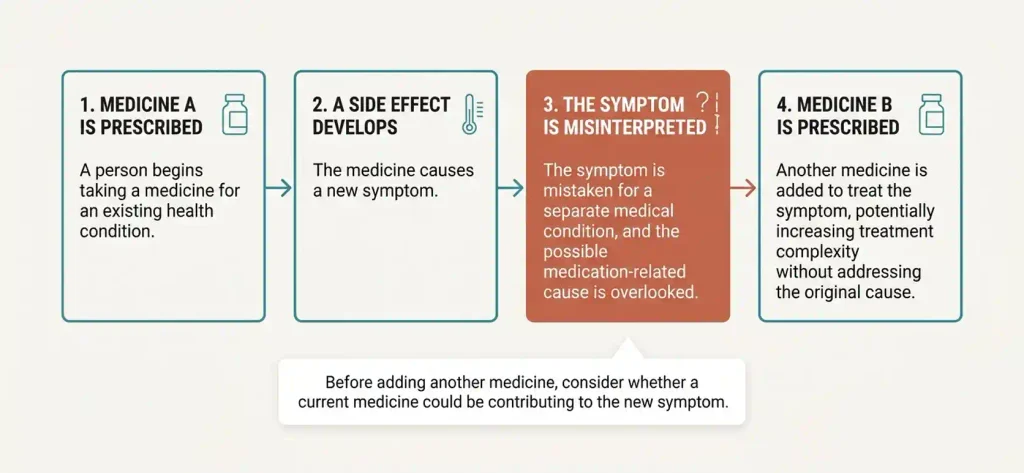
A prescribing cascade occurs when an adverse effect of a medicine is mistaken for a new medical condition, leading to the prescription of another medicine to treat that effect. The second medicine may then cause further problems, potentially resulting in additional prescriptions.
Prescribing cascades do not always happen because a clinician has made an obvious mistake. The symptoms of an adverse drug reaction can resemble those of a genuine illness, and the connection between a symptom and a medicine may not be immediately apparent.
How a prescribing cascade develops
Consider a hypothetical example:
- A person starts a medicine for a legitimate health condition.
- The medicine causes a new symptom, such as ankle swelling.
- The swelling is interpreted as a separate condition rather than a possible adverse effect.
- Another medicine is prescribed to address the swelling.
- The additional medicine creates new monitoring requirements, adverse-effect risks, or treatment burden.
In some circumstances, the second medicine may be appropriate. In others, it may be more useful to reconsider the original treatment, adjust its dose, or select an alternative.
An example: ankle swelling
Certain blood pressure medicines, including some calcium channel blockers, can cause ankle swelling. If this effect is mistaken for a separate fluid-retention problem, a person might be prescribed a diuretic unnecessarily.
The correct response depends on the person’s clinical circumstances. A clinician may need to assess other possible causes of swelling, review the original medicine and its dose, and decide whether a treatment change is appropriate. Ankle swelling should not automatically be attributed to medication because heart, kidney, venous, and other conditions can also cause it.
How prescribing cascades can be prevented
The most useful safeguard is to consider whether a new symptom could be related to a medicine that was recently started, increased, or changed.
When a symptom appears, clinicians can review its timing, examine other possible explanations, and consider whether the suspected medicine is known to cause that effect. Patients can help by reporting when the symptom began and whether it followed a medication change.
The goal is not to assume that every new symptom is a side effect. It is to avoid adding treatment before considering whether an existing medicine might be contributing to the problem.
Before prescribing a new medicine for a newly developed symptom, consider the possibility of a prescribing cascade. The symptom may reflect a new illness, an adverse effect, or a combination of factors. Establishing the likely cause can prevent unnecessary treatment while ensuring that genuine medical conditions are not overlooked.
The prescribing cascade illustrates a broader lesson: medicines should not be assessed only one at a time. A new symptom, a new prescription, or a change in health can alter the balance of an entire treatment plan.
Medicines That Require Extra Care

All medicines can cause adverse effects, but some require particular attention because of their potential for serious harm, their interactions with other treatments, or the monitoring needed to use them safely. Their presence on a medication list does not automatically mean they are inappropriate. The key is to understand the risks and manage them in the context of the person’s overall health.
Anticoagulants and antiplatelet medicines
Anticoagulants and antiplatelet medicines reduce the risk of harmful blood clots, but they work in different ways. Anticoagulants interfere with the blood-clotting process, while antiplatelet medicines reduce the tendency of platelets to clump together.
Both can increase bleeding risk. The risk may become more important when these medicines are combined with certain pain relievers or with other medicines that affect bleeding. However, some combinations are prescribed deliberately for specific conditions and periods, when the expected benefit justifies the risk.
People taking these medicines should know which treatment they use, follow the prescribed instructions, and ask a clinician or pharmacist before adding an over-the-counter medicine or supplement. Unusual or persistent bleeding should be assessed promptly; severe bleeding requires emergency care.
Medicines that can cause low blood glucose
Some diabetes medicines can cause hypoglycemia, or blood glucose that is too low. Insulin and certain medicines that stimulate insulin release are particularly important examples.
The risk depends on the medicine, dose, meal patterns, physical activity, kidney function, and other clinical circumstances. A person who eats less than usual, becomes acutely ill, or has a change in kidney function may need their treatment reassessed.
Not all diabetes medicines carry the same risk of hypoglycemia. It is therefore important to consider the specific medicine rather than treating every glucose-lowering treatment as equally risky.
Sedatives, sleeping medicines, and opioids
Medicines that cause sedation can impair alertness, reaction time, balance, and coordination. Opioids can also cause respiratory depression, in which breathing becomes dangerously slow or inadequate.
Combining opioids with certain sedatives or other central nervous system depressants can increase the risk of profound sedation, overdose, and breathing difficulties. The risk is especially concerning when the combination is not carefully managed.
These medicines may still be necessary for some people. When they are prescribed together, the clinician should assess the indication, doses, duration, other medicines, and individual risk factors. Patients should not add alcohol or unapproved sedating products to the regimen, and should seek urgent help for severe drowsiness, difficulty waking, or slow or difficult breathing.
Nonsteroidal anti-inflammatory drugs (NSAIDs)
NSAIDs, such as ibuprofen and naproxen, are commonly used to treat pain and inflammation. Depending on the medicine and the person’s circumstances, they can increase the risk of stomach ulcers or bleeding, affect kidney function, raise blood pressure, or worsen certain cardiovascular conditions.
The risks may be more significant in people with kidney disease, a history of gastrointestinal bleeding, heart failure, or treatment with particular blood pressure medicines, diuretics, anticoagulants, or antiplatelet medicines.
Using an over-the-counter NSAID does not make these risks disappear. Before adding one to an existing regimen, it is sensible to check with a pharmacist or clinician, especially when taking other medicines or living with a chronic condition.
Corticosteroids
Corticosteroids, such as prednisolone, are used to treat a range of inflammatory and immune-related conditions. Their risks depend on the specific drug, dose, route, duration, and the person’s health.
Longer or higher-dose systemic treatment can contribute to problems such as elevated blood glucose, increased infection risk, bone loss, and other adverse effects. These risks do not apply equally to every corticosteroid preparation; for example, the systemic effects of a short course of oral treatment may differ from those of a topical cream or an inhaled medicine.
Do not stop long-term systemic corticosteroid treatment abruptly without medical advice. Depending on the dose and duration, gradual reduction may be necessary to allow the body’s own cortisol production to recover and to reduce the risk of withdrawal or disease flare.
- Assuming an over-the-counter pain reliever is safe to combine with any prescription.
- Treating all diabetes medicines as though they carry the same risk of low blood glucose.
- Assuming that two medicines affecting blood clotting should never be used together, even when a clinician has prescribed the combination for a specific reason.
- Stopping a corticosteroid suddenly without checking whether tapering is needed.
- Focusing on one medicine’s side effects without considering how other medicines or the person’s health may change the risk.
Practical reminder: The safety of a medicine depends on its specific properties, how it is used, and the person taking it. Ask a qualified healthcare professional to review a potentially risky combination rather than stopping or changing treatment independently.
Don’t Forget Vitamins, Herbal Medicines, and Supplements

A medication review is incomplete if it considers only prescription medicines. Vitamins, minerals, herbal preparations, traditional remedies, and over-the-counter products can all contribute to the total treatment burden. Some provide important benefits, but others may be unnecessary, duplicate existing treatment, or interact with medicines.
The fact that a product is described as natural does not automatically make it safe. Its effects depend on its ingredients, dose, quality, and the person using it.
The same ingredient may appear in several products
A person may take a multivitamin, a separate vitamin D supplement, and another preparation containing vitamin D without realizing that the amounts overlap. Similarly, some cold and flu remedies contain ingredients that are also sold as individual medicines.
The important consideration is the total amount of each active ingredient, not simply the number of products or the claims printed on their packaging. Excessive intake of some vitamins and minerals can cause harm, and the safe or appropriate amount depends on the nutrient and the person’s circumstances.
Herbal products can affect prescribed medicines
Some herbal products can alter how medicines are absorbed, metabolized, or eliminated. Others may have effects that overlap with prescribed treatments, potentially changing the likelihood of adverse reactions.
The nature and clinical importance of these interactions vary considerably. Evidence is stronger for some products and interactions than for others, so it is not accurate to assume that every herbal preparation is dangerous, or that all such products are harmless.
Product labels do not tell the whole story
Products with similar names or advertised purposes may differ in their ingredients, quantities, formulations, and quality controls. A product marketed for sleep, energy, immunity, or joint health may also contain additional ingredients that are not immediately obvious from its front label.
When comparing products, look at the full ingredient list, the amount of each ingredient per serving, the recommended serving size, and any warnings. If the formulation is unclear or the product contains multiple active ingredients, ask a pharmacist or other qualified healthcare professional to help assess it.
Tell your healthcare professional what you actually use
When asked about medicines, include products purchased without a prescription, supplements, herbal preparations, and traditional remedies. If possible, bring the packaging or a clear photograph of the complete label.
This information is particularly important before surgery, when starting a new medicine, during pregnancy, or when managing a condition in which interactions could have serious consequences.
Keep a single, up-to-date list of all the products you use, including prescription medicines, over-the-counter drugs, vitamins, minerals, and herbal preparations. Record the product name, dose, how often you take it, and why you use it. Update the list whenever something changes, and share it with your healthcare professionals.
One Patient, Many Prescribers: Why Communication Matters

A person receiving care from several healthcare professionals may have a legitimate reason for each prescription but still end up with a treatment plan that has not been reviewed as a whole.
A cardiologist may prescribe treatment for heart disease, an endocrinologist may manage diabetes, and a primary care clinician may treat pain or another chronic condition. Each professional has an important role, but the combined regimen can become difficult to coordinate if information is incomplete or changes are not communicated.
How gaps in communication develop
Problems can occur when:
- One clinician does not know about a medicine prescribed by another.
- A patient starts a new medicine but continues an older one that was intended to be replaced.
- A hospital changes the treatment plan, but the updated list does not reach the patient’s usual clinician.
- A medicine is discontinued for a specific reason, yet it remains on a later prescription list.
- Different clinicians assume that someone else is responsible for reviewing the full regimen.
These problems are not limited to hospitals or specialist care. They can also arise when people visit different pharmacies, change healthcare providers, or move between care settings.
Why transitions of care deserve particular attention
Leaving hospital, moving to a new care facility, or changing from one clinical team to another can create opportunities for medication errors. Medicines may be started, stopped, or adjusted during a period when several professionals are involved.
Medication reconciliation – the process of comparing the medicines a person is actually taking with the medicines documented or prescribed at a transition of care – helps identify unintended differences.
The aim is not to make every medication list identical regardless of clinical circumstances. It is to establish which medicines should be continued, changed, or stopped and ensure that those decisions are clearly communicated.
Who should coordinate the overall plan?
The best arrangement depends on the healthcare system and the person’s circumstances. A primary care clinician may coordinate care, while a specialist or pharmacist may lead particular aspects of medication management.
What matters is that the patient knows whom to contact with questions and that there is a reliable way to communicate medication changes. Patients and caregivers can help by maintaining an accurate list and asking whether a newly prescribed medicine replaces or supplements an existing one.
Medication safety is a shared responsibility. Each prescriber needs accurate information about the patient’s treatment, and medication changes should be communicated across care settings. A complete medication list helps, but it must be paired with a clear plan for who reviews the medicines and follows up on changes.
When the Medicine Cabinet Has No Gatekeeper

Not everyone obtains medicines through a coordinated healthcare system. Some people buy medicines directly from pharmacies or informal vendors, reuse old prescriptions, take products recommended by friends, or use leftover medicines from previous illnesses. Others combine prescribed treatment with traditional remedies or products purchased online.
These choices can arise for many reasons, including cost, limited access to healthcare, difficulty obtaining appointments, cultural practices, or the belief that a familiar symptom does not require professional assessment. The problem is not that every medicine obtained outside a formal consultation is necessarily inappropriate. It is that medicines can accumulate without anyone reviewing the complete combination, checking whether each product is suitable, or recognizing when treatment needs to change.
How medicines accumulate without a complete review
A person might purchase a pain reliever for recurring headaches, use an old prescription for stomach discomfort, take a supplement recommended by a relative, and continue medicines prescribed for a chronic condition. Each product may appear reasonable in isolation, but the combined regimen may contain duplicate ingredients, unnecessary treatment, or interactions that have not been considered.
The same problem can occur when someone repeatedly treats a symptom without investigating its cause. Temporary relief may delay the diagnosis of an underlying condition, while continued use of a medicine may introduce additional risks.
The danger of treating familiar symptoms without reassessment
A medicine that was appropriate for one episode of illness may not be suitable for a later episode, even if the symptoms appear similar. Different conditions can produce similar symptoms, and the appropriate treatment may depend on age, pregnancy status, other illnesses, allergies, current medicines, and the cause of the symptoms.
Antibiotics provide a useful example. They are effective against susceptible bacterial infections but do not treat viral illnesses such as the common cold. Using leftover antibiotics or obtaining them without appropriate assessment can expose someone to unnecessary adverse effects and contribute to antimicrobial resistance.
Similarly, repeated use of pain relievers may mask a problem that needs investigation, while some products can cause gastrointestinal bleeding, kidney injury, or other complications in susceptible people.
When access barriers influence medicine use
People may rely on self-medication because professional healthcare is expensive, distant, difficult to access, or inconvenient. Advising everyone to consult a doctor before every medicine purchase may therefore be unrealistic.
Pharmacists and other appropriately qualified healthcare professionals can help people identify potential interactions, understand product labels, choose suitable nonprescription treatments, and recognize symptoms that require medical assessment. Where formal healthcare is difficult to access, improving access to reliable advice is an important part of medication safety.
How to make the medicine cabinet safer
You do not necessarily need to discard every medicine you do not currently use. Instead:
- Keep an up-to-date list of the medicines and health products you actually take.
- Check active ingredients to avoid accidentally doubling up on the same medicine.
- Do not use another person’s prescription or assume an old prescription is still appropriate.
- Check with a pharmacist or clinician before adding a product that may interact with existing treatment.
- Store medicines according to their instructions and keep them away from children.
- Dispose of expired or unwanted medicines through an appropriate take-back or disposal service where available.
- Seek medical assessment when symptoms persist, recur, worsen, or suggest a serious illness.
A medicine cabinet should be a place to store medicines safely, not a substitute for reviewing them. Periodically check what you have, identify products you currently use, and ask a pharmacist or clinician about anything whose purpose, suitability, or expiry is unclear. Do not stop essential long-term medicines simply because they have been stored for a long time.
Who Is Most at Risk?

Anyone taking medicines can experience an adverse reaction or medication error. However, certain circumstances can make problematic polypharmacy more likely or increase the consequences of a mistake.
Risk is not determined by age or medicine count alone. It depends on the person’s health, the specific drugs involved, the complexity of treatment, and the support available to use the medicines safely.
Older adults
Older adults are more likely to live with several chronic conditions and to take multiple medicines. Age-related changes in kidney function, body composition, and sensitivity to some drugs can also affect how medicines work.
Some medicines may increase the risk of falls, confusion, or other complications in susceptible older adults. The American Geriatrics Society Beers Criteria can help clinicians identify potentially inappropriate medicines for older adults in the United States, but the criteria are not a substitute for individualized assessment and should not be treated as a universal list of medicines that must never be used.
People living with multiple chronic conditions
When several health conditions require treatment, the number of medicines may increase, and the recommendations for one condition may complicate the management of another.
For example, a medicine that helps one condition may worsen another, or the combined treatment may require additional monitoring. This does not mean that people with multiple conditions should receive less treatment by default. It means their medicines should be assessed together, with attention to competing risks and personal priorities.
People with kidney or liver disease
Kidney or liver impairment can alter the way certain medicines are handled by the body. Depending on the medicine, this may require dose adjustment, additional monitoring, or selection of a different treatment.
The degree of risk varies. A diagnosis of kidney or liver disease does not mean that all medicines are unsafe, but it does make accurate medication information and appropriate clinical review especially important.
People who have recently experienced a major health change
A new illness, hospital admission, surgery, significant weight change, reduced food intake, or deterioration in organ function can alter a person’s medication needs. A regimen that was appropriate before the change may need reassessment afterward.
People managing complex treatment with limited support
Medication problems may also be more likely when a person has difficulty understanding instructions, remembering doses, accessing refills, paying for treatment, or attending follow-up appointments.
These are not personal failings. They are practical barriers that healthcare teams should consider when designing a treatment plan.
Higher risk should prompt a more careful review, not an automatic reduction in treatment. The aim is to identify medicines whose risks can be reduced, remove unnecessary complexity where possible, and preserve treatments that provide meaningful benefit.
The Human Side of Polypharmacy

Behind every medication list is a person trying to live their life. For some, multiple medicines offer symptom relief, better disease control, and greater independence. For others, the daily routine can become exhausting, expensive, confusing, or frightening.
A person may worry about taking so many tablets, experience unpleasant side effects, struggle to open containers, or feel embarrassed about forgetting doses. Another may be reluctant to question a prescription because they fear appearing difficult or disrespectful toward a healthcare professional.
These experiences matter. A treatment plan that ignores them may be less likely to fit the person’s life, even when its individual prescriptions are clinically reasonable.
People may have different priorities
One person may prioritize living as long as possible, even if treatment requires a demanding routine. Another may place greater importance on remaining alert, avoiding falls, reducing pain, or being able to carry out everyday activities.
These priorities can also change over time. Shared decision-making helps clinicians and patients discuss the likely benefits and risks of treatment alongside what matters most to the person.
Asking questions is part of safe care
Patients should feel able to ask why a medicine is needed, how long it is expected to be used, what side effects to watch for, and whether there are simpler ways to manage the regimen.
A question does not imply that a medicine is unnecessary. It opens a discussion about the purpose and practicalities of treatment. Clinicians can then explain the reasoning, address concerns, and decide together whether a review or adjustment is appropriate.
Caregivers need a clear picture too
Family members and caregivers may help organize medicines, collect prescriptions, or notice changes in alertness and daily function. With the person’s agreement and appropriate privacy safeguards, involving them in medication discussions can improve understanding and continuity of care.
However, support should not remove the patient’s voice. Wherever possible, the person taking the medicines should remain involved in decisions about their treatment.
Good medication management is not measured only by the number of prescriptions or by laboratory results. It also considers whether treatment supports the person’s goals, whether the regimen is manageable, and whether the person feels able to raise concerns and participate in decisions.
Symptoms That May Suggest Medication Problems

Medication-related problems do not always produce obvious symptoms. Some develop gradually, while others appear soon after a medicine is started, its dose is changed, or another product is added. A new symptom may be an adverse drug reaction, an interaction, a sign that a medicine is having too strong or too weak an effect, or an unrelated medical problem.
The timing can provide useful clues, but it cannot establish the cause on its own.
Changes worth discussing with a healthcare professional
Depending on the medicines involved, possible warning signs include:
- New or worsening dizziness, lightheadedness, or faintness.
- Unusual sleepiness, reduced alertness, or difficulty concentrating.
- New confusion or changes in memory or behavior.
- Repeated falls, unsteadiness, or difficulty walking.
- Persistent nausea, vomiting, constipation, or diarrhea.
- New swelling, muscle weakness, or unusual fatigue.
- Unexpected bruising or bleeding.
- Symptoms suggesting that a condition is no longer adequately controlled.
These symptoms have many possible causes. They should not automatically be attributed to medication, and a person should not stop a prescribed treatment solely because a symptom appears on this list.
Pay attention to changes in timing
A symptom that begins shortly after starting a medicine or increasing its dose may warrant particular attention. The same applies when a new medicine is added to an existing regimen, an over-the-counter product is introduced, or a person’s eating habits, fluid intake, or health status changes.
However, some adverse effects appear only after prolonged use, and some interactions may not cause immediate symptoms. The absence of a clear temporal connection does not rule out a medication-related problem.
When discussing a suspected problem, it can help to record when the symptom began, which medicines were recently changed, how the medicines are taken, and whether anything makes the symptom better or worse.
A new symptom in someone taking multiple medicines deserves a careful assessment of both medication-related and non-medication causes. The goal is to identify the cause without overlooking a serious illness or unnecessarily stopping a beneficial treatment.
When to Seek Emergency Medical Care
Some symptoms may indicate a medical emergency, whether or not medication is the cause. Seek emergency medical assistance for:
- Severe difficulty breathing, or swelling of the tongue or throat.
- Suspected overdose or a potentially dangerous medication error.
- Vomiting blood, severe uncontrolled bleeding, or black, tarry stools accompanied by concern for bleeding.
- Seizures, collapse, or sudden marked confusion.
- Possible stroke symptoms, such as sudden facial drooping, weakness of an arm, or difficulty speaking.
- Severe drowsiness, difficulty waking, or slow or inadequate breathing, especially after taking opioids or sedatives.
Do not wait for a routine appointment when these warning signs occur. Follow emergency-service instructions and, if safe to do so, bring the medicine packaging or a list of the products taken. Do not induce vomiting or attempt to counteract a suspected overdose with another medicine unless instructed by a qualified emergency professional.
How Doctors Reduce the Risks of Polypharmacy

Reducing medication-related harm begins with understanding the complete treatment plan. A medication review is not simply a search for medicines to remove. It is a structured assessment of whether the medicines a person uses are appropriate, effective, safe, and manageable.
1. Establish an accurate medication list
The clinician needs to know what the person actually takes, not just what appears in the medical record. This includes prescription medicines, over-the-counter products, supplements, herbal preparations, and medicines prescribed by other healthcare professionals.
The review should identify the product, dose, frequency, reason for use, and any recent changes. Where records disagree, the discrepancies should be clarified rather than assumed to be harmless.
2. Reassess the purpose of each medicine
For every medicine, the clinician should consider:
- What condition, symptom, or health goal is it intended to address?
- Is there evidence that it is helping?
- Does the original reason for prescribing it still apply?
- Are there adverse effects or risks that warrant reconsideration?
- Does it remain consistent with the person’s current health needs and preferences?
A medicine without an obvious purpose may need investigation, but lack of an immediately apparent benefit does not prove that it is unnecessary. Some treatments prevent complications that the person cannot feel developing.
3. Check for interactions, duplication, and monitoring needs
The review should consider the combined effects of medicines, overlapping ingredients, dose-related risks, and changes in kidney or liver function where relevant.
It should also identify any necessary monitoring, such as blood tests, blood pressure measurements, or assessments of treatment response. The exact checks depend on the medicines and the person’s conditions.
4. Simplify the regimen when appropriate
Sometimes a regimen can be made easier to follow without compromising treatment. Options may include reducing unnecessary doses, aligning administration times, considering a suitable alternative formulation, or removing a medicine that is no longer justified.
Simplification must be individualized. Combining medicines into fewer doses or using a combination product is not always safer or more convenient, particularly if the individual ingredients require different adjustments.
5. Agree on a follow-up plan
A medication change is not complete simply because a new prescription has been issued or an old medicine has been stopped. The plan should identify what to monitor, when to review the person’s response, and whom to contact if problems arise.
Patients should know which changes have been made, why they were made, and whether any medicine needs to be reduced gradually.
A useful medication review brings together an accurate medicine list, the purpose and benefits of each treatment, potential harms, the person’s priorities, and a practical monitoring plan. The outcome may be to continue, adjust, replace, simplify, or stop particular medicines, not necessarily to reduce the total count.
Deprescribing: When Stopping a Medicine Can Be Good Medicine

Deprescribing is the planned, supervised process of reducing or stopping a medicine when its potential harms outweigh its benefits, when it is no longer needed, or when it no longer fits the person’s treatment goals.
It is an important part of good prescribing, but it is not the opposite of treatment. Starting, continuing, adjusting, and stopping medicines are all decisions that should be guided by the same question: what is most likely to benefit this person now?
Why might a medicine be deprescribed?
A clinician may consider deprescribing when:
- The condition for which the medicine was prescribed has resolved.
- The medicine no longer provides a meaningful benefit.
- Adverse effects or interactions have become unacceptable.
- The person’s health has changed, altering the balance of benefits and risks.
- A medicine duplicates another treatment without a clear reason.
- The burden of treatment is inconsistent with the person’s priorities.
- A preventive treatment’s expected benefit no longer justifies its risks in the person’s circumstances.
Not every situation will lead to stopping the medicine. Sometimes a dose adjustment or a safer alternative is more appropriate.
Why medicines sometimes need to be reduced gradually
Some medicines can be stopped without a prolonged reduction schedule, while others require tapering. Abrupt withdrawal from certain treatments can cause withdrawal symptoms, rebound effects, or a flare of the condition being treated.
The appropriate approach depends on the particular medicine, dose, duration of use, and clinical circumstances. Long-term corticosteroids, certain antidepressants, benzodiazepines, and some other medicines may require particular care when reducing or stopping treatment.
Patients should not attempt to deprescribe themselves based on general lists of potentially inappropriate medicines. A clinician or pharmacist can help establish whether a change is suitable and how to carry it out safely.
Deprescribing requires monitoring too
After a medicine is reduced or stopped, the person may need follow-up to determine whether symptoms return, a condition worsens, or withdrawal effects develop. Sometimes the original medicine needs to be restarted or replaced.
The success of deprescribing should be judged by the person’s health, safety, function, and treatment goals, not simply by how many medicines remain.
Stopping a medicine is a sign that previous treatment was a mistake.
A medicine that was beneficial at one point may become unnecessary or less suitable as circumstances change. Reviewing and, where appropriate, stopping treatment is part of responsible prescribing. Equally, stopping a beneficial medicine without a sound reason can cause harm.
Does deprescribing always improve outcomes?
Not necessarily. Reducing unnecessary treatment can lessen medication burden and may reduce certain adverse effects, but the benefits and risks vary according to the medicine, the patient, and the reason for the change.
Deprescribing should therefore be treated as an individualized clinical decision, supported by evidence where available, shared decision-making, and appropriate follow-up. It should not be presented as a guaranteed way to prevent hospitalization, prolong life, or improve every health outcome.
How to Prevent Problems From Polypharmacy

Patients and caregivers can help reduce medication-related risks, although responsibility does not rest on them alone. Healthcare professionals and health systems also need reliable prescribing, communication, dispensing, and monitoring processes.
Keep one current list of everything you take
Include prescription medicines, over-the-counter products, vitamins, minerals, herbal preparations, and other supplements. Record the name, dose, frequency, and reason for use, and update the list after every change.
Keep the list accessible during appointments, hospital visits, and pharmacy consultations. If you use several healthcare providers, share the updated list with each of them.
Understand why each medicine is being used
You do not need to memorize every pharmacological detail, but you should be able to identify the purpose of each medicine or know where to find that information.
Ask your healthcare professional to explain any medicine whose purpose is unclear. If a medicine was started temporarily, ask whether there is a planned review or stopping point.
Check before adding another product
Before starting an over-the-counter medicine, supplement, or herbal preparation, check whether it is suitable alongside your current treatment. This is particularly important if you use anticoagulants, medicines that can cause low blood glucose, sedatives, or treatments affected by kidney or liver function.
Do not assume that two products are safe together because they are sold under different brand names or because one is described as natural.
Avoid sharing medicines
A medicine prescribed for one person may be unsuitable for another, even when their symptoms appear similar. Differences in diagnosis, allergies, other medicines, kidney function, pregnancy status, and other factors can change the risks.
Use medicines only as directed for the intended person, and obtain professional advice before making changes.
Make the regimen workable
If you struggle to remember doses, open containers, obtain refills, afford treatment, or follow a complicated schedule, tell your healthcare professional. Practical adjustments may help, such as a simpler schedule, an appropriate reminder system, or a different formulation.
Pill organizers and reminder apps can help some people, but they should be used with care when medicines change frequently or when a medicine has special storage or administration requirements.
Report changes and keep follow-up appointments
Inform your healthcare professional about new symptoms, changes in how you take your medicines, and any new products you have started. Attend recommended monitoring appointments and ask what to do if a dose is missed or a side effect occurs.
Never double a dose to make up for a missed one unless the specific medicine’s instructions or a qualified professional tells you to do so.
Before leaving a medical appointment, make sure you understand three things:
- Which medicines should you take now?
- Which medicines have been started, changed, or stopped and why?
- What symptoms, tests, or follow-up appointments require attention?
If any instruction is unclear, ask for clarification before making assumptions about your treatment.
When Should You Ask for a Medication Review?

You do not need to wait until something goes wrong to ask for a medication review. A review can be useful whenever your medicines, health, or treatment goals change and especially when you are unsure why you are taking a medicine or how your medicines fit together.
Consider asking your doctor, pharmacist, or another qualified healthcare professional for a review if:
- You take several medicines and are unsure what each one is for.
- You have started seeing multiple healthcare professionals who may prescribe medicines independently.
- You have recently left a hospital, changed doctors, or had a significant change in your health.
- You develop new symptoms after starting a medicine or changing its dose.
- You have difficulty swallowing tablets, remembering doses, following a complicated schedule, or paying for your medicines.
- You have started taking vitamins, herbal preparations, supplements, or nonprescription medicines alongside prescribed treatment.
- You have a condition that may affect how your body handles medicines, such as kidney or liver disease.
- You suspect that two products contain the same ingredient or that a medicine is no longer necessary.
A medication review should examine the entire regimen, not just the number of medicines. That includes prescription medicines, nonprescription products, supplements, and herbal preparations. The reviewer should consider what each product is intended to achieve, whether its benefits remain relevant, what harms or interactions may occur, and whether monitoring is needed.
You can ask for a review even if you feel well. Some medicines are intended to prevent future problems, so the absence of symptoms does not automatically mean they are unnecessary.
A medication review is an opportunity to make treatment safer and more manageable, not an instruction to reduce the number of medicines at all costs. The appropriate outcome may be to continue the regimen, adjust a dose, introduce monitoring, replace a medicine, simplify the schedule, or carefully discontinue a treatment that is no longer suitable.
Polypharmacy: What Patients Should Remember

Managing multiple medicines is easier when you know what you are taking, why you are taking it, and what to do if something changes.
- Keep one current medicine list. Include the name, strength, dose, and how often you take each medicine. Add nonprescription medicines, vitamins, supplements, and herbal products.
- Know the purpose of each medicine. If you are unsure, ask the prescriber or pharmacist to explain it in plain language.
- Tell healthcare professionals about everything you use. Do not assume that a product is irrelevant because it is natural, bought without a prescription, or recommended by someone you trust.
- Check before adding a new product. Ask whether it could interact with your current treatment or duplicate an ingredient you already take.
- Report new symptoms. Dizziness, unusual drowsiness, bruising, swelling, or other changes may be related to a medicine, but they can also have other causes that need assessment.
- Do not change treatment on your own. Some medicines need gradual dose reduction, and stopping others abruptly can cause serious harm.
- Ask for a manageable plan. If the schedule is confusing, expensive, or difficult to follow, tell your healthcare professional. A safer or simpler approach may be possible.
The aim of safe medication use is not simply to take fewer medicines. It is to use the medicines that are appropriate for your needs, at suitable doses, with benefits that justify their risks and a plan you can realistically follow.
Frequently Asked Questions About Polypharmacy

1. How many medicines count as polypharmacy?
Polypharmacy is commonly defined in research as the use of five or more medicines, but there is no single threshold that applies in every situation. Some definitions use different numbers, and the medicine count alone cannot tell you whether a treatment plan is appropriate.
2. Is polypharmacy always dangerous?
No. Taking several medicines can be necessary and beneficial, particularly when a person has multiple health conditions or needs combination treatment. Problems arise when the regimen creates avoidable risks, includes medicines that are no longer needed, or becomes difficult to manage safely.
3. Can taking several medicines cause drug interactions?
Yes. One medicine can change the effect of another, increase its side effects, or affect how the body absorbs, processes, or removes it. Interactions can also involve food, alcohol, supplements, and herbal products. However, not every combination causes harm; some combinations are deliberately used in treatment.
4. Are older adults more vulnerable to polypharmacy?
Older adults may be more vulnerable because they are more likely to have multiple health conditions, use several medicines, and experience age-related changes in kidney function, liver function, or sensitivity to certain drugs. The risks vary between individuals, and appropriate treatment should not be withdrawn simply because someone is older.
5. Can vitamins, herbal remedies, and supplements contribute to polypharmacy?
Yes. These products can add ingredients to an already complex regimen, duplicate nutrients or active substances, or interact with prescribed medicines. Tell your healthcare professional about all the products you use, even if you do not consider them medicines.
6. Who can conduct a medication review?
Depending on the healthcare system, a doctor, pharmacist, or another appropriately qualified healthcare professional may conduct or contribute to a medication review. Complex cases may benefit from collaboration between several professionals. The important thing is that the review considers the full regimen, the person’s health needs, and the intended treatment goals.
7. Should I stop taking medicines if I think I take too many?
No, not without appropriate medical advice. Some medicines can cause harm if stopped suddenly, while others may need gradual dose reduction. If you suspect that a medicine is unnecessary or causing side effects, contact your prescriber or pharmacist to discuss a safe plan.
8. Can a pharmacist identify problems with multiple medicines?
Pharmacists can help identify potential interactions, duplicate ingredients, dosing problems, administration difficulties, and other medication-related concerns. They can also explain how medicines should be used. Depending on local regulations and the pharmacist’s role, changes may need to be coordinated with the prescriber.
9. What should I bring to a medication review?
Bring an up-to-date list of everything you take, including prescription medicines, nonprescription products, vitamins, supplements, and herbal remedies. If possible, include doses, how often you take each product, allergies or previous adverse reactions, and any recent changes. Bring the actual containers or clear photographs of their labels if you are unsure of the names or strengths.
The Bottom Line

Polypharmacy is not simply a problem of taking too many tablets. It is a question of whether all the medicines in a person’s treatment plan are necessary, appropriate, effective, safe together, and manageable in everyday life.
For some people, several medicines are essential. For others, changing health needs, side effects, duplicate treatments, or unnecessary products may make a review worthwhile. The safest approach is to understand the purpose of each medicine, communicate openly with healthcare professionals, and review treatment whenever circumstances change.
The goal is not the fewest medicines possible. It is the right medicines, for the right reasons, with benefits that justify their risks.


No comments yet
Be the first to share your thoughts, clinical perspective, or questions on this topic.