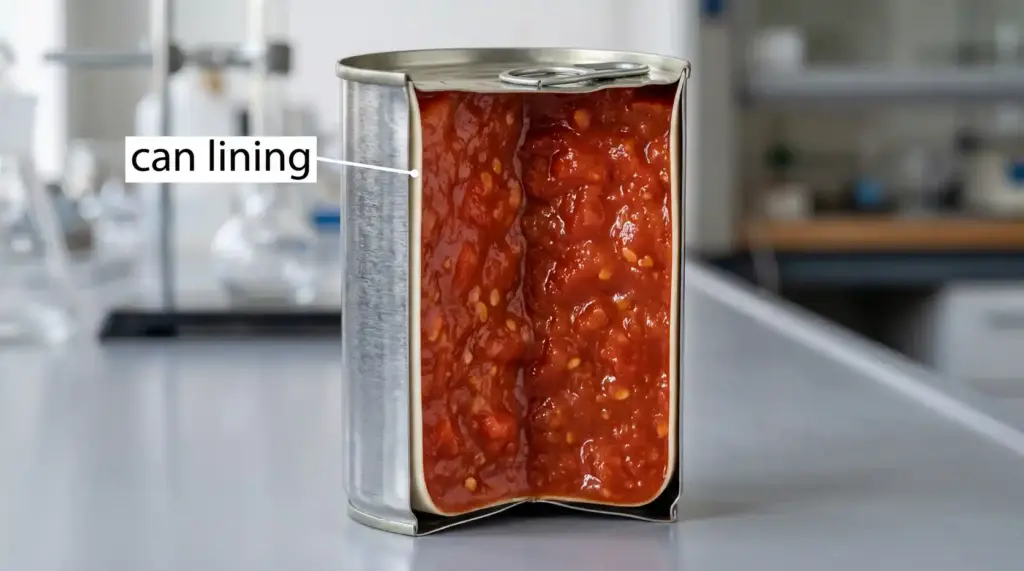
A can lining is a protective coating applied to the inside of a metal food or beverage can to separate the contents from the metal surface and help protect both the food and the container.
Can linings can help prevent corrosion, preserve the quality of the food, and reduce undesirable interactions between the contents and the metal. Different lining materials and formulations are used for different applications, depending on the product and manufacturer.
Because the lining directly or indirectly interfaces with food, substances present in the coating may be considered in food-contact safety assessments, including the possibility of chemical migration under intended conditions of use.
QUICK FACT
A can may be metal on the outside while the food primarily contacts a thin internal coating.
COMMONLY CONFUSED WITH
- Barrier layer: a broader term for a layer designed to limit the movement of substances; a can lining may provide barrier properties.
- Can coating: often used broadly for protective coatings applied to cans, including internal and external coatings.
SEE ALSO