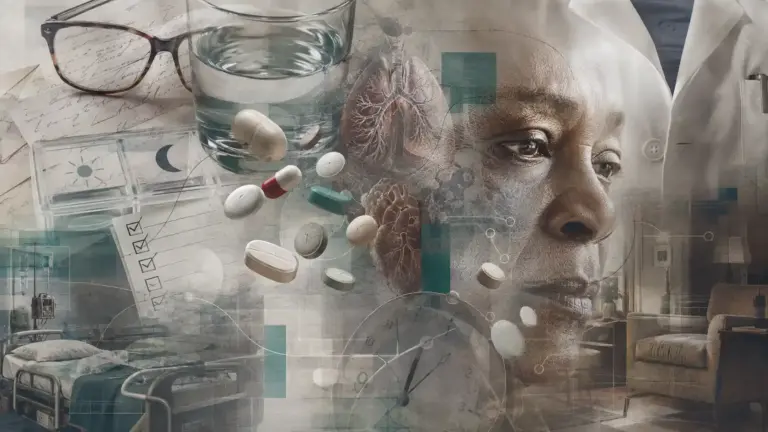
There is laughter in the hospital.

Between the cries of newborns
and the silence of the dying,
between the clatter of instruments
and the shuffle of tired feet,
somewhere, someone is laughing.

A patient laughs at a joke,
though tomorrow holds an uncertainty
no joke can make disappear.

A nurse laughs at a colleague,
her laughter briefly escaping
the weight of another endless shift.

A doctor smiles behind a mask,
perhaps remembering
that medicine, too,
needs a little humanity.

In the waiting room,
strangers become comedians,
trading stories and exaggerations,
finding humor in ordinary things
while extraordinary worries
sit quietly beside them.

A child laughs at a syringe,
unaware of its reputation,
finding amusement in the very thing
that makes grown-ups uneasy.

And somewhere,
a family laughs at an old memory,
careful not to laugh too loudly,
as though happiness itself
might offend the sick.

For a moment,
the hospital forgets itself.

But hospitals have strange acoustics.

Laughter travels,
sometimes across corridors
where tears have barely dried.

One room celebrates a recovery;
another negotiates with fate.

One mother welcomes a new life;
another struggles to say goodbye.

A doctor delivers good news
while another prepares for the difficult conversation.

Here, joy and sorrow
do not take turns.
They happen simultaneously,
separated only by walls,
curtains, and the occasional closed door.

Perhaps some laughter is nervous,
a disguise for fear,
a little rebellion against helplessness.

Perhaps some is deliberate,
a borrowed moment of normality
in an otherwise unfamiliar world.

Perhaps some is simply laughter,
with no deeper meaning,
no hidden message,
no therapeutic intention.

Must every smile be prescribed?
Must every laugh be justified?

For even in places
where life is measured in numbers,
where pain has a scale
and survival has statistics,
there must be room
for the unreasonable business of joy.

After all,
the sick are not merely sick,
the dying are not merely dying,
and those who care for them
are not made of medicine.

They are people
with memories, mischief,
embarrassing stories,
and an occasional appetite
for terrible jokes.

There are lives being lived
in those rooms,
not merely conditions being treated.

And laughter,
for all its inability to heal a wound,
reverse a diagnosis,
or promise another morning,
can remind us
that illness is not the whole story.

So let there be laughter
in the hospital.

Let it rise above the monitors,
slip beneath the curtains,
interrupt the solemnity of rounds,
and visit the waiting room
without an appointment.

Not to deny the pain,
not to mock the suffering,
not to pretend that everything
will have a happy ending.

But to remind us
that even where life is fragile,
it can still be funny.

That even where death is near,
life has not entirely withdrawn.

That a person can be ill
and still be funny,
a family can be afraid
and still find something to smile about,
and those who care for the sick
may need laughter
as much as those they care for.

Because sometimes,
in the very place
where we fight hardest
to keep people alive,
a little laughter
reminds us what living sounds like.

Not because everything is fine.

But because,
even here,
amid all that can go wrong,
something of life
still finds a way
to smile.
About This Reflection
Hospitals are places where pain, uncertainty, and vulnerability are encountered every day. Yet, alongside the seriousness of illness and the weight of difficult diagnoses, there are moments of laughter, humor, and unexpected joy. This reflection explores the coexistence of these seemingly contrasting experiences, considering how patients, healthcare workers, and families find moments of lightness without diminishing the realities of suffering. It is a reminder that hospitals are not merely places where conditions are treated, but places where human lives continue to unfold.
The Medical Context
Humor and laughter are recognized aspects of human emotional and social experience. In healthcare settings, they may help people navigate stress, strengthen interpersonal connections, and create moments of psychological relief during difficult circumstances.
However, laughter is not a universal response to illness, nor should patients or healthcare workers feel pressured to remain cheerful. Its effects vary between individuals and situations. It is also important to distinguish ordinary humor and spontaneous laughter from structured interventions such as humor therapy or therapeutic clowning, which have been studied in specific healthcare populations.
Laughter does not replace medical treatment, resolve the underlying causes of illness, or guarantee better clinical outcomes. Its significance in this reflection is primarily humanistic: even in environments shaped by illness and uncertainty, people retain their identities, relationships, emotions, and capacity for joy.
Laughter can create moments of emotional relief and human connection during illness and hospitalization. However, it is neither a medical treatment nor an obligation. Patients and healthcare workers experience difficult circumstances differently, and compassion must always leave room for sadness, silence, and individual emotional needs.
Suggested Reading
The relationship between laughter, emotional well-being, and healthcare has attracted growing research interest. The following publications explore the potential psychological benefits of laughter, the role of humor-based interventions in hospital settings, and the importance of recognizing emotional well-being as part of compassionate care. They provide additional context for the ideas explored in this reflection.