


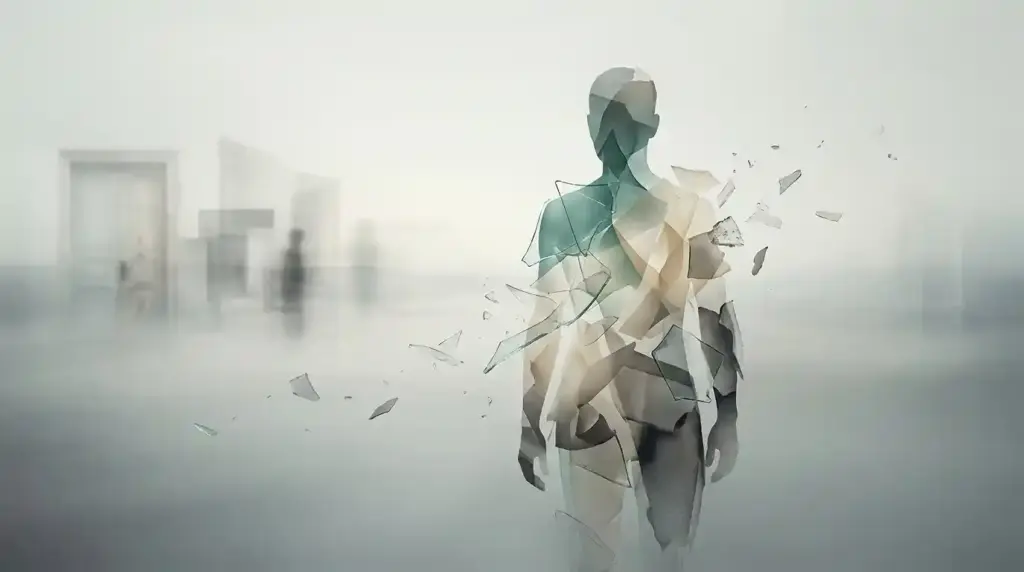
I remember when I could remember.

The faces,
the places,
the voices that made a home of silence.

The smell of yesterday's kitchen,
the laughter behind closed doors,
the names that once needed no introduction,
the stories told so often
they became part of me.

I remember remembering.

I carried childhood in fragments,
old conversations in forgotten corners,
and little things
that made a life feel like mine.

But now,
where did I leave the morning?
What became of the afternoon?
Whose face is that familiar stranger wearing?
And why does everyone seem to know me
when I cannot remember them?

I have misplaced a name,
then a face,
then the road that led me home.

I have forgotten the question
before the answer arrived,
and searched for words
that once came running to me.

They say I repeat myself.

Perhaps I do.
Perhaps I am telling the same story
because it is the only one
that still remembers me.

How strange,
to have lived so many years
and become a stranger to them.

To carry a lifetime in one's head
and slowly lose the key.

To have loved someone
without remembering when,
to have raised a child
and wonder who this grown stranger is,
to have shared a thousand mornings
with someone
whose name now escapes the tongue.

What cruel arithmetic is this,
that subtracts the years
but leaves the wrinkles,
erases the journeys
but leaves the weary feet,
takes away the names
but leaves the faces waiting?

Sometimes,
I remember that I have forgotten.
Sometimes,
I cannot remember what is missing.

And perhaps that is the cruelest part:
to lose something
without knowing what to mourn.

People tell me stories about myself.
They remind me of things I have done,
places I have been,
people I have loved.

They return my life to me
in pieces.

But how much of a life
can another person remember
on my behalf?

And what of those who remember?

The daughter who introduces herself
a hundred times,
the husband who tells their love story
to a wife who no longer knows its beginning,
the son who watches his childhood
disappear from the eyes
that once watched over him.

They mourn someone
who is still breathing.

They grieve without a funeral,
say goodbye without a departure,
and learn to love
without the reassurance of recognition.

They carry the memories
that someone else can no longer hold.

I wonder how lonely it must be
to remember everything
while watching someone you love
slowly lose the way back to you.

Yet,
perhaps not everything has gone.

A familiar melody
may still find its way through the fog.
A gentle touch
may still feel like home.
A familiar voice
may stir something
the tongue can no longer name.

Perhaps the heart keeps
a different kind of record.

Perhaps memory is not the only language
in which we recognize love.

For a person is more
than the things they remember,
more than the names they can recall,
more than the stories they can tell.

A childhood does not cease to exist
because its owner cannot tell its story.
Love does not become less real
because its details have faded.

And even when the mind
can no longer find the way back,
there is still a human being
worthy of patience,
tenderness,
dignity,
and the simple privilege
of being treated as present.

But I wonder...

If I forget the people I love,
does my love forget them too?

If I forget who I was,
who remains to miss me?

If my yesterday disappears,
will tomorrow still recognize me?

And when the last familiar memory
finally slips away,
will there be anything left
to remind me
that I was ever here?

Perhaps that is the saddest thing
about memory.

We spend our lives making it,
never knowing
which moments will stay,
which will fade,
and which will disappear
without even saying goodbye.

So, remember me
when I cannot remember you.

Tell me our stories,
even when I have heard them before.

Be patient with my questions,
even when they are not new.

Hold my hand,
even when I cannot tell you
whose hand it is.

And if I no longer recognize your face,
do not mistake my forgetting
for the absence of love.

For I may lose the names,
the places,
the years we shared,
and even the memory of us.

But I was here.

I lived.
I loved.
I belonged.

And if I ever become
a memory of nothing,

let me remain
something worth remembering.
About This Reflection
Memory of Nothing is a poetic reflection on memory loss, the fragile nature of human identity, and the emotional consequences of forgetting. It explores what happens when familiar faces become strangers, personal histories fade, and the memories that once connected people begin to disappear. Through the experiences of individuals and families affected by memory loss, this reflection considers the relationship between memory, love, identity, and human dignity.
The Medical Context
Memory loss refers to difficulty recalling information, experiences, or previously learned details. It can occur temporarily or progressively and may be associated with aging, sleep disturbances, medication effects, neurological conditions, or other medical problems. Although occasional forgetfulness does not necessarily indicate disease, persistent or worsening memory problems may require medical assessment.
Dementia is one possible cause of significant memory impairment. It involves a decline in cognitive abilities that affects everyday functioning and may also affect language, reasoning, recognition, and independence. Alzheimer's disease is the most common cause of dementia.
Memory loss, however, does not diminish a person's identity, humanity, or right to dignity. Compassionate care, patience, understanding, and meaningful human connection remain important, even when familiar memories and recognition become difficult to sustain.


No comments yet
Be the first to share your thoughts, clinical perspective, or questions on this topic.