


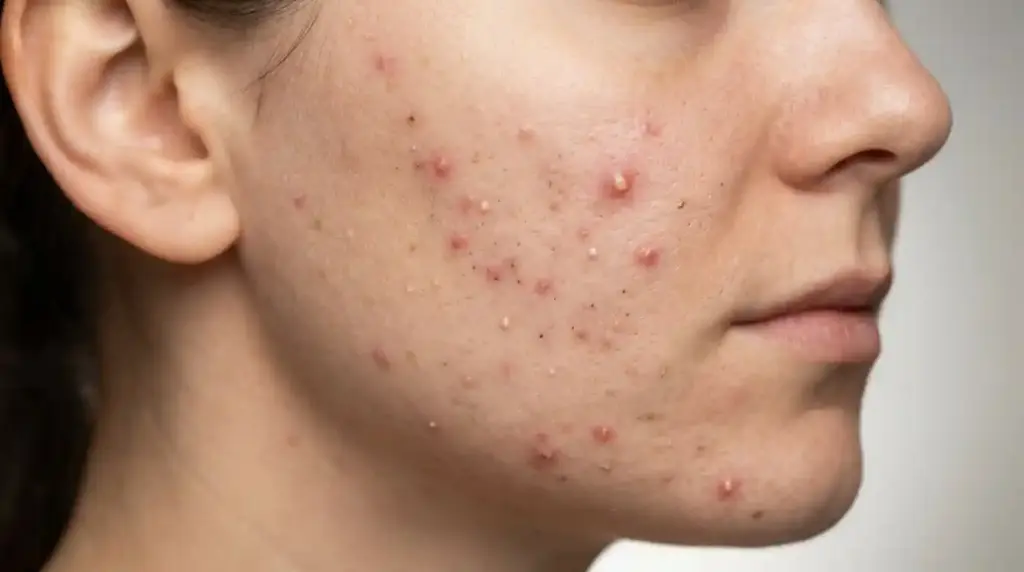
Acne develops primarily within the pilosebaceous unit, which consists of a hair follicle and its associated sebaceous gland. It commonly affects the face, chest, shoulders, and upper back, where sebaceous glands are relatively abundant.
Four interconnected processes contribute to acne development:
Increased sebum production: Sebaceous glands produce excess oil, often under the influence of androgen hormones.
Abnormal follicular keratinization: Skin cells lining the follicle do not shed normally and can accumulate, contributing to blockage.
Changes in the follicular microbiome: Cutibacterium acnes, a bacterium normally found on human skin, can contribute to inflammation within the obstructed follicle.
Inflammation: The body's immune response contributes to redness, swelling, tenderness, and the development of inflammatory lesions.
Acne lesions may be noninflammatory, such as open and closed comedones, or inflammatory, such as papules, pustules, and nodules. Severe or persistent inflammation can damage surrounding tissue and leave scars or areas of altered skin pigmentation.
Acne is not simply a result of poor hygiene. It can affect people of different ages and skin types, including adults who develop acne for the first time or continue to experience it beyond adolescence.