


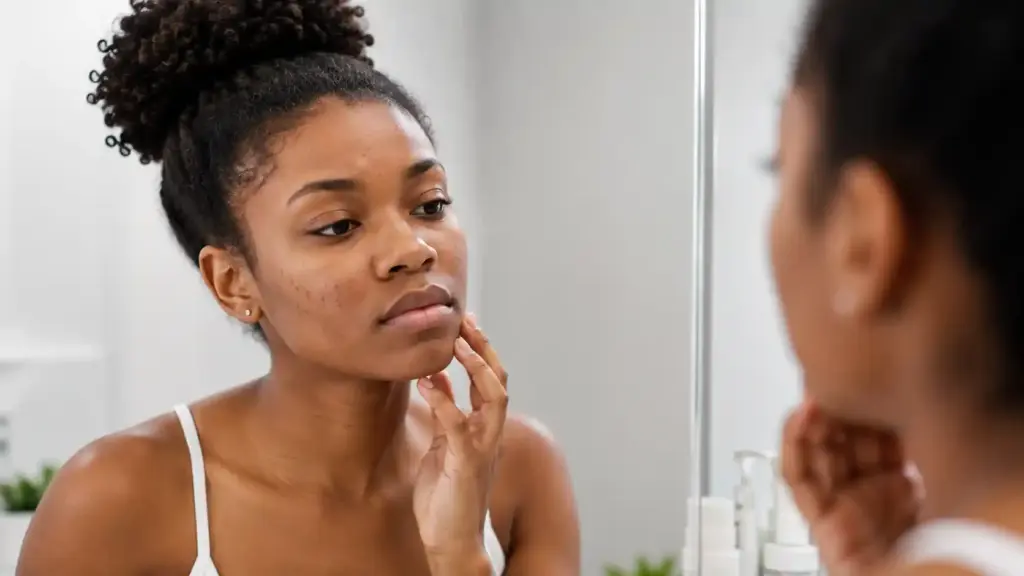
What causes acne on the face, chin, back, and other parts of the body? It is a question that millions of people ask, often after trying different skincare products, changing their diets, or blaming poor hygiene for persistent breakouts. Although factors such as hormones, certain medications, friction, and some dietary patterns can influence acne, the condition does not develop simply because the skin is dirty. Acne is a complex inflammatory skin condition involving the hair follicles and sebaceous glands. Understanding how it develops and why it affects certain areas of the body helps separate medical facts from common misconceptions and provides a clearer path toward effective care.
What Is Acne?
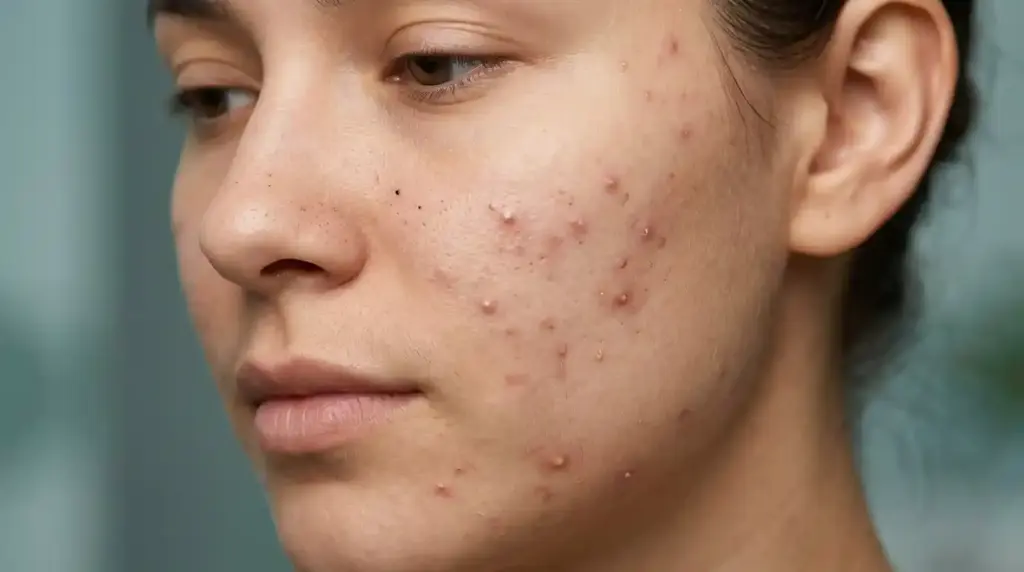
Acne, medically known as acne vulgaris, is a chronic inflammatory skin condition that affects the pilosebaceous units of the skin. These are structures made up of hair follicles and their associated sebaceous glands, which produce an oily substance called sebum.
Acne develops when several biological processes interact, resulting in excess sebum production, abnormal shedding of skin cells within hair follicles, changes in the skin microbiome, and inflammation.
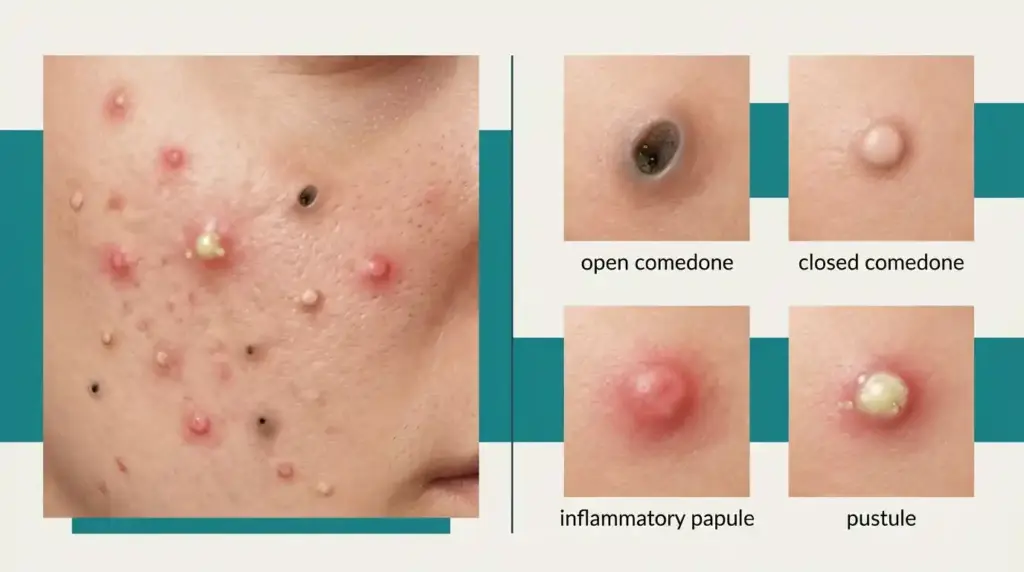
These processes can produce different types of acne lesions, including:
- Blackheads (open comedones): Small, dark spots formed when a hair follicle becomes blocked but remains open at the skin surface.
- Whiteheads (closed comedones): Small, flesh-colored or whitish bumps formed when a blocked follicle remains closed beneath the skin.
- Papules: Small, solid, inflamed bumps that may appear red, pink, or darker than the surrounding skin.
- Pustules: Inflamed bumps containing visible pus.
- Nodules: Larger, deeper, and often painful inflammatory lesions.
- Cyst-like lesions: Deep inflammatory lesions that may contain fluid or semi-solid material and are associated with a greater risk of scarring.
Acne most commonly affects the face, but it can also develop on the neck, chest, shoulders, and back. Although it is particularly common during adolescence, it can affect people at almost any age, including infants, children, and adults.
Acne is not simply a cosmetic problem. Persistent or severe disease can cause permanent scarring, changes in skin pigmentation, and considerable emotional distress.
Acne vulgaris
Acne vulgaris is the medical term for the common form of acne. It is a chronic inflammatory disorder of the pilosebaceous units, involving excess sebum production, abnormal follicular keratinization, changes in the skin microbiome, and inflammation.
Many people think acne is simply a hygiene problem or a consequence of not washing the face properly. In reality, it is a complex biological skin condition influenced by hormones, genetics, sebum production, changes within the hair follicle, and the body’s inflammatory response.
This distinction matters because excessive washing, aggressive scrubbing, and harsh home remedies do not correct the underlying processes responsible for acne. Understanding how acne develops helps people make better skincare decisions and seek appropriate treatment when necessary.
Acne is one of the most common skin conditions worldwide. Studies have reported that it affects a substantial proportion of adolescents, although estimates vary depending on the population studied, age group, and severity of acne.
It can also persist into adulthood or develop for the first time later in life. Adult acne is particularly common among women.
Acne vs. Pimples: What’s the Difference?
People frequently use the words acne and pimples interchangeably, but they do not mean exactly the same thing.
A pimple is a common, non-medical term used to describe an individual skin blemish, usually an inflamed bump such as a papule or pustule.
Acne, on the other hand, is the underlying medical condition. It can produce several different types of lesions, including:
- Blackheads (open comedones).
- Whiteheads (closed comedones).
- Papules.
- Pustules.
- Nodules.
- Deeper cyst-like inflammatory lesions.
In other words, a pimple is an individual blemish, whereas acne is the skin condition that can produce one or many acne lesions.
Not every bump that resembles a pimple is necessarily acne. Other skin conditions, including folliculitis, can produce similar-looking eruptions.
Someone may say they have a pimple after noticing a single inflamed bump on the face. A healthcare professional, however, may diagnose acne when there is a pattern of recurring comedones, inflammatory lesions, or both.
Understanding the distinction makes it easier to describe skin problems accurately and recognize when a different condition may require investigation.
The word pimple has no strict medical definition. Dermatologists generally describe individual lesions according to their specific appearance and depth, using terms such as papule, pustule, nodule, and comedone.
These descriptions provide more useful clinical information than simply calling every skin blemish a pimple.
Quick Comparison
| Feature | Acne | Pimple |
|---|---|---|
| What is it? | A chronic inflammatory skin condition | A common term for an individual skin blemish |
| Medical term? | Yes | No |
| Includes | Blackheads, whiteheads, papules, pustules, nodules, and deeper inflammatory lesions | Usually an individual inflamed blemish |
| Can it occur alone? | May involve multiple or recurring lesions | Yes |
| Treatment | Depends on the type and severity of acne | Depends on the underlying cause |
Acne and pimples are exactly the same thing.
A pimple is an informal term for an individual skin blemish, often an inflamed acne lesion. Acne is the underlying medical condition that can produce several different types of lesions, including blackheads, whiteheads, papules, pustules, and deeper inflammatory lesions.
How Healthy Skin Works
Before exploring what causes acne, it helps to understand how healthy skin normally functions.
The skin is the body’s largest organ and performs several important functions, including protecting the body against environmental damage, regulating temperature, preventing excessive water loss, and providing sensory information.
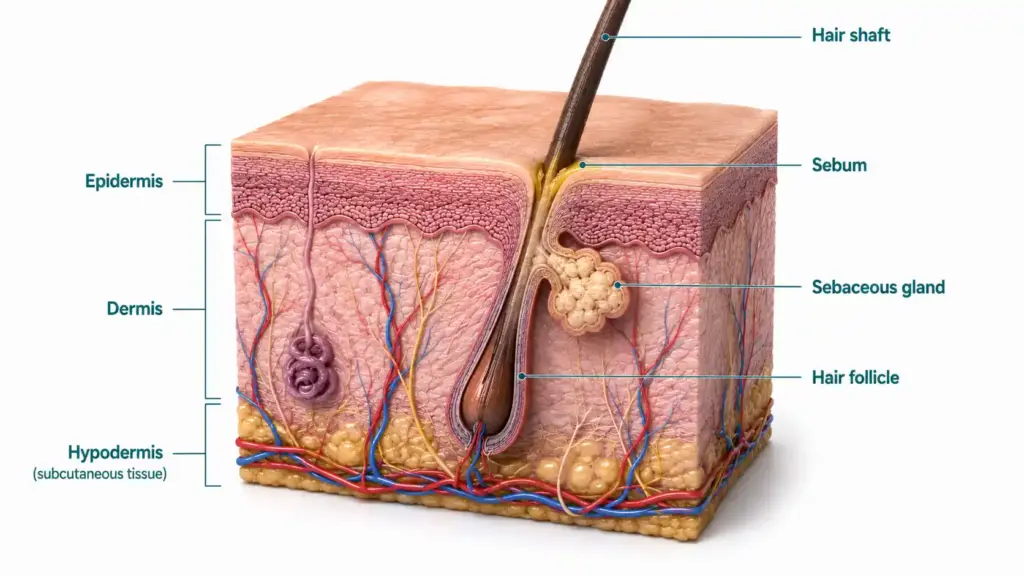
It consists of three main layers:
- Epidermis: The protective outer layer that forms the skin’s primary barrier.
- Dermis: The supportive middle layer containing hair follicles, sebaceous glands, sweat glands, nerves, blood vessels, and connective tissue.
- Hypodermis (subcutaneous tissue): The deeper layer containing fat and connective tissue that cushions the body, provides insulation, and stores energy.
Embedded within the skin are tiny structures called hair follicles. Each follicle is associated with a sebaceous gland, which produces sebum.
Together, the hair follicle and its associated sebaceous gland form a structure called the pilosebaceous unit.
How Does the Sebaceous Gland Work?
Sebaceous glands produce sebum, an oily mixture of substances that helps lubricate the skin and hair, reduce excessive water loss, and support the skin’s protective barrier.
Under normal circumstances, sebum travels through the sebaceous duct and hair follicle before reaching the skin’s surface through an opening commonly called a pore.
Dead skin cells are also continuously shed and replaced as part of the skin’s normal renewal process.
In healthy skin, these processes occur in a balanced manner:
- Sebaceous glands produce sebum.
- Sebum moves through the hair follicle.
- Old skin cells are shed and removed.
- Sebum and cellular material reach the skin surface without significant blockage.
Acne develops when this normal process becomes disrupted.
Although people often describe acne as a problem of clogged pores, the blockage begins within the hair follicle, not simply at the visible opening on the skin’s surface.
The pore is the external opening of the follicle. The abnormal accumulation of sebum and skin cells occurs within the follicular canal and may eventually obstruct the normal movement of material toward the surface.
What Causes Acne?
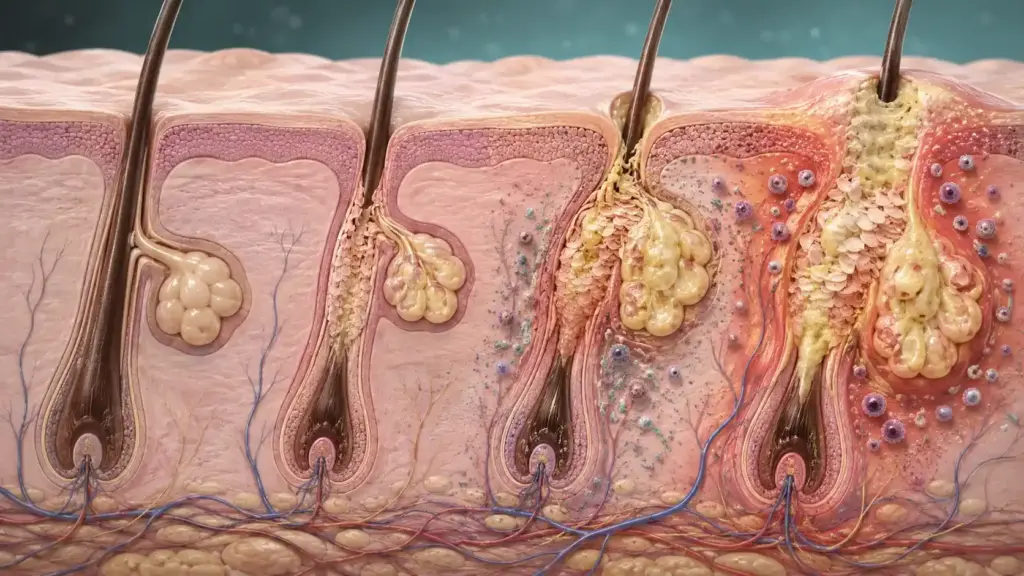
One of the most common questions people ask is, “What causes acne?”
The answer is more complex than many people realize.
Acne does not develop simply because someone has dirty skin, eats chocolate, uses a particular pillowcase, or fails to wash their face regularly.
Instead, acne develops through the interaction of four major biological mechanisms within the pilosebaceous unit:
- Excess sebum production.
- Abnormal shedding of skin cells and blockage of hair follicles.
- Changes in the skin microbiome involving Cutibacterium acnes.
- Inflammation.
These processes influence one another and can sustain the development of acne lesions.
Other factors, including hormones, genetics, certain medications, friction, cosmetics, and possibly some dietary patterns, can influence these mechanisms or aggravate existing acne.
It is important to distinguish between the biological processes that directly participate in acne development and the factors that make someone more susceptible to acne or worsen existing breakouts.
Acne is not the result of a single mistake, habit, or lifestyle choice.
Because several biological mechanisms contribute to its development, successful treatment often requires approaches that target more than one process.
This also explains why a skincare product that works for one person may be less effective for another.
The Four Main Biological Mechanisms of Acne
Although acne looks different from person to person, its development involves four closely related biological processes.
Think of these processes as four interconnected parts of the same puzzle. They do not necessarily occur in a rigid sequence, and their relative importance may vary between individuals and lesions.
1. Excess Sebum Production
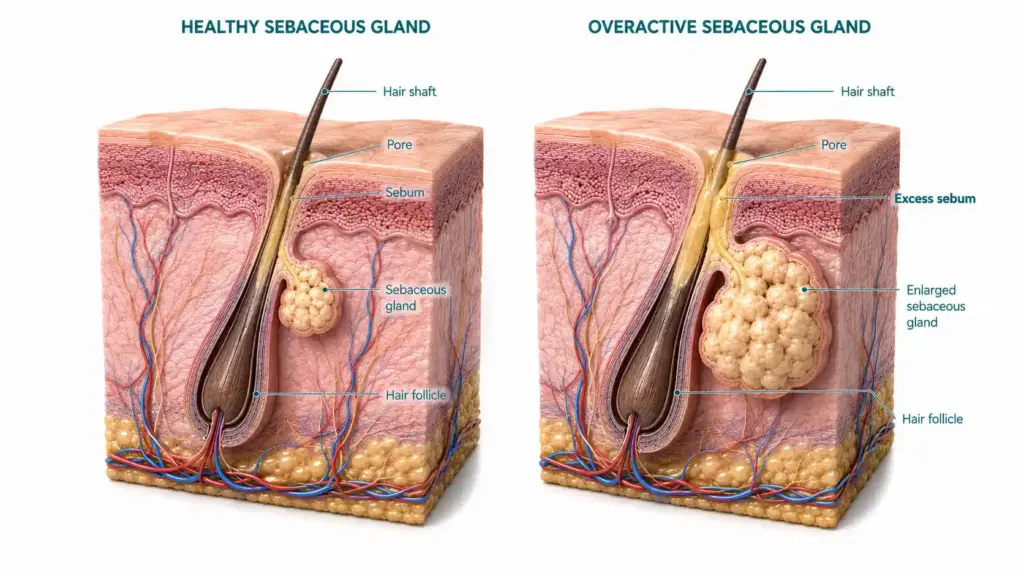
Sebum is essential for maintaining healthy skin. It lubricates the skin and hair, contributes to the skin’s protective barrier, and helps prevent excessive water loss.
However, excessive sebum production can contribute to acne development.
Sebum is produced by sebaceous glands, whose activity is influenced by several factors, particularly hormones known as androgens.
Androgens are present in both males and females, although their concentrations and effects differ.
During puberty, increasing androgen activity stimulates the sebaceous glands, causing them to enlarge and produce more sebum. This is one reason acne becomes particularly common during adolescence.
Excess sebum can accumulate within the hair follicle and mix with dead skin cells, increasing the likelihood of follicular blockage.
Changes in the amount and composition of sebum may also influence the environment in which acne-associated microorganisms function.
However, having oily skin does not automatically mean someone will develop acne. Sebum production is only one component of a much larger biological process.
Increased sebum production is one of the established mechanisms involved in acne vulgaris.
Androgen activity stimulates sebaceous gland function, while changes in sebum production and composition interact with follicular blockage, microbial activity, and inflammation to contribute to acne development.
2. Blocked Hair Follicles (Comedone Formation)
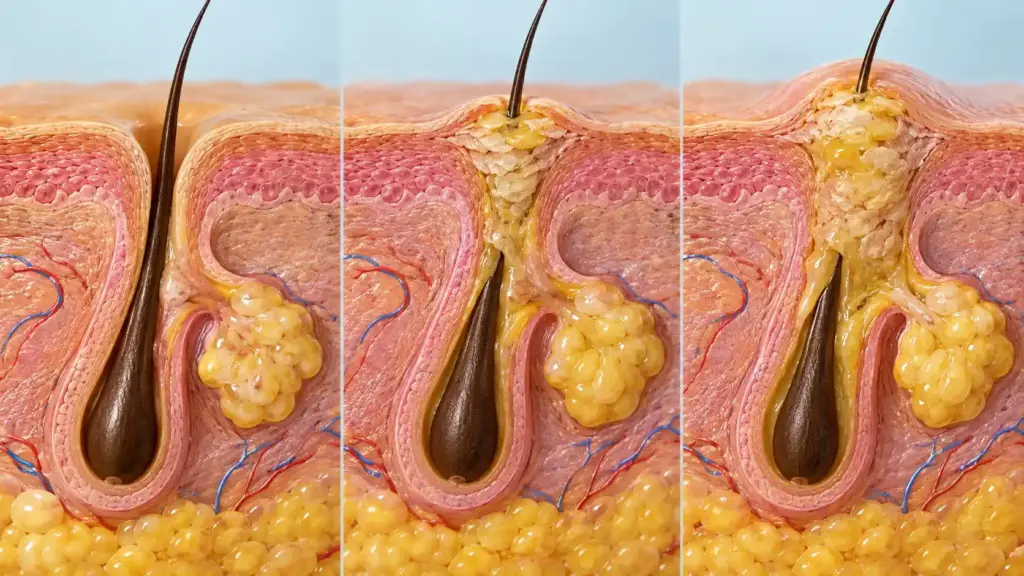
Healthy skin continuously sheds old skin cells while producing new ones.
Normally, dead cells are released from the lining of the hair follicle and move outward with sebum. This allows the follicle to remain relatively clear.
In acne-prone skin, however, the normal shedding process becomes disrupted.
Dead skin cells may accumulate and stick together within the follicular canal. They mix with sebum, forming a plug that interferes with the normal movement of material through the follicle.
This process is called follicular hyperkeratinization.
As the accumulation develops, it can produce a comedone, which is one of the earliest recognizable features of acne.
There are two main types:
These develop when a blocked follicle remains open at the skin surface. The material inside the follicle is exposed to air, and oxidation contributes to its dark appearance.
Blackheads are not simply dirt trapped inside the pores.
These develop when the follicular opening remains closed or covered by the surrounding skin. The trapped material produces a small, pale or flesh-colored bump.
Both blackheads and whiteheads are forms of noninflammatory acne lesions, although they may become inflamed.
Follicular hyperkeratinization
Follicular hyperkeratinization is an abnormal process in which skin cells accumulate within the hair follicle instead of shedding normally.
These cells combine with sebum and contribute to the formation of a follicular plug, which can develop into a comedone.
Many people assume blackheads are simply pores filled with dirt. This is incorrect.
Blackheads develop because sebum and dead skin cells accumulate inside an open hair follicle. Their dark appearance results from changes in the exposed follicular contents, including oxidation, rather than poor hygiene.
Aggressive scrubbing is therefore unlikely to solve the underlying problem and may irritate the skin.
Understanding the different types of acne lesions
Dermatologists classify acne lesions according to their appearance, inflammatory characteristics, and depth within the skin.
- Microcomedo: A microscopic follicular plug that represents an early acne lesion and cannot usually be seen without magnification.
- Whitehead (closed comedo): A blocked follicle with a closed surface.
- Blackhead (open comedo): A blocked follicle with an open surface and a dark appearance.
- Papule: A small, solid, inflamed bump without visible pus.
- Pustule: An inflamed lesion containing visible pus.
- Nodule: A larger, deeper inflammatory lesion that may be painful and can persist for a prolonged period.
- Cyst-like lesion: A deep inflammatory lesion that may contain fluid or semi-solid material. Some lesions commonly called acne cysts are technically nodules or pseudocysts rather than true cysts.
Acne does not always progress through the same stages.
A microcomedo may resolve without becoming visible, while blackheads and whiteheads may remain stable or become inflamed.
Not every papule develops into a pustule, and only some people develop deeper lesions such as nodules or cyst-like lesions.
These descriptions represent common forms of acne rather than a fixed developmental sequence.
3. Changes in the Skin Microbiome and Cutibacterium acnes
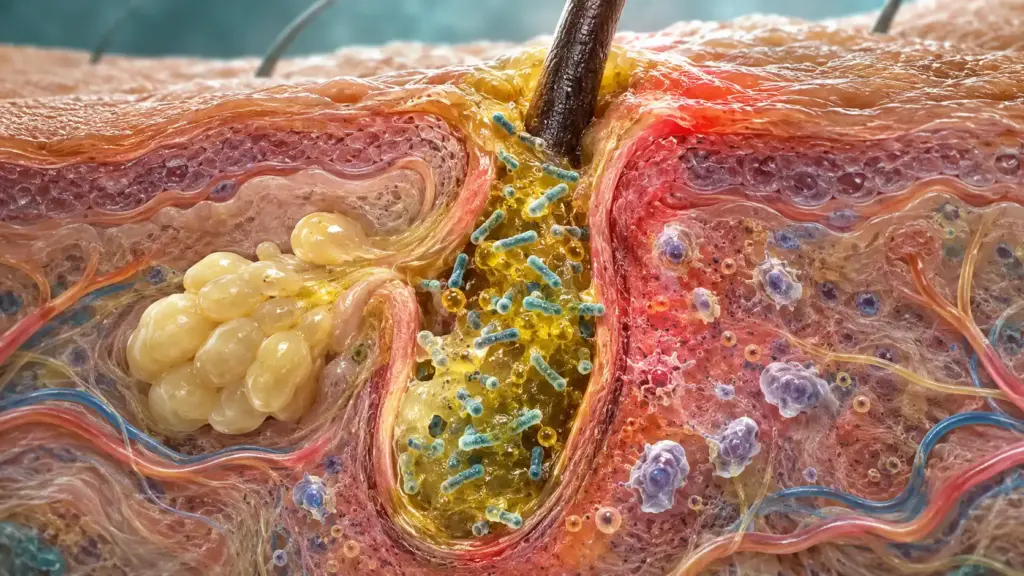
Healthy skin is home to a diverse community of microorganisms, including bacteria, fungi, viruses, and microscopic organisms.
Together, these microorganisms form the skin microbiome.
Many of these organisms coexist with the body without causing disease. Some contribute to the skin’s protective functions and interact with the immune system.
One of the bacteria commonly found on human skin is Cutibacterium acnes, formerly known as Propionibacterium acnes.
Despite its association with acne, C. acnes is not simply an invading germ. It is a normal resident of the skin microbiome and can be found on the skin of people who do not have acne.
Problems arise from changes in the follicular environment and interactions between the bacterium, the skin, and the immune system.
When a hair follicle becomes blocked with sebum and dead skin cells, conditions inside it change. The oxygen level decreases, and the environment may favor particular activities and populations of C. acnes.
The bacterium can interact with components of the follicular environment and stimulate inflammatory responses.
Importantly, acne does not develop simply because C. acnes is present. The balance of microbial populations, bacterial characteristics, sebum, follicular blockage, and individual immune responses all contribute.
This is why acne is not considered a contagious disease.
Acne is caused by bacteria on dirty skin.
Cutibacterium acnes is a normal member of the skin microbiome. Acne develops through interactions between the follicular environment, sebum, microbial activity, and the body’s inflammatory response. It is not simply an infection caused by dirty skin.
Research indicates that acne is associated with changes in the skin microbiome and the behavior of Cutibacterium acnes, rather than the simple presence of the bacterium.
Different bacterial characteristics and interactions with the immune system help explain why some individuals develop acne while others with similar levels of skin colonization do not.
4. Inflammation
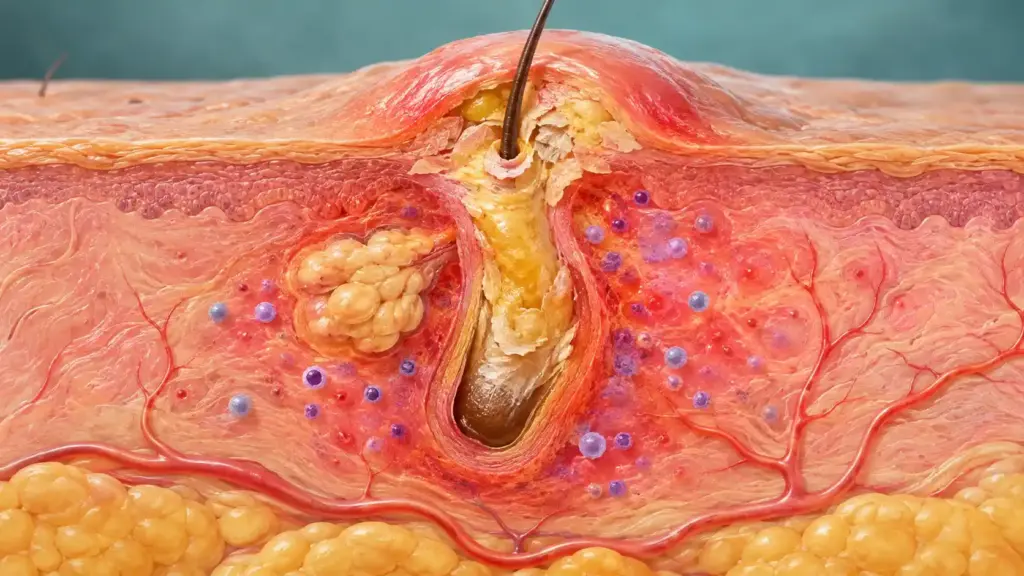
Inflammation is the body’s natural response to injury, irritation, infection, or other forms of tissue disturbance.
In acne, inflammation develops through interactions between the follicular environment, microbial activity, and the body’s immune system.
When inflammatory processes become active around an affected hair follicle, immune cells and inflammatory substances accumulate.
This can produce:
- Redness or discoloration.
- Swelling.
- Tenderness.
- Pain.
- Pus formation in some lesions.
Inflammation is responsible for many of the visible features of inflammatory acne.
A relatively mild inflammatory response may produce a papule, while more substantial inflammation can contribute to pustules and deeper lesions such as nodules.
Importantly, inflammation may begin earlier in acne development than previously thought. It is not necessarily a process that starts only after a blackhead or whitehead has become visibly inflamed.
Persistent or severe inflammation can damage surrounding skin tissue, increasing the likelihood of post-inflammatory hyperpigmentation and permanent scarring.
Inflammation is one reason healthcare professionals discourage squeezing or picking acne lesions.
Manipulating an inflamed lesion can increase tissue injury, worsen inflammation, delay healing, and raise the risk of scarring or persistent pigmentation changes.
Although squeezing a pimple may temporarily release its contents, it does not address the underlying biological processes responsible for acne.
Inflammation is a central component of acne vulgaris and interacts with sebum production, follicular blockage, and changes in the skin microbiome.
It contributes not only to visible inflammatory lesions but also to longer-term complications, including scarring and post-inflammatory pigmentary changes.
Acne develops through the interaction of four major biological mechanisms:
- Excess sebum production: Increased activity of sebaceous glands contributes to the accumulation of oil within hair follicles.
- Follicular blockage: Abnormal shedding of skin cells causes dead cells and sebum to accumulate inside the hair follicle.
- Changes in the skin microbiome: Interactions involving Cutibacterium acnes contribute to the development of an acne-prone follicular environment.
- Inflammation: The body’s immune response produces the swelling, tenderness, and other inflammatory features associated with acne.
These processes influence one another and may vary in their importance between individuals.
This is why acne is considered a complex inflammatory skin condition rather than the result of a single cause.
Why Do Some People Get Acne While Others Don’t?

Not everyone with oily skin develops acne, and not everyone who follows the same skincare routine has the same experience.
This is because acne results from a combination of biological processes, genetic predisposition, hormonal influences, and environmental factors.
Some people are naturally more susceptible because their sebaceous glands respond more strongly to hormonal signals, their hair follicles are more prone to blockage, or their immune systems respond differently to changes within the follicular environment.
Genetics also influence how much sebum the skin produces and how severe acne may become.
Consequently, two people exposed to similar environmental conditions can have very different experiences with acne.
Two people can eat the same foods, wash their faces in the same way, and use identical skincare products yet have very different experiences with acne.
This is because genetics, hormone sensitivity, sebaceous gland activity, and inflammatory responses vary between individuals.
Acne should therefore not automatically be interpreted as evidence of poor personal hygiene or an unhealthy lifestyle.
Factors That Can Trigger or Worsen Acne

Although the four biological mechanisms explain how acne develops, several additional factors can influence these processes.
Some increase a person’s susceptibility to acne, while others may trigger or aggravate existing breakouts.
The effect of these factors is not identical in everyone. A factor that worsens acne in one person may have little or no noticeable effect in another.
Hormonal Changes
Hormones are among the most important influences on acne development.
Androgens stimulate sebaceous glands to produce sebum. Changes in androgen levels or the skin’s sensitivity to these hormones can therefore increase the likelihood of acne.
Hormonal influences are particularly important during:
- Puberty.
- Menstrual cycles.
- Pregnancy.
- Perimenopause.
- Certain endocrine disorders, including polycystic ovary syndrome (PCOS).
Some women notice that acne becomes worse shortly before menstruation, when hormonal fluctuations may influence sebaceous gland activity.
In PCOS, increased androgen activity may contribute to persistent acne, particularly when accompanied by irregular menstrual cycles, excessive facial or body hair, or other signs of hormonal imbalance.
However, acne alone does not establish a diagnosis of PCOS or another endocrine disorder.
Genetic Factors and Family History
Acne often runs in families.
People whose parents experienced moderate or severe acne may have a greater likelihood of developing acne themselves.
Researchers believe this is related to inherited differences in:
- Sebum production.
- Hormonal sensitivity.
- Hair follicle characteristics.
- Inflammatory and immune responses.
- Susceptibility to scarring.
Genetic factors do not determine with certainty whether someone will develop acne, but they can influence susceptibility and severity.
Age
Acne is most common during adolescence because hormonal activity increases significantly during puberty.
However, acne is not restricted to teenagers.
It can occur in:
- Infants.
- Children.
- Adolescents.
- Young adults.
- Middle-aged adults.
- Older adults.
Some people experience acne that persists from adolescence into adulthood, while others develop it for the first time later in life.
Certain Medications
Some medications can cause or aggravate acne, while others produce acne-like eruptions that may not be typical acne vulgaris.
Examples include:
- Corticosteroids.
- Testosterone.
- Anabolic-androgenic steroids.
- Lithium.
- Certain antiseizure medications.
- Some targeted cancer treatments.
Medication-associated eruptions may have a different appearance or distribution from ordinary acne.
If acne develops suddenly after starting a new medication, discuss it with a healthcare professional.
Never stop a prescribed medication without obtaining appropriate medical advice.
Friction, Pressure, and Occlusion
Repeated friction, pressure, heat, and occlusion can aggravate acne or produce a particular form known as acne mechanica.
This occurs when repeated physical irritation affects acne-prone skin, particularly when combined with heat and sweating.
Common sources include:
- Sports helmets.
- Tight clothing.
- Backpack straps.
- Shoulder pads.
- Face masks.
- Chin straps.
- Protective sports equipment.
People who participate in sports or wear restrictive equipment for prolonged periods may notice breakouts in areas exposed to repeated pressure or friction.
Cosmetics and Skincare Products
Some cosmetics, moisturizers, sunscreens, and hair products contain ingredients or formulations that can contribute to follicular blockage.
Products that are highly occlusive or comedogenic may aggravate acne in susceptible individuals.
Examples include certain:
- Heavy facial creams.
- Oily makeup preparations.
- Hair pomades and styling oils.
- Greasy sunscreens.
- Thick cosmetic preparations.
Choosing products labelled non-comedogenic may reduce the likelihood of follicular blockage.
However, this label is not an absolute guarantee that a product will never aggravate acne in every individual.
Dietary Patterns
The relationship between diet and acne is an area of continuing research.
Some studies have found associations between acne and diets with a high glycemic load.
High-glycemic foods are rapidly digested and absorbed, producing relatively quick increases in blood glucose.
Examples include:
- Sugary drinks.
- Candy.
- Some refined breakfast cereals.
- White bread.
- Certain pastries and highly refined carbohydrate foods.
These dietary patterns may influence hormonal and metabolic pathways involved in sebum production and inflammation.
Some studies have also reported an association between acne and dairy consumption, although the strength and consistency of the evidence vary.
It is important to understand that these associations do not establish that a particular food causes acne in everyone.
There is currently insufficient evidence to recommend a specific acne diet as a universal treatment.
A balanced dietary pattern is generally preferable to unnecessary food restriction.
Stress
Stress does not directly create acne, but it may worsen existing acne in some individuals.
During periods of psychological or physical stress, the body activates hormonal and inflammatory pathways that can influence skin function.
Stress-related changes may affect inflammatory responses, sebum production, and the body’s ability to maintain healthy skin.
Some people therefore notice that their acne becomes worse during examinations, demanding work periods, illness, or other stressful experiences.
Stress management may support general well-being, but it should not replace appropriate acne treatment.
Environmental Conditions
Heat, humidity, sweating, and prolonged skin occlusion may aggravate acne in susceptible individuals.
For example, someone who exercises regularly in hot weather and wears tight athletic clothing may experience breakouts on the chest, shoulders, or back.
Sweat itself is not the primary cause of acne. However, when combined with friction, heat, and occlusion, it may contribute to irritation and aggravation of existing lesions.
The following factors can increase the likelihood of developing acne or make existing acne worse:
- Hormonal fluctuations and increased androgen activity.
- Family history of acne.
- Increased sebaceous gland activity.
- Certain medications, including corticosteroids, testosterone, and lithium.
- Occlusive cosmetics and skincare products.
- Repeated friction and pressure on the skin.
- High-glycemic dietary patterns in susceptible individuals.
- Certain dietary associations, including some dairy products.
- Stress and environmental conditions such as heat and humidity.
These factors do not affect everyone in the same way, and the presence of one or more risk factors does not guarantee that acne will develop.
Genetic predisposition, androgen activity, increased sebum production, and abnormal follicular keratinization are well-established contributors to acne.
Other factors, including high-glycemic dietary patterns, some dairy consumption, stress, occlusive products, and friction, may influence acne in certain individuals.
However, the strength of evidence differs between these factors. Dietary associations, for example, do not establish a universal food-related cause of acne.
Why Does Acne Develop on Different Parts of the Body?

Acne does not affect every part of the body equally.
It is most common on areas that contain numerous or highly active sebaceous glands, particularly the face, upper chest, shoulders, and back.
However, anatomical distribution is also influenced by hormonal sensitivity, friction, occlusion, cosmetics, and other local environmental factors.
This explains why someone may experience acne predominantly on the forehead, while another person develops breakouts mainly on the chin, chest, or back.
Common Locations and Their Potential Contributing Factors
| Body area | Potential contributing factors |
|---|---|
| Forehead | Hair products, sweat, headgear, excess sebum |
| Nose | Sebaceous gland activity and follicular blockage |
| Cheeks | Cosmetics, friction, occlusion |
| Chin | Hormonal influences, shaving, friction |
| Jawline | Hormonal influences, shaving and friction |
| Chest | Sebum, sweat, tight clothing |
| Shoulders | Friction, sports equipment, occlusion |
| Back | Sebum, sweat, friction and athletic clothing |
These associations are not diagnostic. The location of acne can provide useful clues, but it cannot independently establish its cause.
Facial Acne
The face is one of the most common locations for acne because it contains numerous sebaceous glands.
Facial acne can affect the forehead, nose, cheeks, chin, and jawline.
The central part of the face, commonly called the T-zone, includes the forehead, nose, and chin. These areas contain numerous sebaceous glands and may be particularly prone to excess oil production.
Facial acne may also be influenced by:
- Cosmetics and makeup.
- Sunscreens and moisturizers.
- Hair products.
- Frequent touching of the face.
- Friction from face masks.
- Headgear and other forms of occlusion.
- Hormonal influences.
The specific contributors vary from person to person.
Forehead Acne
The forehead is a common site of acne, partly because it contains numerous sebaceous glands.
Its proximity to the scalp also makes it susceptible to exposure to hair products and styling preparations.
Potential contributors include:
- Hair gels.
- Pomades.
- Hair oils.
- Styling creams.
- Hats and helmets.
- Sweat and prolonged occlusion.
Some oily hair products can contribute to follicular blockage along the hairline and forehead.
This type of breakout is sometimes described as pomade acne when it is associated with greasy hair preparations.
Choosing suitable hair products and minimizing unnecessary contact between oily styling products and acne-prone facial skin may help.
Nose Acne
The nose contains numerous active sebaceous glands.
As a result, excess oil production and comedones, particularly blackheads, are common in this area.
The nose may develop:
- Blackheads.
- Whiteheads.
- Inflamed papules.
- Pustules.
Not every dark spot on the nose is necessarily a blackhead. Some are sebaceous filaments, which are normal structures that help transport sebum through the hair follicle.
Sebaceous filaments are not acne lesions and should not be confused with open comedones.
Cheek Acne
Cheek acne can result from the underlying biological mechanisms of acne combined with external factors that irritate or aggravate the skin.
Possible contributors include:
- Cosmetics and makeup.
- Mobile phones.
- Pillowcases.
- Makeup brushes.
- Face masks.
- Repeated touching or rubbing of the face.
These factors do not necessarily cause acne on their own. However, friction, occlusion, and unsuitable cosmetic products may contribute to breakouts in susceptible individuals.
Regularly cleaning makeup brushes and choosing non-comedogenic products can help reduce avoidable aggravating factors.
Chin and Jawline Acne
Acne affecting the chin and jawline is often associated with hormonal influences, particularly in adults.
Some women notice that breakouts in these areas become worse:
- Before menstruation.
- During periods of hormonal fluctuation.
- During pregnancy.
- Around perimenopause.
- In association with PCOS.
Hormonal changes can influence sebaceous gland activity and contribute to acne development.
However, chin and jawline acne is not exclusively hormonal. Shaving irritation, friction, occlusive skincare products, and other factors can also contribute.
The distribution of acne alone cannot establish whether someone has a hormonal disorder.
Persistent adult acne accompanied by irregular menstrual cycles, excessive facial hair, or other signs of hormonal imbalance may warrant medical assessment.
Back Acne
The back is one of the most common locations for acne outside the face.
The upper back contains numerous sebaceous glands, making it susceptible to the same biological mechanisms responsible for facial acne.
Back acne, sometimes called bacne, may appear as:
- Blackheads.
- Whiteheads.
- Papules.
- Pustules.
- Deeper inflammatory nodules.
Additional factors that may aggravate back acne include:
- Heavy sweating.
- Tight athletic clothing.
- Backpack straps.
- Sports equipment.
- Prolonged friction.
- Heat and humidity.
- Occlusive body products.
People who exercise regularly may notice that breakouts become worse when sweat, friction, and tight clothing occur together.
Showering after heavy sweating, changing out of damp clothing, and choosing breathable fabrics may help reduce these aggravating factors.
Chest and Shoulder Acne
The chest and shoulders also contain numerous sebaceous glands and are common locations for truncal acne.
Breakouts in these areas may be influenced by the same biological mechanisms involved in facial acne.
Potential aggravating factors include:
- Tight clothing.
- Sweat.
- Sports bras.
- Shoulder straps.
- Protective equipment.
- Repeated friction.
- Occlusive body creams.
Acne affecting the chest and shoulders may produce inflammatory lesions and, in some individuals, persistent dark marks or scars.
Deeper inflammatory lesions in these areas deserve particular attention because the chest, shoulders, and upper back can be susceptible to hypertrophic and keloid scarring.
Not every breakout on the chest, shoulders, or back is acne vulgaris.
Folliculitis, an inflammation of the hair follicles, can produce clusters of small, acne-like bumps. It may be associated with bacteria, yeasts, friction, occlusion, or other causes.
Folliculitis may resemble acne but requires different assessment and, in some cases, different treatment.
Persistent, itchy, unusually distributed, or treatment-resistant eruptions should therefore be assessed by a healthcare professional rather than automatically assumed to be acne.
Although genetics and hormonal influences cannot always be changed, several practical measures may help reduce avoidable acne aggravation:
- Choose non-comedogenic skincare and cosmetic products.
- Shower after heavy sweating or exercise.
- Change out of damp or sweaty clothing.
- Wear breathable clothing when practical.
- Avoid unnecessary friction from helmets, straps, and sports equipment.
- Wash pillowcases, towels, and clothing regularly.
- Clean makeup brushes routinely.
- Avoid picking or squeezing acne lesions.
- Choose suitable hair products if breakouts occur along the hairline.
- Follow recommended acne treatments consistently.
These habits can support acne management but cannot guarantee that breakouts will be prevented.
What Does Not Cause Acne?
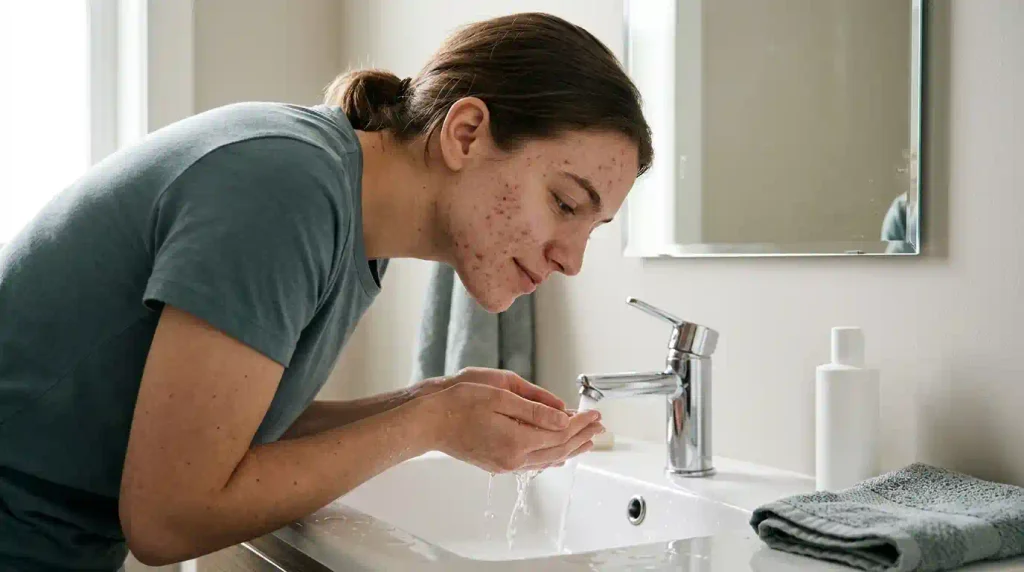
Several long-standing myths about acne persist despite advances in dermatological research.
Understanding what does not cause acne is just as important as understanding the biological processes responsible for it.
| Myth | Fact |
|---|---|
| Acne is caused by poor hygiene. | Acne develops through biological processes within the hair follicle. It is not simply caused by dirty skin. |
| Blackheads are dirt trapped in pores. | Blackheads form when sebum and dead skin cells accumulate inside an open follicle. Their dark appearance is associated with oxidation and other changes in the follicular contents. |
| Acne is contagious. | Acne cannot be transmitted through touching, kissing, or sharing ordinary household items. |
| Washing the face many times a day cures acne. | Excessive washing and aggressive scrubbing may irritate the skin without addressing the underlying mechanisms. |
| Chocolate always causes acne. | Chocolate has not been established as a universal cause of acne. Some dietary patterns may aggravate acne in susceptible individuals. |
| Greasy food automatically produces oily skin. | The oil in food does not travel directly to the skin. Dietary patterns may influence acne through other biological pathways. |
| Only teenagers get acne. | Acne can occur in infants, children, adolescents, and adults. |
| Every breakout is acne. | Other skin conditions, including folliculitis, can produce acne-like lesions. |
| Acne means someone does not wash properly. | People with excellent personal hygiene can still develop acne because of genetics, hormones, and skin biology. |
Understanding these distinctions helps prevent unnecessary blame, ineffective skincare practices, and inappropriate treatment.
Acne is not caused by poor hygiene, and several commonly blamed factors are not established causes of the condition. Acne develops through interacting biological processes involving excess sebum, blocked hair follicles, changes in the skin microbiome, and inflammation. Although certain lifestyle and environmental factors may aggravate acne in some individuals, it is important to distinguish established causes and risk factors from common misconceptions.
Acne, Skin of Color, and Lasting Skin Changes
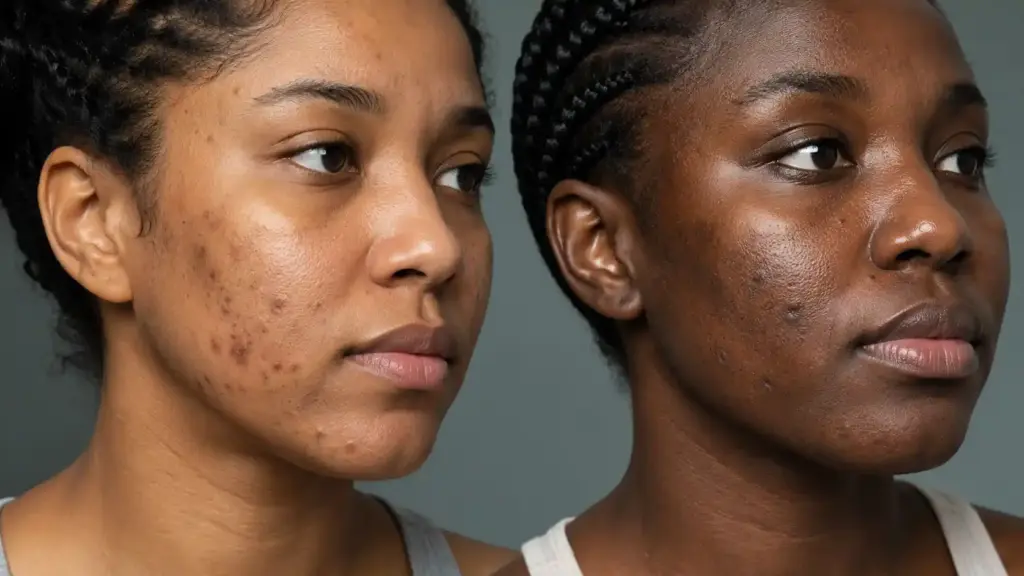
Acne can affect people of every skin tone and ethnic background. However, some of its visible consequences may appear differently depending on skin pigmentation.
In people with darker skin tones, acne-related inflammation may leave noticeable dark marks even after the active lesions have healed.
These marks are known as post-inflammatory hyperpigmentation.
Post-Inflammatory Hyperpigmentation
Post-inflammatory hyperpigmentation (PIH) occurs when inflammation stimulates increased melanin production or alters its distribution within the skin.
Melanin is the pigment responsible for much of the natural variation in human skin color.
After an acne lesion heals, the affected area may remain darker than the surrounding skin.
These marks may persist for weeks or months, and sometimes longer.
Importantly, PIH is not the same as active acne. A dark mark left behind by a healed pimple does not necessarily mean that the acne is still active.
Acne Scarring
Severe or persistent inflammation can damage the deeper structures of the skin.
When the skin heals, this damage may produce permanent changes in its texture.
Common forms of acne scarring include:
- Atrophic scars: Depressed scars caused by loss of supporting tissue.
- Hypertrophic scars: Raised scars caused by excessive collagen deposition within the original wound area.
- Keloid scars: Raised scars that extend beyond the boundaries of the original skin injury.
Keloid scarring may be particularly troublesome around the jawline, chest, shoulders, and upper back.
Acne-related dark marks and scars can persist long after the original breakouts have resolved.
People with darker skin tones may experience particularly noticeable post-inflammatory hyperpigmentation, which can affect confidence and quality of life.
Treating active acne early, avoiding unnecessary manipulation of lesions, and seeking professional advice when scarring develops can help reduce long-term skin changes.
Managing Acne: Practical Prevention and Common Mistakes
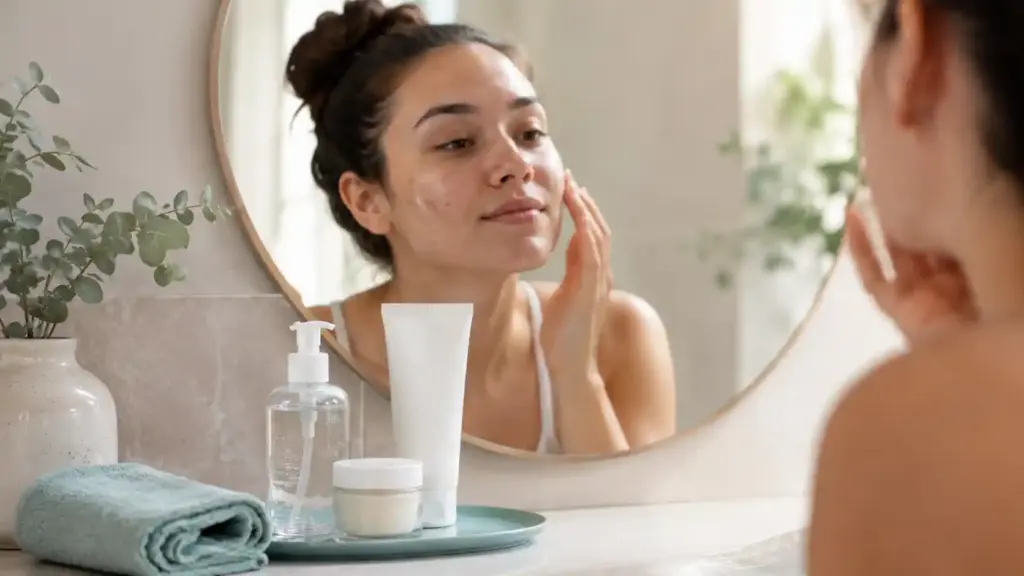
Acne cannot always be prevented, particularly when genetic and hormonal factors play important roles.
However, appropriate skincare habits and evidence-based treatment can help reduce breakouts, control inflammation, and lower the risk of scarring.
The following measures may help support healthier skin and reduce avoidable acne aggravation:
- Cleanse gently: Use a mild cleanser rather than harsh soaps or abrasive products. Washing twice daily is generally sufficient for routine facial cleansing.
- Choose suitable skincare products: Look for non-comedogenic products when selecting moisturizers, sunscreens, and cosmetics.
- Remove makeup before sleeping: Leaving makeup on overnight may contribute to irritation and follicular blockage.
- Shower after heavy sweating: Cleanse the skin after strenuous activity, particularly when sweat is combined with tight clothing or equipment.
- Wear breathable clothing: Reduce prolonged friction and occlusion where possible.
- Avoid picking lesions: Picking and squeezing can worsen inflammation and increase the risk of scarring.
- Use suitable sunscreen: Protect the skin from ultraviolet radiation, particularly when using acne treatments that may increase irritation or sensitivity.
- Follow treatment instructions: Acne treatments often require consistent use over several weeks before improvement becomes noticeable.
- Avoid unnecessary product changes: Introducing several new skincare products simultaneously can irritate the skin and make it difficult to identify what is helping or worsening the condition.
Avoid these common mistakes when managing acne:
- Scrubbing the skin aggressively in an attempt to remove oil.
- Washing the face excessively.
- Using harsh cleansers that irritate the skin.
- Picking or squeezing pimples.
- Applying toothpaste, lemon juice, or other irritating household substances to acne lesions.
- Using multiple new acne products at the same time.
- Assuming that expensive skincare products are automatically more effective.
- Expecting improvement within a few days.
- Stopping treatment prematurely because results are not immediate.
- Using prescription acne medication without appropriate guidance.
- Ignoring persistent, painful, or scarring acne.
Acne treatments commonly take several weeks to produce noticeable improvement. Treatment response should be assessed over an appropriate period rather than judged after only a few applications.
When Should You See a Doctor?
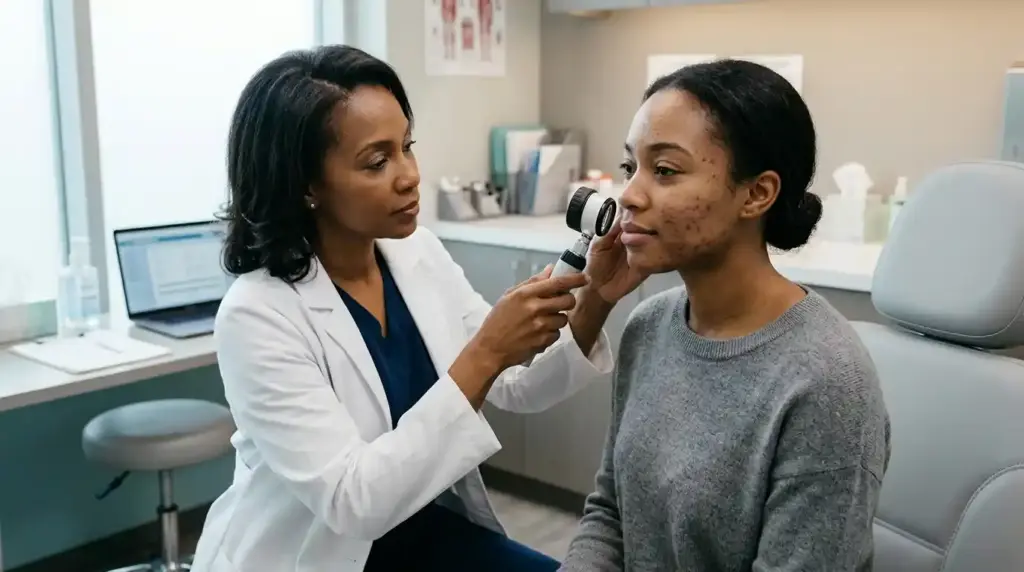
Mild acne may improve with appropriate skincare and over-the-counter treatments. However, some forms of acne require professional assessment and prescription treatment.
Consider seeing a healthcare professional if:
- Acne is severe, widespread, or painful.
- You develop deep nodules or cyst-like lesions.
- Acne is leaving permanent scars or persistent dark marks.
- Over-the-counter treatments have not produced adequate improvement after an appropriate trial.
- Acne repeatedly returns despite treatment.
- You develop sudden or unusual acne-like eruptions.
- Acne is causing significant emotional distress or affecting your quality of life.
- Adult acne occurs alongside symptoms suggesting a hormonal disorder.
- Acne develops or worsens after starting a new medication.
Early assessment is particularly important when deep inflammatory lesions or scarring are present.
A healthcare professional can confirm whether the eruption is acne vulgaris, assess its severity, identify possible contributing factors, and recommend appropriate treatment.
In severe or persistent cases, referral to a dermatologist may be necessary.
Seek professional assessment when acne is painful, severe, persistent, associated with nodules or cyst-like lesions, or leaving scars and persistent pigmentation changes.
Also seek advice if the diagnosis is uncertain, if acne is causing significant psychological distress, or if it develops suddenly after starting a medication.
Do not delay assessment when there is a risk of permanent scarring.
Frequently Asked Questions About Acne
1. Is acne the same as pimples?
Short answer: Not exactly.
A pimple is a common term for an individual skin blemish, usually an inflamed papule or pustule. Acne is the underlying medical condition that can produce different types of lesions, including blackheads, whiteheads, papules, pustules, and deeper inflammatory lesions.
2. What causes acne on the face?
Short answer: A combination of excess sebum, blocked hair follicles, microbial changes, and inflammation.
Facial acne develops through the same biological mechanisms responsible for acne elsewhere on the body. Hormonal influences, genetics, cosmetics, occlusive skincare products, and friction may also contribute to facial breakouts.
3. What causes chin and jawline acne?
Short answer: Hormonal influences are common contributors, but they are not the only possible cause.
Hormonal fluctuations may increase sebaceous gland activity and aggravate acne around the chin and jawline. Shaving irritation, friction, and occlusive products may also contribute. Acne in this location alone does not establish a hormonal disorder.
4. What causes acne on the back and chest?
Short answer: The combination of active sebaceous glands and the biological processes responsible for acne.
The back and chest contain numerous sebaceous glands. Sweat, tight clothing, friction, sports equipment, and prolonged occlusion may aggravate breakouts in these areas.
5. Can dirty skin cause acne?
Short answer: No. Acne is not simply caused by dirty skin.
Acne develops through biological processes inside the hair follicle. Excess sebum, abnormal follicular keratinization, changes in the skin microbiome, and inflammation all contribute. Regular cleansing is useful, but aggressive washing does not cure acne.
6. Is acne contagious?
Short answer: No.
Acne cannot be caught from another person through touching, kissing, or sharing pillows and towels. Although Cutibacterium acnes is involved in acne development, it is a normal member of the skin microbiome and is not simply an infectious organism transmitted through ordinary contact.
7. Can hormones cause acne?
Short answer: Yes. Hormones are among the most important influences on acne development.
Androgens stimulate sebaceous glands to produce sebum. Hormonal changes during puberty, menstruation, pregnancy, and perimenopause may therefore influence acne. Certain endocrine disorders, including PCOS, can also contribute.
8. Does stress cause acne?
Short answer: Stress may worsen existing acne, although it is not considered a primary cause.
Stress can influence hormonal and inflammatory pathways that affect skin function. Some people notice increased breakouts during stressful periods, although the extent of this effect varies.
9. Does chocolate or greasy food cause acne?
Short answer: Neither has been established as a universal cause of acne.
The relationship between diet and acne is complex. Some research suggests that high-glycemic dietary patterns and certain dairy products may aggravate acne in susceptible individuals. However, there is insufficient evidence to recommend a specific diet as a universal acne treatment.
10. Can a dirty pillowcase cause acne?
Short answer: Not directly.
A dirty pillowcase is not considered a primary cause of acne. However, regularly washing pillowcases may reduce the accumulation of oils, sweat, cosmetics, and other debris that could contribute to skin irritation in some individuals.
11. Can adults get acne?
Short answer: Yes. Acne can affect people well beyond adolescence.
Adult acne may persist from teenage years or develop for the first time later in life. It is particularly common among women and may be influenced by hormonal fluctuations, genetics, medications, and other factors.
12. Can pregnancy affect acne?
Short answer: Yes. Pregnancy-related hormonal changes may improve or worsen acne.
Changes in hormone levels during pregnancy can influence sebaceous gland activity. Some women experience clearer skin, while others develop new or worsening breakouts. Acne treatments should be reviewed with a healthcare professional during pregnancy because some medications are unsuitable.
13. Can acne run in families?
Short answer: Yes. Genetic factors can influence acne susceptibility and severity.
Family history is an important risk factor. Inherited differences in sebum production, hormone sensitivity, follicular characteristics, and inflammatory responses may help explain why acne is more severe in some families.
14. Does wearing makeup cause acne?
Short answer: Not necessarily.
Many cosmetic products are formulated to reduce the likelihood of blocking hair follicles. Choosing non-comedogenic products, removing makeup before sleeping, and cleaning makeup brushes regularly may help reduce avoidable aggravating factors.
15. Can dirty skin cause acne?
Short answer: No.
Acne develops inside the hair follicle and is driven primarily by excess sebum, blocked follicles, inflammation, and changes in the skin microbiome. While good skin hygiene is beneficial, scrubbing the skin aggressively or washing the face excessively does not cure acne and may irritate the skin.
16. Can acne leave permanent scars or dark marks?
Short answer: Yes. Severe or persistent acne can leave permanent scars and long-lasting pigmentation changes.
Inflammation may stimulate excess pigment production, resulting in post-inflammatory hyperpigmentation. Deeper tissue damage can also produce depressed, raised, or keloid scars. Early acne management can help reduce these complications.
17. Why do I get acne even though I wash my face regularly?
Short answer: Because acne is not simply a hygiene problem.
Many people with excellent hygiene still develop acne due to genetics, hormones, excess sebum production, and inflammation.
18. Does hard water cause acne?
Short answer: There is no strong evidence that hard water directly causes acne.
However, hard water may irritate the skin or affect how well some cleansers work, which could indirectly influence skin comfort in certain individuals.
19. Should I burst or squeeze pimples?
Short answer: It is generally not recommended.
Squeezing pimples may increase inflammation, delay healing, introduce bacteria from the fingers, and increase the risk of scarring or post-inflammatory hyperpigmentation.
20. Can acne cause skin cancer?
Short answer: No.
Acne does not turn into skin cancer.
However, severe acne may leave permanent scars or pigmentation changes if not appropriately managed.
- Acne is a chronic inflammatory condition affecting the hair follicles and sebaceous glands.
- Four major biological mechanisms contribute to acne: excess sebum production, abnormal follicular keratinization, changes in the skin microbiome, and inflammation.
- Hormones and genetics play important roles in determining who develops acne and how severe it becomes.
- Certain medications, cosmetics, friction, stress, and dietary patterns may trigger or aggravate breakouts in susceptible individuals.
- Acne can affect the face, chin, jawline, chest, shoulders, and back.
- Acne is not contagious and is not simply caused by poor hygiene.
- Not every acne-like breakout is acne vulgaris; other conditions, including folliculitis, may produce similar lesions.
- Persistent inflammation can cause dark marks and permanent scarring.
- Gentle skincare and appropriate evidence-based treatments are more effective than harsh cleansing and unproven home remedies.
- Early assessment and treatment can reduce the risk of long-term skin damage.
Bottom Line
Acne is far more than a cosmetic concern or a sign of poor hygiene. It is a complex inflammatory skin condition influenced by the interaction of hormones, genetics, sebum production, follicular changes, the skin microbiome, and the body’s immune response.
These processes explain why acne develops in some people but not others, why it affects particular areas of the body, and why its severity varies considerably between individuals.
Although factors such as friction, certain cosmetics, medications, stress, and some dietary patterns may contribute to breakouts, they do not explain acne on their own.
Understanding how acne develops is the first step toward choosing appropriate skincare practices and evidence-based treatments rather than relying on myths or harsh home remedies.
If acne is persistent, painful, or causing scars and lasting pigmentation changes, professional assessment can help identify the underlying problem, guide effective treatment, and reduce the risk of long-term skin damage.




No comments yet
Be the first to share your thoughts, clinical perspective, or questions on this topic.