


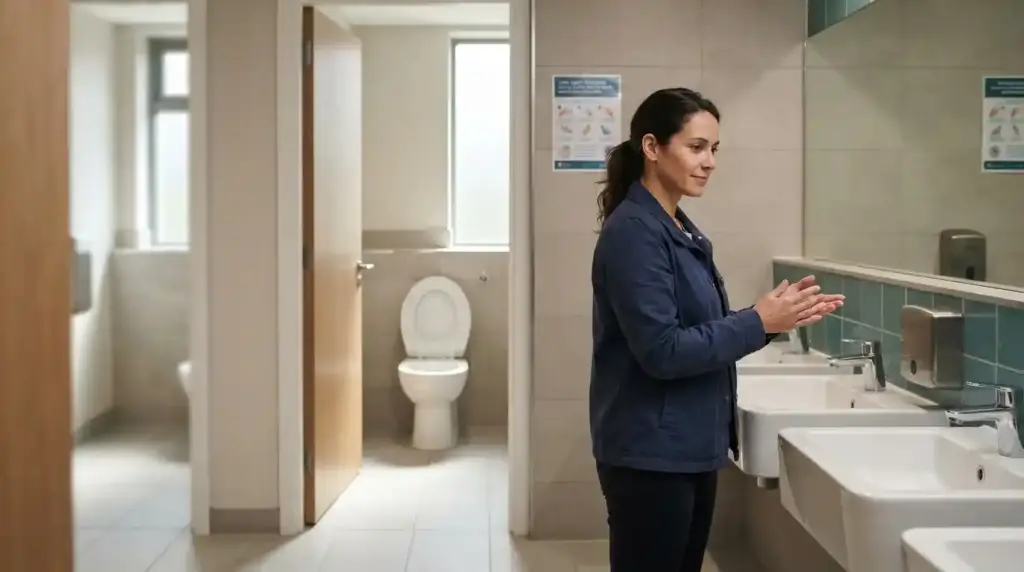
Few everyday activities generate as much unnecessary anxiety as using a public toilet. For some people, sitting on a public toilet seat immediately raises fears of contracting an infection. Others become concerned about vaginal itching, unusual discharge, or burning during urination hours or days after using a public restroom, automatically assuming that the toilet must be responsible. The expression toilet infection has consequently become a familiar explanation for a wide range of urinary and genital symptoms, particularly among women. But is there really such a thing as a toilet infection? Can sitting on a toilet seat transmit a sexually transmitted infection or cause a urinary tract infection? And can the fear of contracting an infection sometimes contribute to the very symptoms a person begins to notice? The answers require us to separate established medical facts from assumptions, understand how infections actually spread, and recognize the difference between genuine infection, physical irritation, and the influence of psychological expectations on bodily sensations.
What Are Toilet Infections? Understanding What People Really Mean

The expression toilet infection is widely used in everyday conversation to describe symptoms that people associate with using public or shared toilets. These may include vaginal itching, unusual vaginal discharge, unpleasant genital odor, burning during urination, frequent urination, and lower abdominal discomfort.
Despite its widespread use, toilet infection is not a recognized medical diagnosis. It does not identify a particular microorganism, disease, or established route of infection.
Instead, the expression is often used as an umbrella term for several conditions that have different causes and require different treatments.
Conditions Commonly Described as Toilet Infections
Urinary tract infections (UTIs)
These are infections involving parts of the urinary system, including the urethra, bladder, ureters, and kidneys. Most uncomplicated bladder infections occur when bacteria, commonly Escherichia coli (E. coli) from the intestinal tract, enter the urethra and travel into the bladder.
Vaginal yeast infections (vulvovaginal candidiasis)
These occur when Candida yeast, which may normally exist in small amounts in the body, multiplies excessively and causes inflammation. Symptoms can include intense itching, irritation, redness, and thick vaginal discharge.
Bacterial vaginosis (BV)
This condition develops when the normal balance of vaginal bacteria changes, allowing certain bacteria to become more dominant. It can cause unusual discharge and a fish-like odor. BV is not simply an infection acquired from an unclean toilet.
Trichomoniasis
This is a sexually transmitted infection caused by the parasite Trichomonas vaginalis. It can cause vaginal discharge, irritation, and discomfort during urination, although many infected people have no symptoms.
Other genital and urinary conditions
Not every episode of itching, discharge, or painful urination is caused by an infection. Contact dermatitis, allergic reactions, irritation from personal-care products, urethritis, and other conditions can produce similar symptoms.
The CDC emphasizes that symptoms such as vaginal itching, burning, odor, and discharge can have several different causes. Clinical assessment and appropriate testing are important because symptoms alone may not reliably identify the underlying condition.
The term toilet infection is not a medical diagnosis. Vaginal discharge, genital itching, and painful urination can arise from several different infectious and noninfectious conditions. Identifying the actual cause is essential because treatments are not interchangeable.
Why the distinction matters
Calling every episode of genital or urinary discomfort a toilet infection can create several problems:
- People may assume they have acquired an infection from a toilet when no such exposure has occurred.
- They may purchase antibiotics or antifungal medications without knowing what they are treating.
- Conditions requiring specific investigations may go undiagnosed.
- Sexually transmitted infections may be incorrectly attributed to environmental exposure.
- People may develop unnecessary fear of public restrooms and ordinary toilet use.
Understanding the actual condition is therefore the first step toward appropriate treatment and prevention.
How Do Infections Spread? Understanding the Science of Transmission

To understand whether a toilet can transmit an infection, we first need to understand how microorganisms cause disease.
Bacteria, viruses, fungi, and parasites do not all behave in the same way. They differ in their ability to survive outside the human body, the routes through which they enter the body, and the conditions required for them to establish an infection.
How microorganisms spread
Depending on the organism, infection can occur through several routes:
- Direct contact: Physical contact with an infected person, including contact with infectious skin lesions or mucous membranes.
- Sexual transmission: Exchange of infectious secretions or direct contact with infected genital, anal, or oral tissues.
- Indirect contact (fomite transmission): Contact with an object or surface contaminated with an infectious microorganism, followed by transfer to a susceptible entry point.
- Fecal–oral transmission: Swallowing microorganisms transferred from infected feces, often through contaminated hands, food, water, or surfaces.
- Respiratory transmission: Inhaling infectious respiratory particles released by an infected person.
- Bloodborne transmission: Exposure to infected blood through routes such as contaminated needles or certain other forms of blood exposure.
Not every microorganism can use every route. The presence of a pathogen on a surface does not automatically mean that it can infect someone who touches that surface.
How long can germs survive outside the body?
There is no universal survival time for microorganisms.
Some bacteria and viruses can remain viable on surfaces for varying periods, depending on:
- The type of microorganism.
- Temperature and humidity.
- The nature of the surface.
- Exposure to sunlight and drying.
- The presence of organic material.
- Cleaning and disinfection.
Some sexually transmitted pathogens are poorly adapted to transmission through ordinary dry environmental surfaces. Others may survive outside the body under particular conditions, but environmental survival alone does not establish that transmission will occur.
The skin as a protective barrier
Human skin provides an important physical barrier against infection.
The intact skin covering the thighs and buttocks is not the same as the delicate mucous membranes lining the vagina, urethral opening, mouth, and other body openings.
For an infection to develop, a viable pathogen must reach a susceptible entry point in sufficient quantity and under suitable conditions.
This is one reason why simply sitting on a toilet seat is not considered a realistic route of transmission for most sexually transmitted infections.
Contamination, exposure, and infection are not the same
These three concepts are frequently confused.
| Term | Meaning |
|---|---|
| Contamination | Microorganisms are present on a surface or object. |
| Exposure | A person comes into contact with a microorganism or a potentially contaminated environment. |
| Infection | A microorganism successfully enters the body, establishes itself, and multiplies. |
A toilet seat may be contaminated without causing anyone to become infected. A person may also encounter microorganisms without developing disease.
This distinction is fundamental to understanding the actual risks associated with public toilets.
The presence of microorganisms on a surface does not automatically translate into infection. Transmission depends on the organism‘s ability to survive, the amount transferred, the route of exposure, and the susceptibility of the person exposed.
Can You Really Get an Infection from a Toilet?

The short answer is that some infections can be transmitted through contaminated restroom environments, but the risks depend on the microorganism and the route of exposure.
The idea that simply sitting on a public toilet seat commonly causes UTIs, vaginal infections, or STIs is not supported by established medical evidence.
Can microorganisms survive on toilet seats?
Yes. Toilet seats and other bathroom surfaces can become contaminated with microorganisms.
Studies of public washrooms have identified bacteria and viruses on surfaces, including microorganisms originating from human skin, fecal material, and the surrounding environment.
However, detecting microorganisms on a toilet seat does not establish that they can cause a particular infection through ordinary contact with the seat.
A systematic review of infectious disease transmission in public washrooms found evidence of surface contamination but emphasized the importance of hand hygiene, environmental cleaning, and proper washroom maintenance. It also found no evidence of airborne transmission of the infectious diseases examined within public washrooms. Read about it here.
Which bathroom surfaces deserve more attention?
Although toilet seats attract considerable attention, other frequently touched surfaces can be important in the spread of microorganisms.
Examples include:
- Flush handles and buttons.
- Door handles and locks.
- Faucet handles.
- Sink surfaces.
- Soap dispensers.
- Hand-drying equipment.
These surfaces can transfer microorganisms to the hands, which may subsequently contaminate food, the mouth, or other surfaces.
This is particularly relevant to infections spread through the fecal-oral route.
Can flushing spread microorganisms?
Flushing can generate droplets and aerosols containing microorganisms from toilet contents. This phenomenon is sometimes called a toilet plume.
The extent of aerosol generation and the distance microorganisms travel depend on several factors, including toilet design, flushing mechanism, ventilation, and the organisms present.
However, it is important not to confuse aerosol generation with demonstrated disease transmission.
Research has identified potential exposure pathways, but the actual contribution of toilet plumes to infections in ordinary public restroom use remains uncertain.
Are public toilets more dangerous than household toilets?
Not necessarily.
Public toilets may experience heavier use, variable cleaning standards, and more frequent contact with different users. Household bathrooms can also become contaminated, particularly when cleaning and hand hygiene are inadequate.
The level of risk depends more on sanitation, maintenance, contamination, and hygiene practices than simply whether a toilet is public or private.
Toilet Infections: Common Myths and the Medical Facts

Many misconceptions about toilet infections arise from confusing the presence of microorganisms with the ability to transmit disease. Others are sustained by personal experiences in which symptoms appear shortly after using a public restroom.
The following myths examine these beliefs against established medical knowledge.
You can contract sexually transmitted infections from toilet seats.
Ordinary toilet-seat contact is not a recognized or realistic route of transmission for common STIs such as gonorrhea, chlamydia, and syphilis.
These infections are primarily transmitted through sexual contact involving infected genital, anal, or oral tissues and secretions. Sitting on a toilet seat does not provide the exposure conditions normally required for transmission.
Genital herpes is also not ordinarily transmitted through toilet seats. It spreads mainly through direct contact with infected skin or mucous membranes.
The important distinction: Some microorganisms may survive outside the body for varying periods, but survival on a surface does not establish a practical route of infection.
You can get HIV from using a public toilet.
HIV is not transmitted through toilet seats, toilet water, shared bathrooms, or ordinary contact with contaminated environmental surfaces.
The virus is transmitted through specific exposures involving certain body fluids, including blood, semen, vaginal fluids, rectal fluids, and breast milk, when these reach susceptible tissues or enter the bloodstream.
HIV does not reproduce on toilet seats or survive and spread through ordinary toilet use.
Public toilet seats cause urinary tract infections.
Public toilet seats are not an established cause of ordinary UTIs.
Most UTIs develop when bacteria, particularly E. coli originating from the intestinal tract, enter the urethra and travel upward into the urinary system.
Factors such as female anatomy, sexual activity, urinary catheter use, urinary retention, and certain underlying health conditions can increase the risk.
The mere act of sitting on a toilet seat does not provide the usual pathway through which these infections develop.
Vaginal itching and discharge after using a public toilet mean you have a toilet infection.
The appearance of symptoms after using a public toilet does not establish that the toilet caused them.
Vaginal itching and discharge can result from yeast infections, bacterial vaginosis, trichomoniasis, contact irritation, allergic reactions, and other conditions.
Some may have been present before the person noticed symptoms. Others may develop independently of the toilet exposure.
A temporal association is not proof of causation.
All vaginal infections are caused by poor personal hygiene.
This is an oversimplification.
Vaginal yeast infections are associated with excessive Candida growth, which may be influenced by antibiotic use, pregnancy, diabetes, and other factors.
Bacterial vaginosis involves changes in the normal vaginal bacterial community. It is not simply a consequence of inadequate washing.
Excessive washing, douching, and the use of irritating or perfumed products may actually disturb the vaginal environment.
Hovering over a public toilet seat prevents urinary or vaginal infections.
There is no convincing evidence that hovering provides meaningful protection against infection. Research on crouching and urinary function has produced mixed findings, and some studies suggest that hovering may interfere with complete bladder emptying. When a toilet is reasonably clean and dry, sitting comfortably is generally preferable to maintaining an uncomfortable hovering position.
Covering a toilet seat with tissue paper prevents infections.
A tissue-paper barrier is not a medical requirement for routine toilet use. Although paper covers may reduce some surface contamination, they do not make a toilet sterile or guarantee protection against microorganisms. For most healthy people, the risk of acquiring an infection from contact with an intact toilet seat is low. Hand hygiene and avoiding contact with visibly contaminated surfaces are more useful precautions.
Public toilets are always more dangerous than household toilets.
Not necessarily.
Public toilets may have more users and greater variation in maintenance. However, household bathrooms can also harbor microorganisms.
Risk depends on cleaning practices, ventilation, plumbing, contamination, and the behavior of people using the facility.
A well-maintained public toilet is not automatically more dangerous than a poorly maintained household bathroom.
Flushing a toilet spreads infections to everyone who uses it afterward.
Flushing can generate droplets and aerosols, some of which may contain microorganisms.
However, this does not mean that every person who subsequently uses the toilet will become infected.
Disease transmission depends on the pathogen, the amount present, the route of exposure, and other environmental and biological factors.
Closing the lid before flushing, where a lid is available, may help reduce some forms of environmental dispersal, although it does not eliminate contamination.
Sharing a toilet with someone who has an infection means you can catch it.
Sharing a bathroom does not automatically transmit an infection.
A person with a UTI, for example, does not ordinarily transmit that infection to another person through a shared toilet.
Likewise, someone with vaginal candidiasis or an STI does not automatically infect everyone who uses the same bathroom.
However, gastrointestinal pathogens can spread through contaminated hands, surfaces, and other fecal–oral routes. Appropriate bathroom hygiene remains important.
Washing inside the vagina prevents infections.
The vagina has a natural microbial environment that helps maintain its health.
Douching or washing inside the vagina with water, soap, antiseptics, or other preparations can disturb this environment and may increase the risk of irritation and certain vaginal conditions.
Routine external cleaning of the vulva with water, and mild unscented soap if tolerated, is generally sufficient.
The vagina does not need internal washing to remain clean.
Urinating immediately after sex is guaranteed to prevent urinary tract infections.
Urinating after sex is commonly recommended as a simple, low-risk precaution, but evidence that it independently prevents UTIs is limited. It should not be presented as a guaranteed preventive measure. People with recurrent UTIs should discuss their individual risk factors and evidence-based prevention options with a healthcare professional.
Holding urine causes toilet infections.
Occasionally delaying urination does not automatically cause an infection.
However, routinely ignoring the urge to urinate or having difficulty emptying the bladder may contribute to urinary problems in some circumstances.
Urinary retention, particularly when the bladder does not empty properly, can increase the risk of UTIs.
The distinction between occasionally delaying a toilet visit and chronic urinary retention is important.
Drinking plenty of water will cure a urinary tract infection.
Drinking enough water helps prevent dehydration and may support recovery, but it does not reliably eliminate an established bacterial UTI on its own. Some mild UTIs may resolve without antibiotics, but others require medical treatment. Persistent or worsening symptoms need appropriate assessment rather than relying on increased water intake alone.
Every episode of genital itching, discharge, or unpleasant odor requires antibiotics.
Different conditions require different treatments.
Bacterial infections may require specific antibiotics.
Yeast infections require antifungal medication when treatment is indicated.
Some irritant or allergic conditions require removal of the offending substance rather than antimicrobial medication.
STIs require organism-specific treatment and, in some cases, partner evaluation and treatment.
Taking antibiotics without establishing the cause may delay appropriate treatment and contribute to antimicrobial resistance.
Men cannot get urinary tract infections.
Men can develop UTIs, although they occur less frequently in younger men than in women.
Urinary infections in men may be associated with prostate enlargement, urinary retention, urinary tract abnormalities, catheter use, and other conditions.
Men with urinary symptoms should receive appropriate medical assessment rather than assuming that UTIs are exclusively a female problem.
What Infections Can Actually Spread Through Restroom Environments?
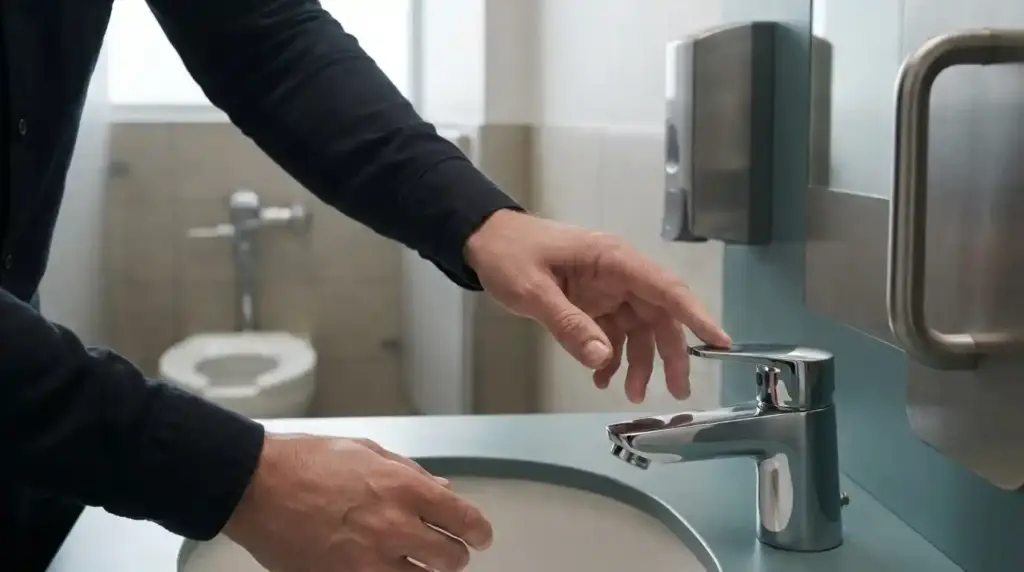
Debunking toilet-seat myths should not lead to the opposite misconception that restrooms present no infection risks.
Some microorganisms can spread through contaminated hands, surfaces, and other environmental pathways.
Gastrointestinal infections
One important example is norovirus, a highly contagious virus responsible for acute gastroenteritis.
It can spread when microscopic particles of infected feces or vomit contaminate hands, food, water, or surfaces and are subsequently swallowed.
A person may become infected after touching a contaminated restroom surface and then eating or touching their mouth without adequate hand hygiene.
Other gastrointestinal pathogens can also spread through fecal–oral transmission.
Contaminated high-touch surfaces
Flush handles, faucet handles, door locks, and other frequently touched surfaces may become contaminated.
The concern is not simply touching these surfaces. It is what happens afterward.
For example:
- An infected person contaminates a restroom surface.
- Another person touches that surface.
- Microorganisms transfer to their hands.
- The person touches food or their mouth without adequately cleaning their hands.
- Some microorganisms may enter the digestive system.
This illustrates why hand hygiene is more important than excessive concern about sitting on a toilet seat.
Toilet flushing and contaminated aerosols
Toilet flushing can release droplets and aerosols into the surrounding environment.
Some may contain microorganisms from fecal material or contaminated toilet water.
However, the presence of microorganisms in aerosols does not establish that ordinary exposure will result in infection. The actual risks vary according to the organism and environmental conditions.
Research on toilet plumes continues to identify important evidence gaps, particularly concerning the extent to which these aerosols contribute to real-world infections.
Skin infections and contaminated surfaces
Some microorganisms can cause skin infections when they enter through cuts, abrasions, or damaged skin.
This is more relevant to contaminated surfaces that come into contact with broken skin than to ordinary contact between intact skin and a toilet seat.
Good personal hygiene, wound care, and routine environmental cleaning help reduce these risks.
Public restroom surfaces can carry bacteria and viruses, but contamination is not equivalent to disease transmission. The clearest practical concern is the transfer of enteric pathogens through contaminated hands and subsequent hand-to-mouth contact. Evidence for airborne transmission of infectious diseases in ordinary public washrooms remains limited.
What Actually Causes the Conditions People Call Toilet Infections?

Understanding the actual causes of urinary and vaginal conditions helps replace fear-based explanations with useful prevention strategies.
Urinary tract infections
Most UTIs occur when bacteria enter the urinary tract through the urethra and multiply in the bladder.
The bacterium Escherichia coli is responsible for many uncomplicated UTIs.
Women are more susceptible partly because their urethra is shorter and its opening is closer to the anus, making it easier for intestinal bacteria to reach the urinary opening.
Other risk factors include:
- Sexual activity.
- Previous UTIs.
- Urinary catheter use.
- Urinary tract abnormalities.
- Incomplete bladder emptying.
- Pregnancy.
- Diabetes and certain other medical conditions.
A UTI is therefore not simply an infection acquired by sitting on a toilet seat.
Vaginal yeast infections
Vaginal candidiasis occurs when Candida yeast multiplies excessively and produces inflammation.
Potential contributing factors include:
- Recent antibiotic use.
- Pregnancy and hormonal changes.
- Poorly controlled diabetes.
- Certain immune-system conditions.
- Other factors that alter the vaginal environment.
It is important to understand that candidiasis is not necessarily sexually transmitted and can occur in people who have never had sexual intercourse.
Bacterial vaginosis
Bacterial vaginosis develops when the normal balance of bacteria in the vagina changes.
The usual protective Lactobacillus-dominant environment becomes less dominant, while other bacterial species increase.
It may cause:
- Thin, unusual vaginal discharge.
- A characteristic fish-like odor.
- Occasionally mild irritation.
Some people have no symptoms.
BV is associated with several factors, including sexual activity, new or multiple sexual partners, and vaginal douching. It should not be reduced to a problem of toilet hygiene or simply being unclean.
Bacterial vaginosis involves a change in the balance of the vaginal bacterial community. It is not simply caused by inadequate washing or contact with an unclean toilet.
Trichomoniasis and other STIs
Trichomoniasis is caused by the parasite Trichomonas vaginalis and is primarily transmitted through sexual contact.
Other STIs, including gonorrhea, chlamydia, syphilis, and genital herpes, also have established transmission routes involving sexual contact.
Because several of these infections can cause overlapping symptoms, proper testing is important.
Noninfectious causes of genital irritation
Not all genital symptoms are infectious.
Irritation may arise from:
- Perfumed soaps and intimate washes.
- Laundry detergents.
- Sanitary products.
- Tight clothing and friction.
- Allergic reactions.
- Excessive washing.
- Contact with irritating substances.
These conditions may produce itching, redness, soreness, or burning without an infection.
Symptoms: How to Recognize the Different Conditions

Symptoms can provide useful clues, but they are not always sufficient to distinguish one condition from another.
| Condition | Possible symptoms |
|---|---|
| UTI | Burning during urination, frequent urination, urgency, lower abdominal discomfort |
| Vaginal candidiasis | Intense itching, redness, soreness, thick white discharge |
| Bacterial vaginosis | Thin discharge, fish-like odor |
| Trichomoniasis | Discharge, irritation, genital discomfort, sometimes painful urination |
| Other STIs | Discharge, sores, ulcers, pelvic pain, painful urination, or no symptoms |
| Contact dermatitis | Itching, redness, burning, irritation |
Some people have infections without noticeable symptoms. Others experience symptoms that resemble an infection despite having no detectable infectious cause.
The CDC advises that clinical history alone is insufficient for accurately diagnosing many causes of vaginal symptoms. Examination and appropriate laboratory investigations may be necessary.
Why self-diagnosis can be misleading
A person who experiences itching may assume they have candidiasis. Someone with an unusual discharge may assume they have bacterial vaginosis. Another person may interpret burning during urination as a UTI.
Yet these symptoms overlap across several conditions.
Treating the wrong condition may prolong symptoms, delay diagnosis, or expose someone to unnecessary medication.
The Mind–Body Connection: Can Fear of Toilet Infections Cause Real Physical Symptoms?

This is an aspect of the toilet-infection misconception that deserves particular attention.
Consider the following situation:
A woman uses a public toilet. She has heard repeatedly that public toilet seats are contaminated and that using them can cause vaginal infections. Although she does not notice anything unusual immediately afterward, she begins worrying that she may have contracted an infection.
A few hours later, she notices an itch around her genital area. By the following morning, she is even more conscious of the sensation. She begins checking herself repeatedly, becomes increasingly uncomfortable, and concludes that she must have acquired a toilet infection.
The itching may be entirely real. However, does its appearance prove that the toilet caused an infection?
No. The timing of a symptom does not establish its cause.
There is a recognized scientific concept that helps explain part of this experience: the nocebo effect.
What is the nocebo effect?
The nocebo effect describes how negative expectations, fears, or previous experiences can contribute to the development or worsening of unpleasant symptoms.
It is often discussed alongside the placebo effect.
While positive expectations can sometimes improve how a person experiences symptoms, negative expectations can increase discomfort or make certain sensations more noticeable.
For example, someone who expects a substance to cause itching may become more sensitive to sensations on their skin after exposure, even when the substance itself has no harmful effect.
This does not mean that the person is pretending or deliberately imagining the symptoms.
The brain and body are closely connected. Attention, expectation, stress, and the nervous system can influence how physical sensations are processed.
Research supports the ability of negative expectations and learned associations to aggravate sensations such as pain and itching. A systematic review and meta-analysis published in Psychosomatic Medicine in 2023 examined experimental evidence of learned nocebo effects on cutaneous pain and itch.
How can fear of toilet infections produce itching or discomfort?
Several processes may contribute.
Heightened attention to bodily sensations
Normally, people do not pay constant attention to every sensation around their genital area.
However, after a frightening experience or perceived exposure, someone may begin monitoring the area closely.
Minor sensations that would ordinarily go unnoticed can become more prominent.
Negative expectations
When someone strongly believes that using a public toilet will cause an infection, they may interpret ordinary bodily sensations as evidence that the feared outcome has occurred.
The expectation of discomfort can influence the perception of subsequent sensations.
Anxiety and stress
Anxiety can increase physiological arousal and influence sensory processing.
Stress can also aggravate itching in people who already have itchy skin conditions. The relationship can become cyclical: itching increases anxiety, and anxiety makes the itching more troublesome.
A review published in Clinical Therapeutics in 2020 discusses the interaction between psychological stress and itching, including how each can aggravate the other.
Repeated checking and irritation
Repeatedly examining, touching, rubbing, or washing an already sensitive genital area may produce additional irritation.
Excessive washing, especially with perfumed products or antiseptics, can further aggravate discomfort.
Does this mean the itching is imaginary?
Absolutely not.
A sensation can be genuine even when there is no infection causing it.
Psychological influences on physical symptoms do not make those symptoms false. They simply mean that the body and mind cannot always be separated when explaining how a person feels.
However, it is equally important not to assume that every symptom following a frightening experience is psychological.
An infection, skin irritation, allergic reaction, or another medical condition may still be responsible.
How can someone distinguish anxiety-related sensations from an actual infection?
There is no reliable way to make this distinction based on timing alone.
For example:
- Itching that begins after using a public toilet does not prove infection.
- Itching that becomes more noticeable when someone thinks about infection does not rule out an underlying medical condition.
- The absence of symptoms immediately after toilet use does not guarantee that no unrelated condition will develop later.
The appropriate approach is to consider the symptoms, relevant exposures, medical history, physical examination, and investigations where necessary.
Repeated symptoms, unusual discharge, sores, painful urination, or other concerning features should be medically assessed.
Negative expectations and anxiety can influence the perception and intensity of physical sensations, including itching and pain. A person may experience genuine discomfort without an identifiable infection. However, psychological explanations should never replace appropriate medical evaluation when symptoms persist or suggest an underlying condition.
Breaking the cycle of fear and symptoms
A few practical steps can help:
- Understand that ordinary toilet-seat contact is not a recognized route of transmission for most genital infections.
- Avoid repeatedly checking or touching the genital area because of fear.
- Do not use antiseptics, vaginal washes, or antibiotics simply because you have used a public toilet.
- Maintain normal hygiene without excessive washing.
- Seek medical evaluation when symptoms persist, recur, or are accompanied by concerning features.
- Avoid interpreting every bodily sensation as evidence of infection.
The objective is not to dismiss symptoms but to prevent fear and misinformation from becoming additional sources of physical discomfort.
Toilet Hygiene and Personal Habits: What Actually Matters?
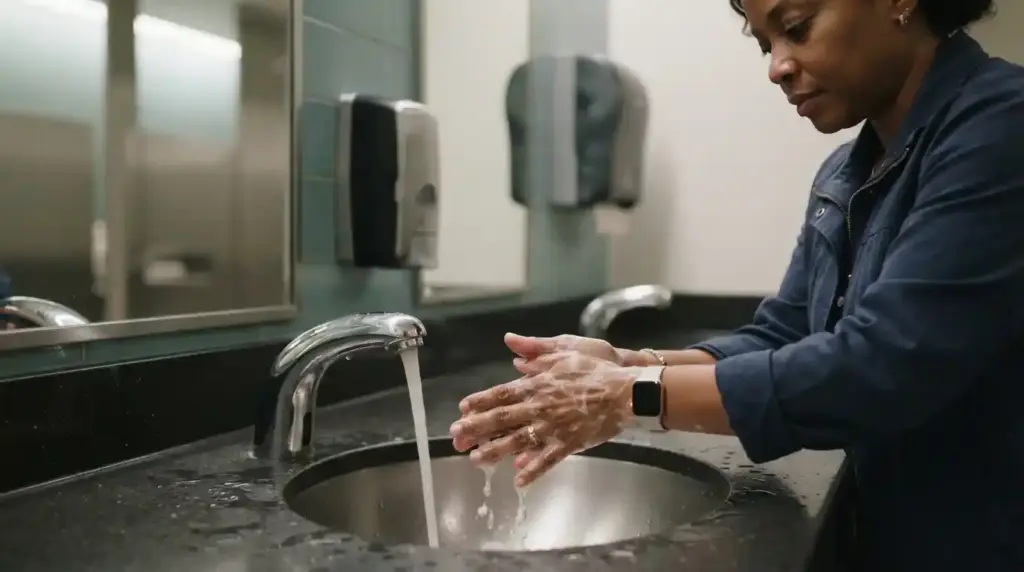
Good toilet hygiene is important, but it should be based on established infection-prevention principles rather than exaggerated fears about toilet seats.
Wash your hands properly
Handwashing with soap and running water after using the toilet is one of the most important ways to reduce the spread of gastrointestinal pathogens.
Pay attention to:
- The palms and backs of your hands.
- Between your fingers.
- Your fingertips and thumbs.
- Areas around and beneath your fingernails.
Wash thoroughly and dry your hands properly.
Alcohol-based hand sanitizers can be useful in some situations, but they should not replace soap-and-water handwashing when norovirus contamination is a concern.
Wash your hands thoroughly with soap and running water after using the toilet. This is particularly important for reducing the spread of gastrointestinal pathogens such as norovirus. Hand sanitizer should not replace soap-and-water handwashing when norovirus contamination is a concern.
Wipe from front to back
For women, wiping from front to back after urination or bowel movements helps reduce the transfer of intestinal bacteria toward the urethral and vaginal openings.
This is a sensible hygiene practice, although it does not guarantee protection against UTIs.
Clean the external genital area appropriately
The external genital area should be cleaned gently.
Avoid:
- Vaginal douching.
- Harsh antiseptic solutions.
- Strongly perfumed soaps.
- Unnecessary intimate washes.
- Inserting cleansing preparations into the vagina.
Maintain a clean toilet environment
Clean toilet seats, flush handles, faucet handles, and other frequently touched surfaces regularly.
Where possible:
- Use appropriate household cleaning products.
- Disinfect frequently touched surfaces when necessary.
- Maintain proper ventilation.
- Keep toilets and surrounding floors clean.
- Ensure that waste is disposed of appropriately.
Practice sensible public toilet habits
When using public facilities:
- Choose a reasonably clean and maintained toilet.
- Avoid direct contact with visibly contaminated surfaces.
- Wash your hands afterward.
- Avoid touching your face or food with unwashed hands.
- Do not feel compelled to hover over every toilet seat or construct elaborate tissue barriers.
Maintain appropriate menstrual hygiene
Change menstrual products according to their instructions and individual needs.
Wash your hands before and after changing menstrual products, and avoid inserting unapproved cleansing substances into the vagina.
Practice appropriate toilet hygiene with children
Teach children to:
- Wash their hands after toilet use.
- Wipe appropriately.
- Avoid playing with toilet water.
- Avoid touching their mouths with unwashed hands.
- Keep their surroundings clean.
How to Prevent Urinary and Vaginal Infections

Preventing infections requires understanding the particular condition involved. There is no single hygiene practice that prevents every urinary or vaginal infection.
Reducing the risk of UTIs
Useful measures include:
- Drinking adequate fluids.
- Avoiding routinely delaying urination.
- Emptying the bladder when needed.
- Wiping from front to back.
- Avoiding unnecessary urinary catheterization.
- Discussing recurrent UTIs with a healthcare professional.
For women who experience recurrent UTIs, additional preventive strategies may be appropriate depending on age, hormonal status, medical history, and the circumstances surrounding the episodes.
Supporting vaginal health
- Avoid vaginal douching.
- Avoid irritating or perfumed genital products.
- Use appropriate menstrual hygiene practices.
- Seek medical advice for recurrent or persistent symptoms.
- Avoid unnecessary antibiotics.
- Manage underlying conditions such as diabetes appropriately.
Preventing STIs
- Use condoms correctly and consistently.
- Consider appropriate STI screening.
- Discuss sexual health with partners.
- Seek testing when exposure is suspected.
- Ensure that diagnosed infections receive appropriate treatment.
What about cotton underwear and tight clothing?
Breathable clothing and underwear may improve comfort and reduce moisture retention in some people.
However, wearing cotton underwear is not a guaranteed way to prevent vaginal infections, and tight clothing should not be presented as a direct cause of every episode of candidiasis or BV.
The emphasis should remain on established risk factors and appropriate medical care.
Preventing Recurrent Urinary Tract Infections
Adequate fluid intake helps prevent dehydration and may reduce the risk of recurrent urinary tract infections, particularly in people who habitually drink too little. Avoid routinely delaying urination, and consider urinating soon after sexual intercourse as a simple, low-risk precaution, although evidence for its independent preventive effect is limited. These measures support urinary health but do not guarantee protection against infection. Anyone experiencing recurrent UTIs should seek medical advice about individualized prevention strategies.
Diagnosis and Treatment: Why Self-Medication Can Be Risky

One of the consequences of the widespread toilet-infection misconception is inappropriate self-treatment.
Someone experiences itching after using a public toilet and immediately purchases an antifungal medication. Another person experiences burning during urination and starts taking antibiotics without testing.
The problem is that the symptoms may not represent the condition being treated.
How urinary infections are diagnosed
Depending on the clinical situation, investigations may include:
- Urinalysis.
- Urine microscopy.
- Urine culture and antibiotic susceptibility testing.
A urine culture can help identify the organism responsible and determine which antibiotics are likely to be effective.
How vaginal infections are diagnosed
Assessment may involve:
- Medical and sexual history.
- Physical examination.
- Vaginal pH testing.
- Microscopy of vaginal secretions.
- Appropriate laboratory testing.
- Molecular tests where indicated.
Different conditions require different diagnostic approaches.
Why the wrong treatment can be harmful
Unnecessary or inappropriate medication may:
- Fail to treat the actual condition.
- Delay an accurate diagnosis.
- Cause adverse effects.
- Disturb normal microbial communities.
- Contribute to antimicrobial resistance.
Antibiotics do not treat fungal infections, and antifungal medications do not treat bacterial vaginosis or UTIs.
The right treatment depends on the diagnosis.
Do not assume that genital itching, unusual discharge, or burning during urination is a toilet infection. Avoid taking antibiotics or antifungal medications without appropriate medical assessment. Different conditions can produce similar symptoms but require different treatments.
When Should You See a Doctor?

Not every episode of itching or urinary discomfort represents a serious condition. However, persistent, recurrent, or unexplained symptoms deserve medical attention.
Seek medical assessment if you experience:
- Persistent vaginal itching or irritation.
- Unusual vaginal discharge.
- A strong or unfamiliar genital odor.
- Burning or pain during urination.
- Frequent or urgent urination.
- Blood in the urine.
- Genital sores, blisters, or ulcers.
- Recurrent urinary or vaginal symptoms.
Warning signs requiring urgent assessment
Fever, chills, pain in the back or side, vomiting, or feeling seriously unwell alongside urinary symptoms may indicate a kidney infection or another significant condition.
These symptoms require prompt medical evaluation.
Pregnant people with suspected UTIs should also seek timely assessment, even if symptoms appear mild.
Fever, chills, flank or back pain, and vomiting in someone with urinary symptoms may indicate an infection involving the kidneys. Seek urgent medical attention rather than attempting to manage these symptoms with water, herbal preparations, or leftover antibiotics.
Special Considerations: Who Needs Extra Attention?

Certain groups may need more careful assessment and individualized preventive advice.
Pregnant women: UTIs during pregnancy require particular attention because of the potential for complications.
Children and adolescents: Urinary symptoms, genital irritation, and unusual discharge should be evaluated appropriately rather than automatically attributed to toilet hygiene.
Men: UTIs in men may be associated with underlying urinary tract or prostate problems.
Older adults: Urinary symptoms may occur alongside other health conditions, and diagnosis can sometimes be more complicated.
People with diabetes: Diabetes can increase susceptibility to certain infections, including UTIs and genital candidiasis.
People with weakened immune systems: Some infections may be more complicated or require earlier evaluation.
People with recurrent infections: Repeated episodes should prompt an assessment of possible underlying causes rather than repeated self-medication.
Frequently Asked Questions About Toilet Infections
Should you disinfect a public toilet seat before sitting?
It is reasonable to clean a visibly dirty seat or choose another toilet. Routine disinfection before every use is not medically necessary to prevent the common genital infections people associate with toilet seats.
Can toilet water splashing cause an infection?
A splash does not automatically cause infection. The risk depends on what microorganisms are present, the amount of exposure, and where the contaminated material makes contact.
Can you get a UTI from a dirty toilet?
A dirty toilet can indicate poor sanitation, but sitting on a contaminated seat is not an established cause of ordinary UTIs. UTI prevention should focus on recognized risk factors and appropriate urinary health practices.
Can a man give a woman a toilet infection?
A man can transmit certain sexually transmitted infections to a woman through sexual contact. However, this is different from transmitting an infection through a shared toilet.
Can vaginal infections occur in women who are not sexually active?
Yes. Vaginal candidiasis and bacterial vaginosis can occur in women who are not sexually active. Trichomoniasis and many other STIs are primarily sexually transmitted.
Can a UTI go away without antibiotics?
Some mild urinary symptoms may resolve, but a confirmed bacterial UTI should be assessed according to the person’s symptoms and risk factors. Antibiotics are often required, and suspected kidney infection should never be managed by simply waiting for it to disappear.
Can you use public toilets during menstruation?
Yes. Menstruation does not make ordinary public toilet use inherently dangerous. Maintain normal menstrual and hand hygiene.
Do intimate washes protect against infections?
No. Intimate washes are not necessary for maintaining vaginal health and may cause irritation, particularly when perfumed or used internally.
Key Takeaways
- Toilet infection is not a medical diagnosis. It is a popular expression used for several different urinary and genital conditions.
- Toilet seats are not established sources of ordinary UTIs or common STIs.
- Public restrooms can contain microorganisms. Contaminated hands and surfaces are particularly relevant to gastrointestinal infection transmission.
- Vaginal itching and discharge have multiple possible causes. Not all are infections, and not all infections are sexually transmitted.
- Fear can influence physical sensations. Negative expectations and anxiety may aggravate itching and discomfort, but symptoms should not automatically be dismissed as psychological.
- Hand hygiene matters more than elaborate toilet-seat avoidance rituals.
- Self-medication can cause harm. Different conditions require different treatments.
- Persistent or concerning symptoms deserve proper medical assessment.
Bottom Line
Using a public toilet does not mean that an infection will follow. Although restrooms can become contaminated with microorganisms, the presence of germs on a surface is not the same as acquiring an infection from it.
Most urinary and vaginal conditions commonly described as toilet infections have identifiable causes that are not related to ordinary toilet-seat contact. Some infections can spread through contaminated restroom environments, particularly when hand hygiene and sanitation are inadequate, but these risks should not be confused with the widespread fear of acquiring genital infections simply by sitting on a public toilet.
We must also recognize that fear itself can influence physical experiences. Someone who expects to become infected may become unusually attentive to normal bodily sensations or experience worsening discomfort through anxiety and negative expectations. Such symptoms are not necessarily imaginary, but neither do they establish an infection.
The answer is not to abandon public toilets, become excessively preoccupied with cleanliness, or take medication after every perceived exposure. It is to understand how infections actually spread, practice sensible hygiene, avoid unnecessary self-treatment, and seek appropriate medical care when symptoms occur.




No comments yet
Be the first to share your thoughts, clinical perspective, or questions on this topic.