


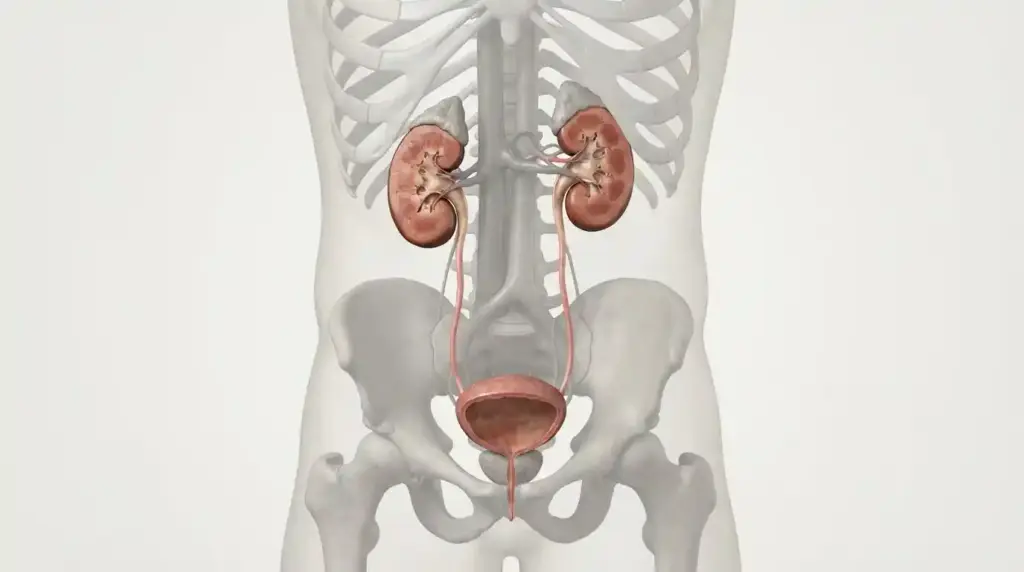
The urinary system is the group of organs responsible for filtering waste products and excess water from the blood, producing urine, storing it, and removing it from the body. It consists of two kidneys, two ureters, the urinary bladder, and the urethra.
It is also known as the renal system.
The urinary system helps maintain the body's internal chemical balance by regulating water, electrolytes, and acid-base balance while removing metabolic waste products.
Its four main structures work together:
Kidneys: Filter blood, remove waste products, regulate fluid and electrolyte balance, and produce urine.
Ureters: Carry urine from each kidney to the bladder.
Bladder: Temporarily stores urine until urination occurs.
Urethra: Carries urine from the bladder out of the body.
The kidneys also perform important functions beyond urine production. They help regulate blood pressure, stimulate red blood cell production through erythropoietin, and activate vitamin D.
The urinary system is closely associated with the reproductive system, particularly in males, where the urethra also carries semen during ejaculation. However, the urinary and reproductive systems have distinct functions.
Disorders affecting this system include urinary tract infections, kidney stones, urinary incontinence, urinary retention, and chronic kidney disease.