


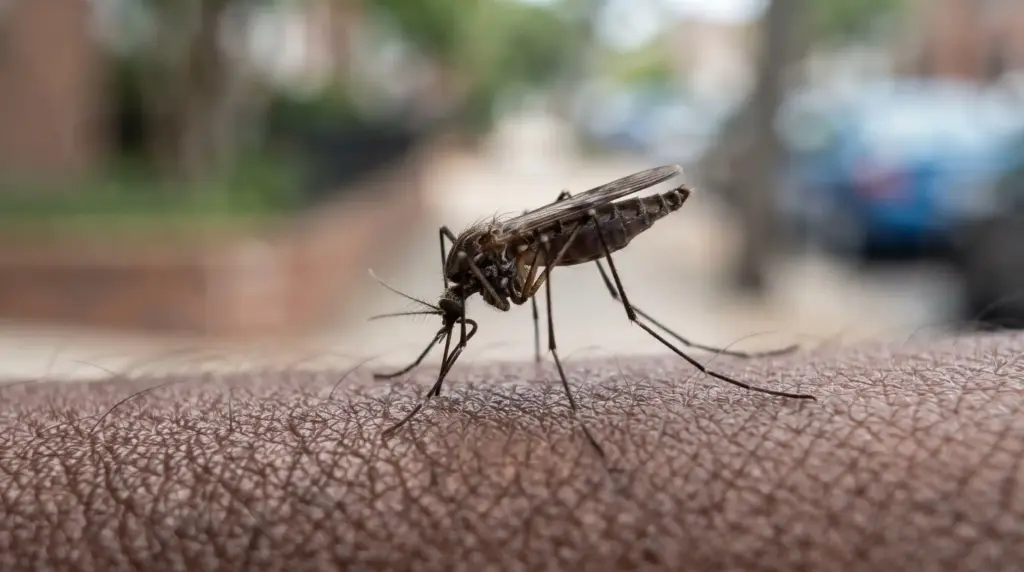
An Anopheles mosquito is a type of mosquito belonging to the genus Anopheles. Certain species are responsible for transmitting malaria parasites from infected people to other humans through mosquito bites.
Only female Anopheles mosquitoes transmit human malaria. They become infected when they take a blood meal from a person carrying malaria parasites. The parasites undergo development inside the mosquito before reaching its salivary glands, allowing the mosquito to transmit infection when it bites another person.
There are more than 400 recognized species of Anopheles mosquitoes, but only a relatively small number are important malaria vectors. Different species occur in different geographical areas and may have different biting, feeding, and resting behaviors.
Anopheles mosquitoes are important in malaria transmission because they serve as biological vectors for Plasmodium parasites, particularly Plasmodium falciparum, which causes the most severe form of human malaria.
The mosquito itself does not cause malaria. Infection occurs when an infected female mosquito introduces malaria parasites into the human bloodstream during feeding.