


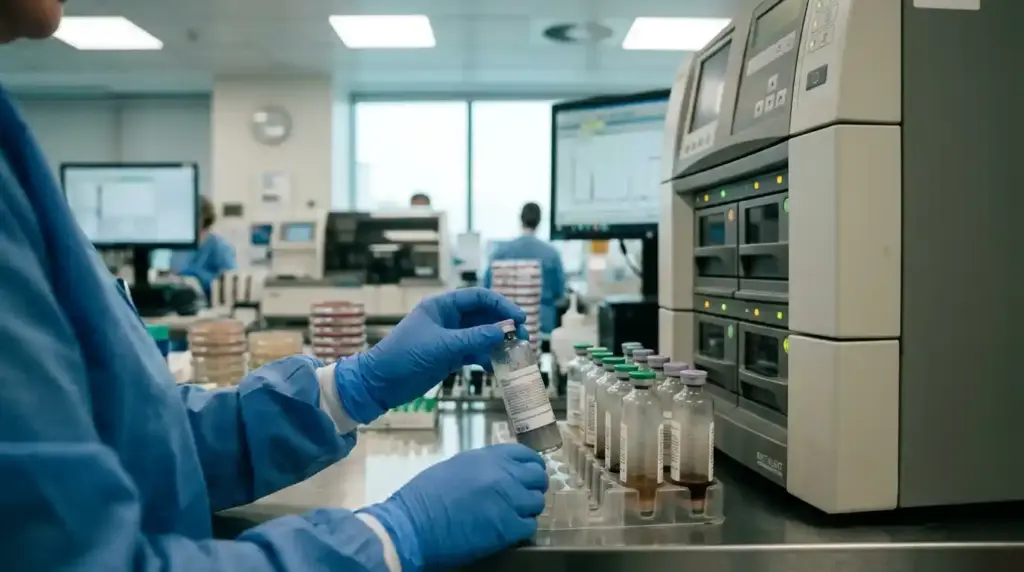
Blood culture is a laboratory test used to detect and identifybacteria or fungi present in the bloodstream. It involves collecting a blood specimen and placing it into specially prepared culture bottles containing nutrients that support microbial growth.
The bottles are then monitored using laboratory equipment or appropriate manual methods to determine whether microorganisms grow. If growth occurs, additional investigations are performed to identify the organism and, where appropriate, determine its susceptibility to antimicrobial medicines.
Blood culture is particularly important when a bloodstream infection or systemic bacterial infection is suspected. It is the mainstay of laboratory diagnosis for typhoid fever because Salmonella Typhi can circulate in the bloodstream during the illness.
Blood culture may also be used when investigating conditions such as sepsis, endocarditis, and certain other serious infections.
The timing and quality of specimen collection influence the accuracy of blood culture. Whenever possible, blood should be collected before antibiotics are administered because antibiotics can reduce the likelihood of detecting microorganisms. However, collection should not cause dangerous delays in treating a seriously ill patient.
A negative blood culture does not always rule out infection. The quantity of blood collected, the stage of illness, prior antibiotic exposure, and the number of cultures obtained can influence the result. In suspected typhoid fever, multiple blood cultures may sometimes be necessary.