


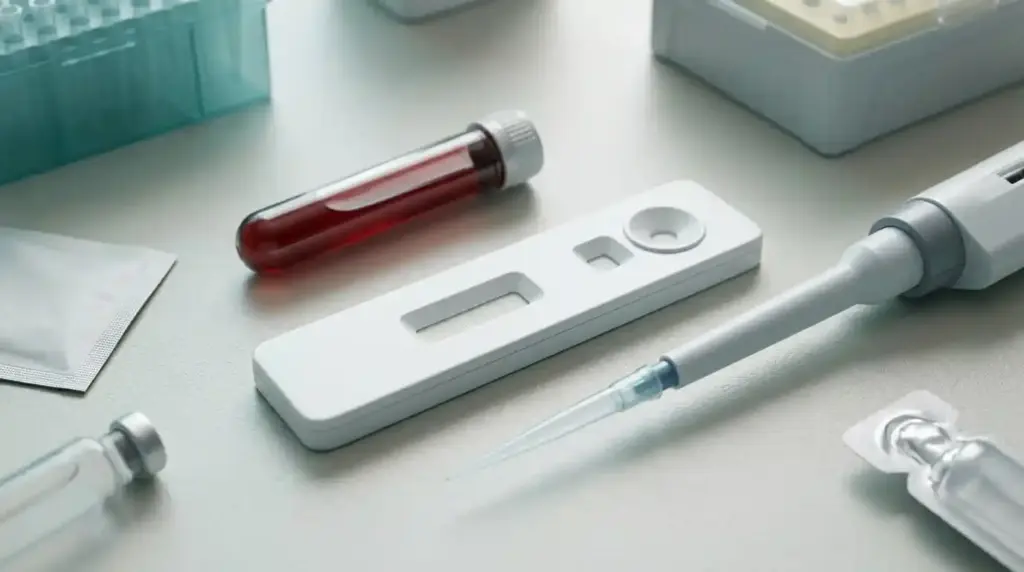
A rapid diagnostic test (RDT) is a medical test designed to detect specific substances or biological markers associated with an infection or disease and provide results within a relatively short period, often within minutes.
RDTs commonly use a small sample of blood, urine, saliva, or another body fluid. Depending on the test, they may detect antigens, antibodies, or other disease-associated markers.
In malaria diagnosis, rapid diagnostic tests detect specific antigens produced by malaria parasites in the blood. They are particularly useful in healthcare settings where microscopy is not readily available or where a quick preliminary result is needed.
RDTs are also available for several other infections, including HIV, dengue, and certain respiratory infections. However, their accuracy depends on the particular test, the disease being investigated, the timing of testing, and how the specimen is collected and handled.
A positive or negative RDT result must be interpreted in the context of the patient's symptoms, medical history, and the limitations of the test. Some infections require additional laboratory investigations for confirmation.
Importantly, malaria RDTs and typhoid antibody-based rapid tests are not interchangeable. A malaria RDT detects malaria-associated antigens, whereas typhoid tests may detect antibodies or other bacterial markers. The diagnostic accuracy of available typhoid serological rapid tests is limited, and blood culture remains the preferred method for confirming acutetyphoid fever.